
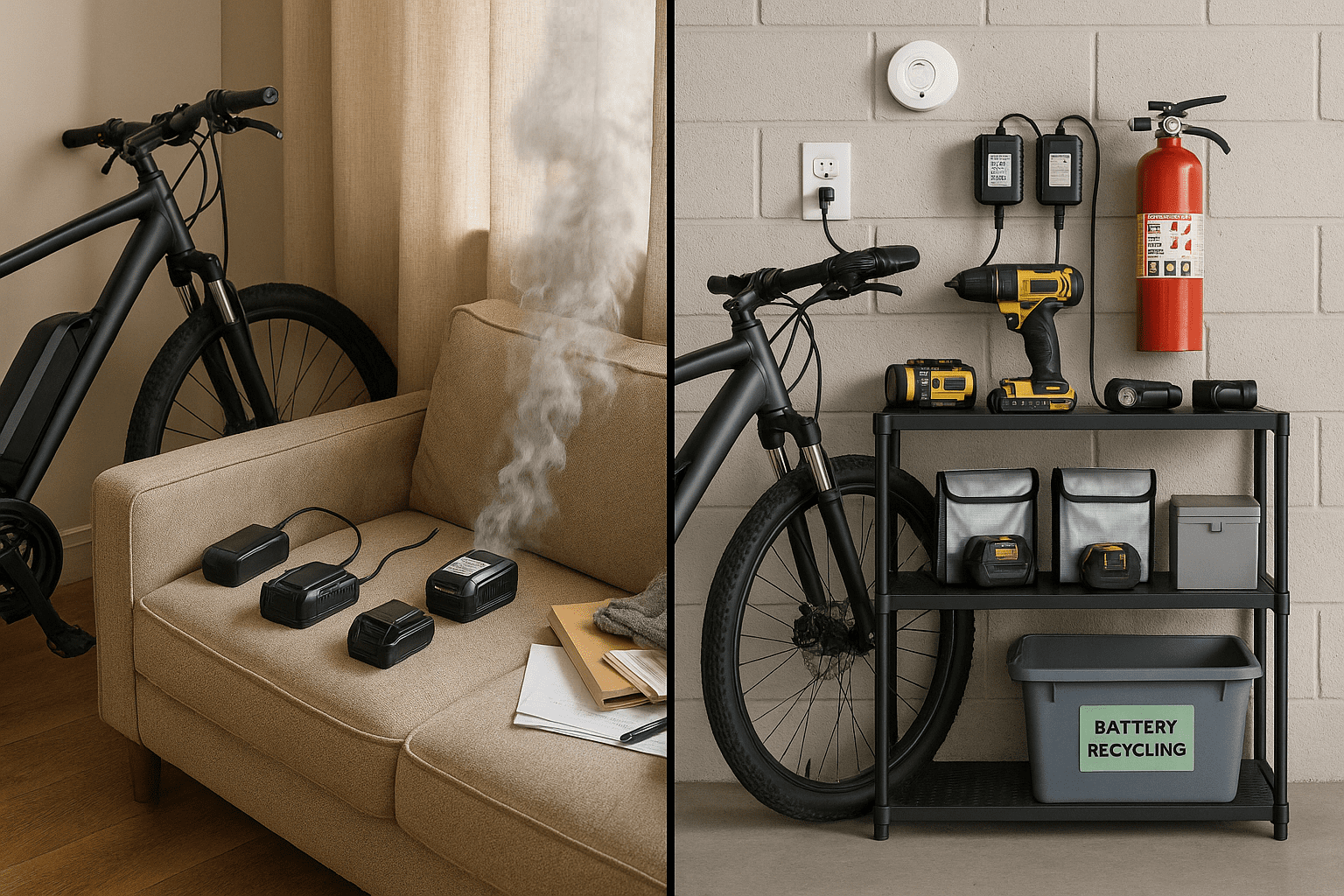
Plug it in. Walk away. Come back to a house full of smoke. That is the nightmare many folks never saw coming with lithium ion batteries in e bikes, power tools, and gadgets. The good news. You can charge and store this stuff without turning your living room into a science project. I own a restoration company. I see the aftermath when things go sideways. So I wrote the guide I wish every homeowner had before that first puff of sweet chemical smoke ever showed up.
Why lithium ion safety matters
Lithium ion packs cram a lot of energy into small spaces. That is the point. That is also the problem when a cell fails. Thermal runaway can kick off fast. Heat builds in one cell. Neighboring cells join the party. Flames shoot. Smoke spreads through the home in minutes. The Fire Safety Research Institute breaks down the hazard and why it escalates so quickly. Their public education push called Take CHARGE aims at simple steps that cut risk. If you want the science without the jargon, start there. FSRI lithium ion battery fire primer.
Trends in real homes tell the same story. FDNY keeps beating the drum. Store and charge outside when you can. Through March 2025 they reported a sharp rise in structural fires from lithium ion batteries. Uncertified or modified packs have been linked to violent flash fires. Their message stays blunt because the risk is real. FDNY lithium ion battery safety PSA.
Micromobility keeps growing. Apartments get tighter. Garages double as workshops. More chargers on the same circuits. More packs stacked near cardboard, paint, or the washer. It only takes one damaged cell or the wrong charger to turn a quiet evening into a full fire department visit. Treat these packs with respect. You get safety plus longer life from your gear.
Where fires happen
We see ignition near entry doors. Next to the couch. In bedrooms. In hallway charging clusters. In garages stacked with fuel, boxes, and tools. Kitchens take hits too when people park the scooter by the island. The pattern is simple. Charging near combustibles. Charging unattended. Charging with the wrong charger. Charging on tired circuits or power strips. All avoidable.
Only certified gear
If you ride an e bike, buy a system that has third party certification of the whole electrical package. Look for UL 2849 in the documentation. That mark covers the drive unit, battery, and charger as a system. It is not just a sticker on a charger. Ask the dealer to show the current certificate from a Nationally Recognized Testing Lab. UL 2849 e bike certification overview.
UL 2849 in plain terms
UL 2849 sets safety tests for the full e bike electrical system. That matters. The most common failure scenarios live at the interfaces between pack, battery management, and charger. System testing checks how these parts behave together. Other UL standards exist for hoverboards or packs, but for e bikes, 2849 is the one you want to see in writing.
Avoid so called universal chargers
The Consumer Product Safety Commission has said it bluntly. Skip generic or universal chargers for micromobility. Stick with the charger that came with the bike or an approved replacement. Wrong voltage or charge profile can overheat a pack. Fires and recalls follow. CPSC warning on universal e bike chargers.
Recalls hit budget gear. Recalls hit premium rigs too. Santa Cruz announced a recall in spring 2025 for certain electric models due to fire risk. VIVI recalled about 24 thousand batteries in summer 2025. This is not brand snobbery. It is product safety. Register your bike. Check recall pages before each riding season. Santa Cruz recall and VIVI e bike battery recall.
Where to charge
Fast rule. Outside beats inside. Detached areas beat living spaces. If you can charge on a covered patio or in a shed that has power, do that. Keep the bike out of rain. Keep the charger dry. Put the setup on concrete or stone. Use a spot away from doors and windows so a flare does not trap you inside.
Best places at home
An open air location with overhead cover works best. A detached garage comes next. A modern attached garage can work if you set a safe zone on concrete. Add a smoke alarm. Keep a clear path to the exterior. Keep water nearby for rapid cooling if something goes wrong. FDNY repeats this point for a reason. FDNY 2024 lithium ion fire trend report.
Places to avoid
Skip living rooms. Skip bedrooms. Skip hallways. Skip closets. Skip any location that blocks your exit. Avoid carpet. Avoid wood furniture. Keep away from curtains and soft goods. Keep kids and pets at a distance. Charging in a stairwell is a hard no.
How to plug in
Use a wall receptacle. Avoid power strips. Avoid extension cords. Do not daisy chain anything. If the location is a garage or exterior spot that can get damp, use a GFCI outlet. Check that the prongs fit snug. Loose plugs build heat. If the outlet feels warm during use, stop and call an electrician. The Massachusetts Fire Marshal repeats the direct to outlet rule for a reason. Mass.gov e bike charging reminder.
Charging and storage rules
Most incidents start with the basics going sideways. Keep the routine tight. Your gear lasts longer. Your house stays whole.
Charging routine
- Use only the charger that came with the device or an approved replacement.
- Plug into a wall outlet on a circuit that is not overloaded.
- Charge on a clean, dry, hard surface. Concrete or tile beats wood or carpet.
- Keep the setup away from combustibles. No cardboard wall. No stack of towels.
- Stay in the home while it charges. No overnight charging. No errands while it sits.
- Unplug at full. Do not trickle for hours.
- Let the pack cool before you charge. Let it cool after a ride or heavy use.
- Keep the temperature moderate. Aim for room temp. Skip freezing garages or hot attics.
- Charge a single device per outlet. Avoid adapters with multiple heads feeding at once.
- Inspect cords and packs. Replace anything with cuts, scorch marks, or wobbly connectors.
The Electrical Safety Foundation keeps these points short and sharp for every home. ESFI lithium ion safety tips.
Storage routine
Planning to park the e bike for a month or longer. Put the pack at a mid state of charge. Bosch recommends thirty to sixty percent. Store in a cool dry room with a smoke detector. Keep packs out of direct sun. Keep away from heaters or hot water tanks. Do not store a battery in a tool bag in your car for a long spell. Bosch eBike battery care guide.
Warning signs and actions
Most packs fail loud. A few fail quietly at first. Respect small oddities. That is your head start.
Signs a battery is failing
- Unusual solvent like odor
- Heat while idle or charging
- Swelling or a bulge in the case
- Hissing or popping sounds
- Smoke or discoloration
- Cannot hold a charge or shuts off
Stop use at the first sign. Move people and pets away. Open doors or windows for fresh air. Do not pick up a hot or smoking pack. If it is safe, unplug the charger at the wall. The ESFI page keeps this list tight for a reason. ESFI lithium ion safety tips.
If a pack overheats or vents
Do not panic. Take calm, quick steps. Cut power at the outlet if you can do it without reaching over the pack. Clear the area. Evacuate if you have heavy smoke or the pack is inside a living space. Call 911. If fire starts and you can do so without risk, use water spray in large amounts to cool the pack. Keep cooling for a long period. Re ignition can occur after flames go out. This matches the Emergency Response Guidebook 2024 Guide 147 for small lithium ion battery fires. ERG 2024 Guide 147.
Note for battery nerds. This guidance is for lithium ion. Single use lithium metal cells behave differently. The ERG has a separate guide for those. Focus your home safety playbook on the chemistry you actually own.
If a battery catches fire
Step one. Clear people. Step two. Call 911. If you trained with extinguishers and the fire is small, act quickly from a safe position. For small lithium ion device or e bike pack fires the ERG calls for water spray only. Not a mist. Not a cup. Large amounts that soak and cool. Keep the water on it for an extended period. You are fighting heat build up inside the cells, not just visible flames.
What to avoid
- Do not cover the pack with a blanket. That traps heat and invites a second flare.
- Do not move a flaming pack. It drops burning material and exposes you.
- Do not use dry chemical or CO2 on small lithium ion battery fires. ERG 147 says skip those for this hazard.
- Do not stand in a smoke plume. Wear a mask if you have one within arm reach. Your lungs will thank you.
After extinguishment treat the pack like a bomb that still ticks. Keep cooling. Keep distance. Wait for firefighters to confirm it is safe. Document the scene for insurance once it is cold and cleared.
End of life and damaged packs
Do not toss lithium ion devices or batteries in household trash. Do not put them in curbside recycling. Trash trucks burn when a pack gets crushed in the hopper. The EPA makes the process simple. Tape or bag each battery terminal. Transport batteries in a way that prevents contact with each other. Bring them to a household hazardous waste drop or a battery recycler. EPA guidance on used lithium ion batteries.
E bike batteries have a national program through Call2Recycle with strong retailer participation. You can find a drop off near you in seconds. Many bike shops will accept packs. Check the locator before you show up. Call2Recycle e bike battery program.
Find an e bike battery drop off
Damaged or recalled batteries
Stop using any pack with physical damage, water intrusion, or a smell that makes your eyes sting. Do not try to repair a pack at home. Do not replace cells yourself. Contact the maker or a dealer for safe handling. For recalled units, follow the instructions on the recall page. You may be offered a replacement or a repair handled by the manufacturer.
Buyer tips and home upgrades
Buy good gear once. Sleep better every night.
How to spot safe systems
Ask for proof of system certification for e bikes. UL 2849 from a recognized lab sits at the top of that list. Confirm that the battery and charger are part of the same certified system. Avoid listings that mix brands without documentation. Skip generic chargers. Keep serial numbers and receipts. Register the product with the manufacturer for recall alerts.
Upgrade the home charging zone
Add a dedicated circuit if you run multiple chargers in a garage. Install a GFCI outlet in damp or exterior locations. Place a smoke alarm within hearing range of the charging area. Keep an ABC extinguisher near the exit. Keep access to water for cooling if a small lithium ion fire starts. Set the bike on concrete blocks or a steel tray to separate it from combustibles. Leave space on all sides for airflow. Keep doors and egress paths clear at all times.
Do and do not at a glance
Do
- Charge outside or in a detached area if possible.
- Use only OEM chargers or ones approved by the manufacturer.
- Plug directly into a wall outlet.
- Supervise charging and unplug at full.
- Store batteries at mid charge in a cool dry room.
- Recycle through proper channels. Use the drop off locator.
Do not
- Do not charge in bedrooms, hallways, or near exits.
- Do not stack packs near cardboard or fabric.
- Do not use a power strip or an extension cord.
- Do not keep charging overnight.
- Do not use universal chargers.
- Do not toss batteries in the trash or curbside recycling.
What happens after a battery fire
Even a small pack can fill a home with acidic smoke and sticky soot. Electronics corrode in hours. Textiles trap odors that do not leave with a quick wash. My team sees it weekly. We secure the property. We remove char and residue. We help you get back to normal with both speed and care. If you want a fast primer on damage types and why speed matters, read our post on Understanding smoke damage and why quick cleanup matters.
If windows are out or doors do not lock after the fire, we can protect the property right away. Our 24 7 emergency board up services keep weather and trespass out while cleanup begins.
Insurance can feel like a second disaster. Document everything once the fire department clears the site. Take photos of the charger, the battery, and the area of origin. Save receipts and serials. We wrote a no fluff walkthrough for claims in plain language. Start with Filing fire damage claims after an incident. Then see what usually can be saved versus what must go in What you can save after a fire vs. replace. If your head is still spinning, we also have a step by step list in After a fire what to do next.
Short notes for power tools and gadgets
E bikes grab the headlines. The same rules protect you with drills, lawn equipment, vacuums, laptops, phones, and scooters. Do not charge under pillows or on beds. Give laptops a hard surface. Retire puffed phone batteries. Replace swollen laptop packs. Use the charger that came with the device. Do not leave a cordless tool battery on a hot dashboard. Treat every weird smell from a device like a warning siren.
If you only keep five rules
Use the charger that belongs to the device. Charge on a hard surface in a room with a smoke alarm. Keep it away from exits and combustibles. Stay home while it charges. Recycle at a proper site when the battery is done or damaged.
Why water is your friend in small Li ion fires
Let this point cut through decades of old advice. For small lithium ion battery fires in things like phones, laptops, scooters, or e bike packs, the current Emergency Response Guidebook says water spray in large amounts is the right call. You are not just chasing flames. You are cooling the cells to stop the chain reaction. Dry chemical or CO2 does not pull heat out of the pack in the same way. That is why re ignition bites people. The heat stayed in. Keep the water on longer than you think. Step back once firefighters arrive. ERG 2024 overview.
Community safety pays off
One last thought from the guy who gets your call at 2 a.m. after the smoke clears. Charging outside helps you. It also helps your neighbors. Fewer apartment fires. Fewer hallway evacuations. Fewer injury calls for first responders. If you manage a building or a shop, set up a safe charging area with clear rules posted. We help property owners build plans for this on the front end. If you run a condo or a campus, our disaster planning and response services cover policy, layout, and response steps that keep people safe.
Straight talk wrap up
Lithium ion batteries power the fun stuff and the must have stuff. Treat them like small fuel tanks with brains. Buy certified systems. Charge in the right place. Use the right charger. Watch for early failure signs. Cool with water if the small stuff lights off. Recycle the dead ones the right way. Do that, and your gear keeps humming while your home stays off the evening news.
FAQ
Is water safe on a lithium ion fire at home
For small lithium ion device or e bike battery fires, yes. Use water spray in large amounts with extended cooling. Re ignition can occur. Evacuate and call 911 if there is any doubt. Source. ERG 2024 Guide 147.
Can I use a power strip to charge an e bike
No. Plug directly into a wall receptacle. Power strips and extension cords raise risk of overheating. Source. Mass.gov Fire Marshal reminder.
Where is the safest spot to charge if I cannot go outside
A well ventilated garage zone on concrete. Keep it away from combustibles and exits. Add a smoke alarm and a fire extinguisher. Supervise charging and unplug at full. Sources. ESFI tips and Mass.gov reminder.
How do I dispose of a swollen laptop battery
Do not place it in trash or curbside recycling. Tape or bag the terminals. Take it to a battery recycler or a household hazardous waste site. Source. EPA used lithium ion batteries.
How can I tell if my e bike is certified
Look for UL 2849 system certification in the documentation. Ask the dealer for a current certificate from a recognized lab. Source. UL 2849 overview.
Are universal e bike chargers safe
No. The CPSC urges riders to avoid them. Use only the charger supplied by the maker or an approved replacement. Source. CPSC universal charger warning.