
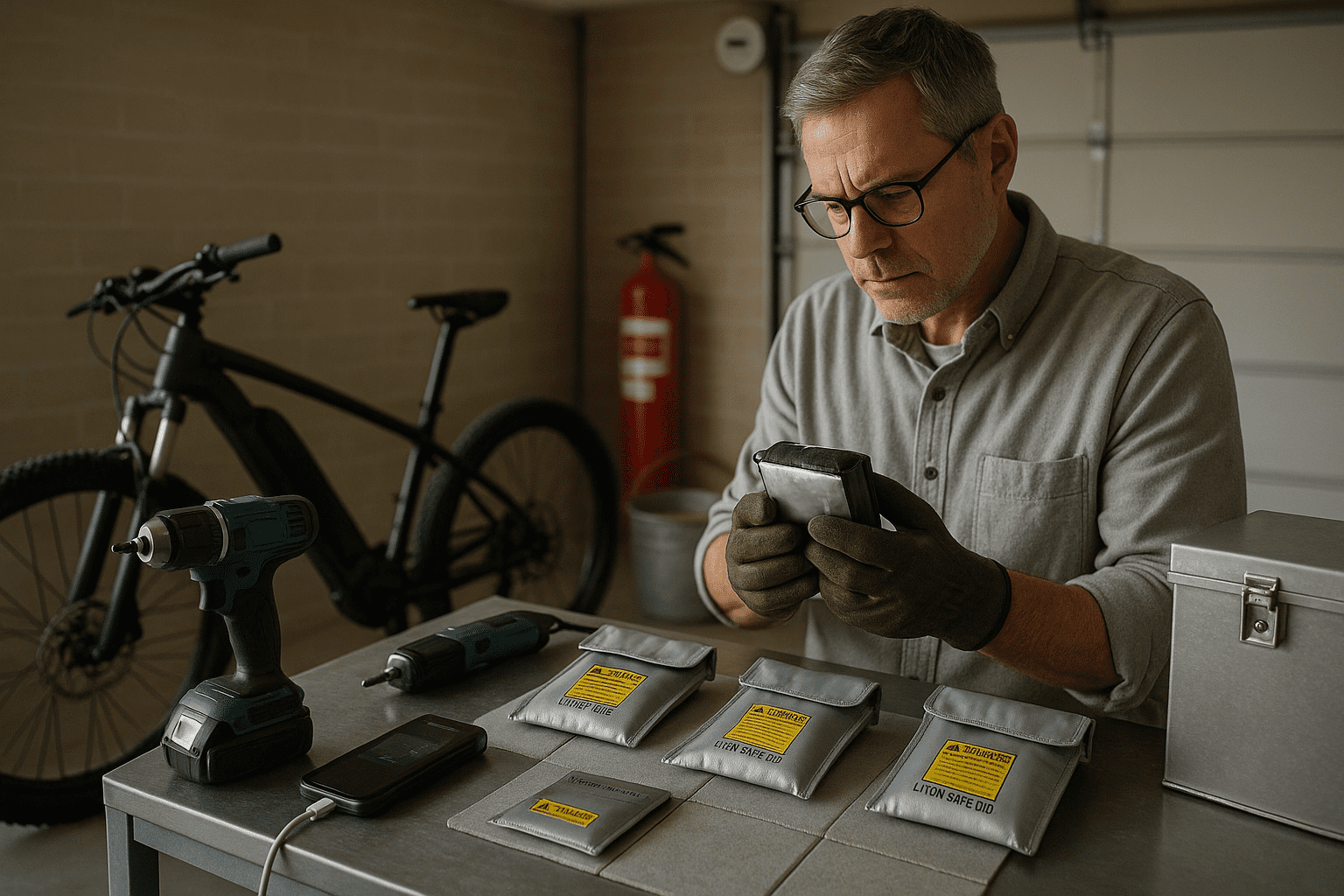
Charging at home should not feel like juggling fireworks. This guide walks through lithium ion battery storage safety for e bikes, cordless tools, and the gadgets you plug in every night. You will see what warning signs matter, what safe charging looks like, how to stack the odds against thermal runaway, and the exact steps to take if a battery overheats or smokes. I own a restoration company. I have cleaned up after these fires. My goal is to keep you off my job calendar.
Quick answers
Lithium ion battery warning signs at home
- Hot to the touch while resting
- Swelling or bulging
- Hissing or popping sounds
- Strong chemical odor
- Smoke or discoloration
Source:
Princeton EHS
How to store lithium ion batteries safely at home
- Room temperature in a dry, ventilated area
- Keep away from combustibles and direct sun
- For long storage set around 40 to 50 percent charge
- Avoid bulk storage in living spaces
- Inspect weekly
Sources:
USFA,
Battery University,
Kent State
What to do if an e bike battery overheats
- Unplug now
- If safe, move it outside to a non combustible area
- Place in a metal container with a lid
- Monitor for smoke
- Evacuate and call 911 if it smokes or ignites
Source:
Seattle Fire
Why battery fires happen
Lithium ion cells pack a lot of energy into small packages. That convenience comes with a condition. The chemistry must stay stable. Heat, physical damage, counterfeit or mismatched chargers, poor quality control, or internal defects can start a chain reaction that burns extremely hot. The National Institute of Standards and Technology cites jet like flames and very fast heat rise during failures, which tracks with what fire departments see in the field. FDNY logged 268 lithium ion battery fires in 2023. Those fires can overtake a room fast. You may have less than a minute to get out once a pack vents hot gas and flame. Source:
NIST.
Thermal runaway explained
Thermal runaway is a feedback loop inside the battery. A cell heats up. That heat breaks down internal layers and releases more heat and flammable gas. Neighboring cells absorb that heat, then enter the same loop. The pack goes from warm to roaring in seconds. Flame jets can shoot several feet. The gas can push fire across a room. Smoke is thick and toxic. Re ignition is possible after the first event because cells can hold heat deep inside. This is why firefighters cool packs with lots of water. That is trained responder work. Your job is to get out and call 911. Source for responder context:
UL Solutions.
Battery thermal runaway prevention
Prevention focuses on three things. Keep heat down. Keep charging matched to the device. Keep damaged or suspicious packs out of service. Use the charger that came with the product or a manufacturer approved replacement. Give packs space to breathe during charging. Do not charge on a bed, couch, or carpet. Do not block exits. Do not charge while you sleep. Choose e bikes and chargers that carry UL certification for the system. Cheap universal chargers are a recurring cause of incidents. The U.S. Consumer Product Safety Commission has urged consumers to avoid universal e bike chargers after dozens of fire reports. Sources:
CPSC trend report,
CPSC Commissioner statement.
Warning signs at home
Batteries often give you a tell before failure. You just need to catch it. If a pack runs hot while sitting still, do not brush it off. Heat at rest means a problem inside the pack. Swelling or bulging means gas buildup in the cell. Hissing or popping means gas is venting. A strong solvent or sweet chemical odor is a red flag. Discoloration near seams or terminals suggests heat damage. Smoke means failure is underway. If you see smoke, evacuate and call 911.
Princeton Environmental Health and Safety lists these exact indicators. It also notes that cells above roughly 113 Fahrenheit while in normal use are suspect. You do not need a lab. Touch tells you enough. If something feels off, stop using it. Source:
Princeton EHS.
Safe charging habits
Charging choices make or break safety. Use only the charger that shipped with your device or a charger sold by the same maker for that model. Avoid universal chargers. The CPSC points to real fires tied to them. They may overcharge or charge cells unevenly which increases heat. That extra heat shortens life and raises risk. Links:
CPSC data.
Set up a clean charging zone on a hard nonflammable surface. Concrete floor. Tile. A metal shelf. Keep the area dry and at room temperature. Do not charge near curtains, cardboard, or gas cans. Never charge while sleeping. Keep the device clear of doors. If something goes wrong you want a clear exit. For e bikes and scooters skip extension cords and power strips. Plug directly into a wall outlet. These devices pull more current. A cheap strip can overheat. Sources:
FDNY Smart,
Seattle Fire.
Choose certified products. For e bikes look for UL 2849 on the system label. That standard evaluates the full drive system which includes the battery, motor controller, and charger. For removable battery packs look for UL 2271. For e scooters and hoverboards look for UL 2272. The UL mark is on the product data label near the serial number or on the charger nameplate. You can also check the product listing on the maker site. UL certification means the design passed tests for electrical shock, fire spread, and charger control. It does not mean zero risk, but it cuts risk. Source:
UL Solutions.
Storage best practices
Good storage habits lower stress on cells and cut risk. Keep batteries at room temperature in a dry ventilated area. Do not store any pack in a hot car or in direct sun. Heat accelerates chemical breakdown inside the battery. That breakdown can show up later as swelling or gas venting during charging.
For long storage of removable packs set the charge around 40 to 50 percent. This sweet spot slows aging inside the cell. Tool batteries and spare gadget packs last longer this way. If you will not use a pack for a month or more, charge it to the middle of the gauge and park it. Top off every few months as needed. Source:
Battery University.
Do not bulk store packs in living rooms or bedrooms. Consider a metal cabinet for spare packs. A small fire resistant container is an option for a few spares. Avoid sealed containers that trap pressure. Give the storage space some airflow. Visually inspect weekly for swelling, leaks, or corrosion on terminals. Keep combustibles away. Source notes:
USFA,
Kent State.
If a battery overheats
A battery that feels hot at rest or starts to hiss needs immediate attention. You can often prevent a fire if you act early and keep your distance.
Overheating but not on fire
- Unplug the charger immediately
- Power down the device if it is on
- If it is safe, move the device outdoors or to a non combustible area such as a concrete patio
- Place it in a metal container with a lid
- Monitor from a safe distance
- Call 911 if it smokes, hisses loudly, or heats up again
These steps come from city fire departments that deal with these calls daily. The goal is simple. Get heat away from your home and keep it from feeding anything that burns. Source:
Seattle Fire,
Princeton EHS.
If it ignites
Leave the battery where it is if moving it is unsafe. Evacuate everyone. Close doors behind you to slow smoke. Call 911 from outside. Lithium ion battery fires burn fast and hot with a high chance of reignition. Firefighters may apply lots of water to cool the pack and keep heat from spreading to nearby cells. Your priority is life safety. Sources:
USFA,
UL Solutions.
Buy safer products
Not all e bikes or chargers are equal. Choose products that show their homework. Look for UL 2849 on e bike systems. Look for UL 2271 on the removable battery pack. Look for UL 2272 on other rideables. These marks show third party testing. Many cities now require these marks for new sales. The U.S. Consumer Product Safety Commission backs this advice. Source:
UL Solutions on UL 2849,
CPSC.
Check recalls before you buy and once a month after. Even respected brands can have a bad batch. Recent examples include Santa Cruz Heckler 9 e bikes with battery overheating issues and FENGQS F7 Pro e bikes with packs that could ignite. See recall notices dated May 1, 2025 and July 24, 2025. Links:
Santa Cruz recall,
FENGQS recall.
Bookmark the
CPSC recalls page.
One more thing. Chargers get recalled too. A charger that overvolts a pack can push cells past safe limits. Use the charger that shipped with the product or a maker approved replacement for that exact model. The CPSC has warned about universal chargers after documented fires. Source:
CPSC Commissioner statement.
Recycling and disposal
Never toss lithium ion batteries in household trash or curbside recycling. They can spark fires in trucks and sorting facilities. Tape exposed terminals or bag each battery. Then use your local hazardous waste site or a retailer collection program. The EPA keeps current guidance and links to find drop off sites. If you search where to recycle lithium ion batteries near me, look for programs that accept your battery size and type. Links:
EPA lithium ion battery disposal.
For swollen or damaged packs, isolate in a non combustible container while you arrange proper drop off. Do not mail damaged packs unless the program specifically accepts them. Do not try to discharge a bloated pack to zero. That invites more heat. Your local waste authority can advise on special handling.
After a fire
Even a small battery fire leaves a mess that you do not want in your lungs. Soot and smoke residues carry acids and toxics that etch surfaces and linger in soft goods. If a battery overheated or ignited in your home, get a professional assessment. Our team handles smoke damage cleanup and can advise on what is salvageable. Learn more about
smoke damage cleanup and health risks.
Insurance questions follow quickly. Document everything. File promptly. We can guide you through filing a fire damage claim after a battery fire. Start with our article on
filing a fire damage claim.
If the damage is wider than a single room, you need a plan for cleanup, contents, and rebuild. We walk through the process in
what to do after a house fire.
Concerned about what you are breathing now. Read our take on
indoor air quality after smoke exposure.
You can reach us 24 by 7 for an assessment. We will bring meters, containment, and a straight answer about your next steps. If we meet because of a battery fire, we will help you get your home back. If this guide keeps you from needing us, even better.
Home safety checklist
- Buy UL listed micromobility devices and batteries. Skip aftermarket or universal chargers
- Charge on a hard nonflammable surface. Keep clear of exits and combustibles. Do not charge while sleeping
- Store spares at room temperature. For long storage set around 40 to 50 percent charge
- Inspect often for heat at rest, swelling, odors, hissing, or discoloration. Stop using any suspect pack
- If overheating, unplug. Move outside or to a safe non combustible area if you can do so safely. Monitor from a distance
- If smoke or fire, evacuate, close doors behind you, and call 911
- Recycle properly. Never put lithium ion batteries in household trash or curbside recycling. Tape terminals or bag before drop off
Sources:
UL Solutions,
FDNY Smart,
Battery University,
Princeton EHS,
Seattle Fire,
USFA,
EPA
Context and current stats
E bikes, scooters, and cordless everything moved in fast. Risk did too. The CPSC reports micromobility injuries increased nearly 21 percent in 2022 compared to 2021. Fire is a big part of that trend. The agency urges the use of certified products and supervised charging. Source:
CPSC.
Local fire data tells the same story. FDNY recorded 268 lithium ion battery related fires in 2023. The heat release is violent which is why escape time can be short. NIST describes jet like flames and intense heat spikes for failing cells. Source:
NIST.
Recalls show the market still learning. CPSC notices in 2025 include major brands and budget sellers. Some bikes overheat during charging. Others fail during use. A recall is a gift. It tells you what to fix or stop using. Register your product when you buy it so you get alerts. Check the recall page monthly if you charge in a garage under sleeping rooms.
Chargers, outlets, and placement
Use wall outlets with good grip. A loose plug runs hot. Replace any outlet that does not hold a plug firmly. Keep chargers off soft surfaces so air can move. Many chargers get warm, which is normal, but heat rises if air cannot circulate. Keep chargers off the floor in a flood prone basement. Water and live power are a bad mix. Match extensions to the load if you must use one for a low draw device. For e bikes, plug into the wall only. Object on top of the charger. Heat builds up. Firefighters hate that scene.
Store bikes and large packs away from sleeping areas. A shed or detached garage is best if it stays dry and moderate in temperature. If you must bring a bike inside, set up a charging station on tile near an exterior door. Keep an ABC fire extinguisher nearby for incidental fires on nearby materials. Do not try to fight a battery fire with a small extinguisher. Use it only on small flames around the device to keep the path clear while you get out.
Swollen or damaged batteries
A swollen pack is a stop sign. Do not use it. Do not charge it. Isolate it in a metal container. Contact the manufacturer for guidance or take it to a hazardous waste site that accepts damaged lithium ion batteries. Many retailers accept normal end of life packs, but not all accept swollen ones. Call first. If a pack smells like solvent or sweet chemical, treat it as damaged. Corrosion or burn marks on terminals also mean do not use.
What UL marks mean
UL 2849 covers the e bike drive system. That means the battery, the controller, the motor, and the charger work together within defined safety limits. UL 2271 covers removable light electric vehicle battery packs. UL 2272 covers the electrical system for hoverboards and similar devices. The mark appears on the product label or on the charger label. You might see a small UL symbol with the standard number. Some brands also list the file number which you can look up on the UL site. Certification is not a decoration. It is the result of tests that try to break the thing in ways that mirror real hazards. If the label is missing, move on to a product that shows its work. Source:
UL Solutions.
House rules for e bikes
Set house rules if you have an e bike at home. Charge only when you are awake. Park the bike with a clear path to a door. Keep a smoke alarm in the area. Use the maker charger only. Replace packs through the maker or a certified service center. No knockoff battery packs. They often cut corners in cell quality and built in protection. If a pack has been in a crash, retire it. Internal damage may not show outside right away. Heat later reveals that damage. Better to spend money on a new pack than on a new house.
Tool and gadget tips
Tool batteries live a hard life. They ride in hot garages. They sit for months between seasons. Give them a better life. Keep them inside at room temperature when not in use. Store around half charge if they will sit more than a month. Do not leave a battery on the charger after the light turns green. Most modern chargers switch to maintenance mode but some do not. Dock and forget is not a good plan.
Phone and laptop packs are less likely to cause a big fire, but heat still kills them. Keep laptops off blankets during charging. If you notice a bulging phone back or screen lift, power down and replace the battery. Use maker service or a trusted shop. Third party parts vary in quality. Shipping damaged packs or loose cells is not allowed under many carrier rules. Return to the source or use local drop off.
Cords and plugs that hint at trouble
Frayed cords, melted plastic on a plug, burn marks on an outlet. These are not cosmetic issues. Replace them. A cord that runs under a rug breaks down faster. Heat builds. That heat can char the rug backing and start a smolder. Keep cords visible and free of pinch points. Coil loosely. Tightly wrapped cords trap heat.
Local news vs safe habits
News of an e bike fire pushes fear into the room. You do not need fear. You need habits. Certified gear. Correct chargers. Good storage. Quick action when a pack acts weird. That is how you keep your home safe. I have walked homes after these fires. Bedrooms blackened. Windows blown. The pattern is consistent. A questionable charger. A bike parked next to a couch. A pack that had been dropped last week. We cannot change the physics. We can change the inputs.
Call us if you need help
If a battery overheated in your home, you smell smoke after, or you see soot on surfaces, call us. Blackhill Restoration handles cleanup, deodorization, and rebuild. We also help manage insurance steps. The sooner you call, the more we can save. If your home is fine today, share this guide with someone who charges in a hallway or on a bed. You might save a life.
Common questions
What are the warning signs my battery is failing
Heat while resting. Swelling or a bulging case. Hissing or popping sounds. Strong chemical odor. Discoloration near seams. Smoke. Stop using a battery that shows any of these signs. Source:
Princeton EHS.
How do I safely charge an e bike at home
Use a UL certified system and the original charger. Charge on a hard nonflammable surface at room temperature. Keep clear of exits and combustibles. Do not charge overnight. Sources:
UL Solutions,
FDNY Smart.
Is it safe to use a universal e bike charger
No. The CPSC has documented fires tied to universal chargers and advises against them. Use only manufacturer approved chargers for your model. Source:
CPSC.
What is the safest way to store spare tool batteries
Keep them at room temperature in a dry ventilated area away from combustibles. For long storage set charge around 40 to 50 percent. Do not bulk store in living spaces. Sources:
USFA,
Battery University,
Kent State.
What should I do if a battery gets hot or starts to smoke
Unplug it. If it is safe, move it outside to a non combustible area and place it in a metal container with a lid. Monitor from a distance. If it smokes or ignites, evacuate and call 911. Source:
Seattle Fire.
Where can I recycle lithium ion batteries
Use a hazardous waste facility or a retailer collection program. Tape terminals or bag each battery. Do not put batteries in household trash or curbside recycling. Source:
EPA.
Do UL certifications matter for e bikes
Yes. UL 2849 for e bikes and UL 2271 for packs reduce shock and fire risk through design tests. Several cities require them. CPSC and NFPA voices recommend them. Source:
UL Solutions.
Why this advice works
This guide pulls from national and local safety authorities. The CPSC tracks injuries and fires and urges certified products and supervised charging. FDNY and NIST data show how fast these fires grow. UL spells out what its marks cover and how they reduce risk. USFA offers simple steps for charging and evacuation. Seattle Fire and Princeton EHS give clear signs and actions for overheating packs. The EPA explains disposal rules that keep fires out of trucks and facilities. The recalls show this is current. Santa Cruz and FENGQS notices were issued in 2025. Before you buy or plug in something new, check the recall site again.
Sources:
CPSC trend report,
CPSC charger warning,
UL on certifications,
USFA,
Seattle Fire,
Princeton EHS,
EPA,
NIST,
Santa Cruz recall,
FENGQS recall