
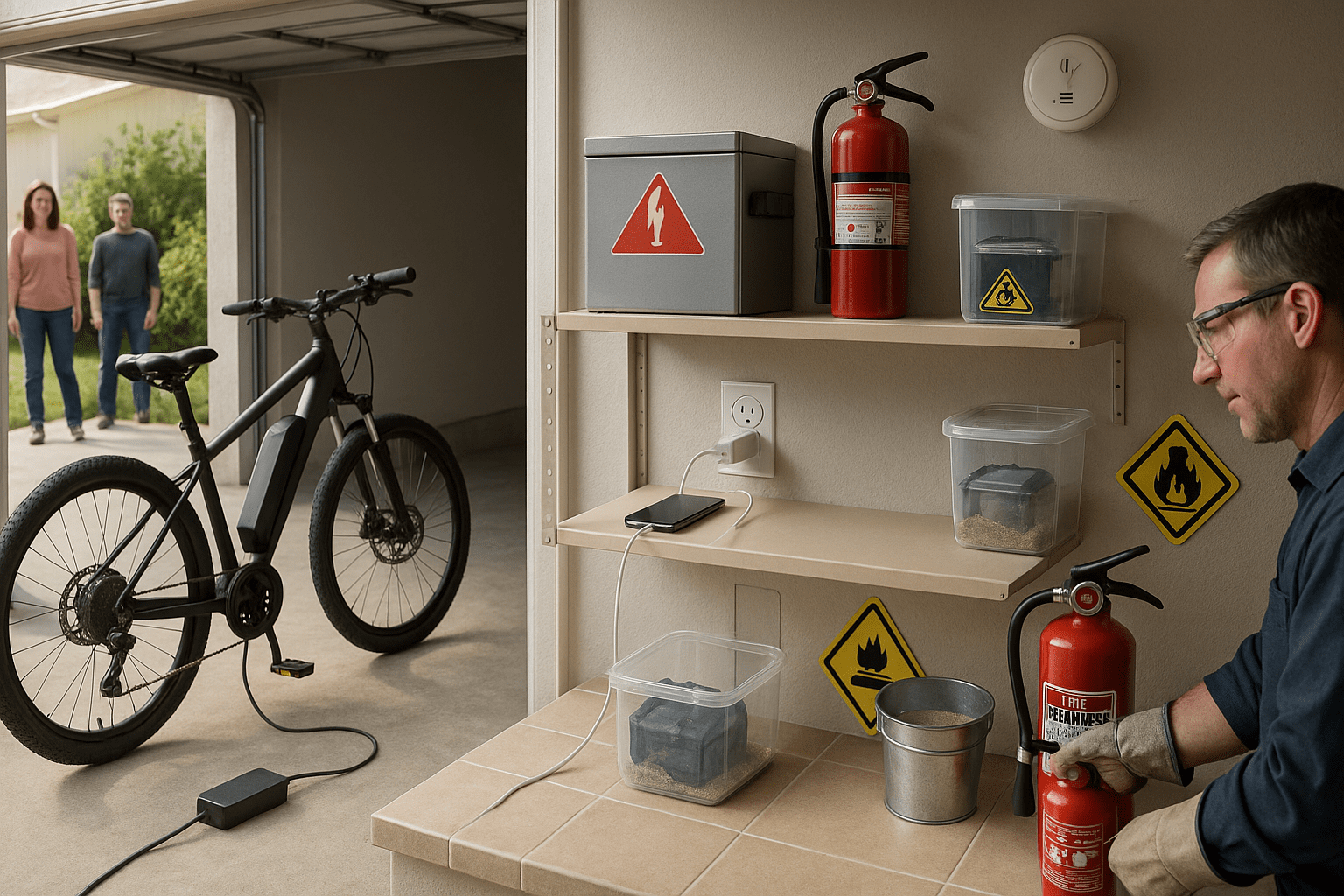
Lithium ion batteries power our commutes, weekend rides, tool sheds, and every table covered in chargers. I own a restoration company. I see what happens when a battery goes sideways in a living room. You want the fun of an ebike. You do not want scorched drywall or toxic smoke. The good news. Prevention is simple. The stakes are high. So is the payoff. Safer gear. Smarter habits. Fewer fire risks at home.
How do I prevent an ebike battery fire at home Buy UL certified ebike systems. Charge on a hard nonflammable surface plugged directly into a wall outlet. Do not charge unattended or overnight. Store at room temperature away from exits and heat. Stop using at the first sign of odor, heat, swelling, or smoke. Recycle properly, never in the trash.
Fast home safety checklist
Keep e mobility fun. Keep your home intact. Start with the basics. Buy certified systems. Charge with the charger that came with the product. Place the charger on a hard surface with open air around it. Plug into a wall outlet. Hold off on power strips. Hold off on extension cords. You would not park a running grill in a hallway. Do not charge next to the door that you need if something goes wrong. If you want a longer list of common fire hazards that pop up in real homes, scan our take on common home fire hazards.
Heat control matters. Lithium ion cells dislike extremes. Room temperature storage keeps stress low. A hot car or attic bakes cells. A freezing garage slows the chemistry. Both push risk higher. I tell clients to treat batteries like a pet. Do not leave them in a car on a summer day. Do not shove them in a sweltering attic. Keep them where you would be comfortable sitting for an hour.
A few blunt do nots, from a guy who cleans up after the sirens clear.
- Do not charge while you sleep.
- Do not block an exit with a bike or tool on a charger.
- Do not mix and match chargers or brands.
- Do not ignore odd smells, heat, or swelling.
- Do not toss used packs or cells in the trash bin.
Charge safely
Your charging setup makes or breaks risk. The Electrical Safety Foundation points to a few simple habits that work for homes. Plug directly into a wall outlet. Avoid extension cords. Avoid power strips. Place the product and charger on a hard, nonflammable surface. Keep clear space around the setup. Skip overnight charging. Unplug once full. Keep the area away from doors or entryways so a failure does not trap you while you exit. That guidance lives on their page for micromobility safety. You can read the summary from ESFI right here.
Temperature matters during charging. Public fire safety guidance calls for room temperature storage. It also calls for charging within reasonable limits. Do not charge outside in freezing conditions. Do not charge in a hot shed during a heat wave. Cold stalls the chemistry. Heat pushes cells toward failure. The U.S. Fire Administration stresses room temperature storage, plus a caution against charging in extreme cold or heat. Their battery safety page spells out temperature ranges for everyday users.
Spacing also matters. Give the charger air. No blankets or laundry piles nearby. No charging on a couch or a bed. A bench or concrete floor works well. Have a smoke detector in the charging area that you know actually chirps when tested. Keep an ABC extinguisher nearby for other classes of fire in the room. If a lithium ion pack smokes or burns, do not attack it. More on that next.
One more note for the nerds who read product sheets. NIST and NIOSH research shows that external heat can push cells into failure. Chemistries vary in heat to failure thresholds. Cooler surroundings lower stress. You can skim the supporting research from NIST on this page. For the rest of us, the take away is simple. Keep charging areas cool. Keep them clean. Keep them supervised.
Store batteries the right way
Storage rules look a lot like smart charging rules. Keep packs at room temperature. Avoid hot cars, attics, sealed sheds, or direct sun near a window. The U.S. Fire Administration advises room temperature storage. That one habit removes a big chunk of risk. Do not leave a battery or ebike where it blocks a door. Never treat a hallway like a parking lot.
Can you charge or store outside A lot of folks can. FDNY recommends outdoor charging and storage when possible. They have seen the stakes up close. They also warn against charging in shared hallways or near exits. If you want a plain language summary from the largest fire department in the country, see their guidance page on lithium ion safety. They also shared an update in 2025 that noted a rise in structural fires linked to these batteries. That push led to a louder message to keep charging and storage outside when the setup allows it. The PSA focuses on habits that keep escape routes open.
Indoor only storage works for many homes. If you must store inside, choose a clear corner on a hard surface with space around the pack. Distance from curtains. Distance from furniture. No stacking stuff on it. Keep kids from tinkering with cables. Do not leave a pack in a place where a fallen object can crush it.
Think about impact, water, or rough handling. A pack that takes a hit can suffer internal damage. The outside can look fine. The inside can have a bent or shorted cell. If a bike or tool falls down a stairwell, treat the pack as suspect. If a pack gets soaked, treat it as suspect. Dry the outside. Do not charge. Contact the brand or an authorized dealer for a check.
Spot failure warning signs
Batteries give off signals before a crisis. Listen to them. UL Solutions lays out the clues. Stop using a battery that overheats during use or charge. Stop using one that smells odd. Watch for discoloration near the pack. Look for swelling or a bulge. Popping or hissing sounds signal trouble. Smoke ends the debate. Move people and pets out. Close a door if safe. Call 911. You can see the UL consumer advisory that lists these signs on their micromobility safety page.
Small quirks matter. A charger that runs hotter than normal points to a mismatch or a failing component. A pack that now takes forever to charge or will not hold a charge needs service. An adapter that sparks at the plug needs replacement. Use only brand authorized parts. Non OEM chargers can push the wrong current or voltage profile. That stresses the pack. That shortens life. That raises risk.
Fire prevention rarely hangs on one problem. Often it is a mix. A warm corner. A blocked exit. A bargain charger. You need to thin those risks. If you want a quick refresher on house wiring clues that signal bigger issues, skim our guide to electrical warning signs.
If a battery overheats or ignites
Stop charging the hero act while smoke pours off a pack. The U.S. Fire Administration points the public to a simple plan. Evacuate people and pets. Close the door to the room if you can do that without delay. Call 911. Do not try to handle a smoking or burning lithium ion battery. Crews may advise cooling with copious water outdoors for a very small device if the scene is safe. That step can help slow thermal runaway. The default public guidance is to step out and call 911. You can read that public message on the USFA site at this link.
Two quick clarifications from the field. Lithium ion is not lithium metal. Fire crews carry the tools and training to make that call. Homeowners do not. Toxic smoke fills rooms fast. Do not take chances with lungs. Get out. Call it in. Let fire professionals take the lead.
Clip and save emergency steps
Evacuate everyone. Close the door if safe on the way out. Call 911. Do not touch a smoking pack. Wait for firefighters. If the battery is outdoors and small, cooling with large amounts of water may help, but only if fire crews say it is safe. Keep distance until the scene gets cleared.
Choose safer products
Purchase decisions matter more than you think. UL 2849 applies to ebike electrical systems. UL 2271 applies to battery packs. Choose products that show certification to those standards from a qualified lab. Use the charger that came with the product. Stick with battery replacements sold by the brand or an authorized dealer. UL also repeats a simple rule. Do not modify packs. Do not re cell packs. Do not bypass protection circuits. That voids safety layers that engineers designed for your exact setup. Their consumer facing guidance lives on this UL page.
Recent recalls show why this matters. The Consumer Product Safety Commission has warned against certain noncompliant ebike batteries without the right safety certification. Reports included overheating and fires. They also posted recalls for branded bikes with overheating hazards. Chargers have been flagged as well. One off brand multi slot charger even tied to a fatal incident. This is not fear mongering. This is a pattern of issues with non OEM parts and cut rate gear. See a representative warning on the CPSC portal for UPP ebike batteries.
How to check a product before you buy
Check the product page for UL 2849 on the system and UL 2271 on the battery. Look for the UL mark on the bike frame label or battery label. Verify the seller is an authorized dealer for the brand. Compare charger output ratings to the pack label. Contact the brand if anything looks off. If a price seems too good to be true, it usually comes with a missing safety certification.
Where to park an ebike or scooter indoors
Pick a corner with a clear path around it. Do not block doors. No curtains above the bars. No heaters nearby. No stacked coats or cardboard next to the battery bay. Keep a smoke alarm within hearing range. If your climate or building allows outdoor storage, FDNY favors that approach for both charging and storage. Their PSA in 2025 also reported a rise in structural fires that quarter. The message was simple. Keep charging outside when you can. Keep exits clear inside.
Disposal and recycling
An old or damaged lithium ion battery does not belong in your trash or curbside bin. The Environmental Protection Agency spells out a simple playbook. Tape over the exposed terminals. Or place each battery in an individual plastic bag. Take them to a household hazardous waste drop site or a battery collection program in your area. Call2Recycle and Earth911 are two names that help people find drop locations. The EPA keeps a clear guide that you can consult on this page.
Do not hold onto swollen packs. Do not stuff them in a drawer. Handle with care. Keep them away from heat or flame. Prepare for drop off as above. Tape or bag. Place in a nonflammable container for the trip. No pickup truck bed in full sun. No storage in a hot car while you run errands. Knock out this errand first.
Large format packs need a safe plan as well. Ebike packs, tool packs, drone packs, and similar. Use the same approach. Tape or bag terminals. Transport in a container that will not burn. Call your local HHW site for large pack drop rules. Retail take back programs sometimes accept these, but call first.
Power tools and gadgets
Tool batteries deserve the same care you give to an ebike pack. Do not buy off brand packs that offer extra capacity at a dreamy price. Those cells may pack more punch than the tool and charger can manage. Use the charger that shipped with the tool. A universal charger can push the wrong profile. A pack that got dropped off a ladder needs a cool down, then a check by an authorized shop. No charging until after that call.
Small gadgets carry risk too. Phones, cameras, drones, speakers, and more. Do not charge under a pillow. Do not cover a laptop on the couch while gaming with it plugged in. Do not leave devices charging on stacked mail or cloth. Give devices air. Unplug once full. Store extras away from heaters, windows with direct sun, or cars that turn into ovens. If a device smells like burnt electronics or something chemical, stop using it. Set it on a nonflammable surface. Put space between it and anything that burns. Contact the manufacturer.
After a hard strike or water event, show restraint. That phone fell in a lake. Do not toss it on a charger as soon as it feels dry. That pack bounced down a stairwell. Do not test it immediately out of curiosity. Let a shop test it. Your house will thank you.
After a fire at home
If a battery incident did happen, fast action helps. Evacuate. Call 911. Once the scene gets released, protect the structure from weather and trespass. We can help with emergency board up. That prevents further damage while your claim starts. Smoke hangs around. It also seeps into places that you cannot see. Residue can corrode metal surfaces. It also carries toxins. Our primer on smoke damage explains those hidden risks.
Content decisions come next. Some items clean up well. Some do not. Porous materials soak up odor. Electronics with soot inside pose shock risk. You need a plan that protects health. Look at our field guide to what to save versus what to let go. You also need a path through the insurance process. Start with photos. Keep a list of affected rooms. Save serial numbers if you can. Then check our two step post fire roadmap in After the Blaze. If paperwork gives you a headache, you are not alone. Our claims guide breaks the process into digestible chunks.
I also owe you one more reality check. You will see videos where people try to extinguish a battery with random liquids. Do not replicate that. The public guidance is simple. Evacuate. Close the door if safe. Call 911. Wait for the pros. That path keeps you breathing. That path prevents secondary injuries that fill the claim file with more zeros in the wrong column.
FAQs
Can I charge an ebike or power tool battery overnight
No. ESFI warns against any charging while sleeping or unattended. Unplug once full. Short charging windows reduce risk and stress on cells.
Is it okay to use a power strip or extension cord to charge
No. ESFI recommends plugging directly into a wall outlet. Power strips and extension cords add resistance and heat. They also add trip hazards that can yank a charger onto a flammable rug.
Where should I charge and store an ebike battery at home
Outdoors or in a detached, well ventilated space when possible. That mirrors FDNY guidance. If indoors, pick a hard surface away from combustibles. Keep clear space around it. Keep it out of any path that you would use to exit during a fire.
What certifications should I look for on an ebike
UL 2849 for the overall system. UL 2271 for the battery pack. Use the charger that came with the bike. Use brand authorized parts for replacements. Skipping these steps raises risk.
How do I get rid of old or swollen lithium ion batteries
Do not use the trash or curbside recycling. Tape terminals or place each battery in a separate bag. Take them to a household hazardous waste site or a battery collection program.
Are recalls common for ebike batteries or chargers
They happen often enough to check for your model. The Consumer Product Safety Commission publishes recalls and warnings. If your product appears on a list, stop using it until you see the corrective action.
What is thermal runaway in plain language
Heat triggers a chain reaction inside cells that creates more heat faster than the pack can shed it. External heat or internal damage can start the process. That is why temperature control and careful handling make such a difference.
Can I charge in a garage
Yes, with limits. Keep chargers off cardboard. Keep them off oily benches. Keep space clear. Keep the garage door clear for exit. Do not charge next to gas cans. Never charge in a sealed garage during extreme heat.
What surface makes the best charging station
Concrete. Ceramic tile. A metal shelf. A hardwood bench with no clutter. Avoid fabric, carpet, paper stacks, or anything that melts or burns.
Does a small puff of smoke mean a total loss
It means stop and step away. Do not poke at it. Move people out. Close a door if safe. Call 911. The pack may cool or it may ramp up. Let firefighters decide the next move. Afterward, get a pro inspection for nearby surfaces and systems.
Do not list for quick reference
Keep this short. Keep it blunt.
- Do not charge while you sleep.
- Do not block exits with a bike, scooter, or tool on a charger.
- Do not use a charger that did not come with the product.
- Do not use a pack that smells, swells, leaks, or smokes.
- Do not keep used packs in cars or hot sheds.
- Do not throw lithium ion batteries in the trash or curbside bin.
How to set up a safe charging corner
Pick a room with a door that closes. Place a nonflammable mat or tray on the floor or bench. Keep two feet of open space on all sides of the charger and pack. Plug into a wall outlet. No adapters or power strips. Set a phone reminder to unplug in one to three hours. Keep a smoke alarm in that zone tested and active. Teach the household that this area is a no laundry zone and no kiddie fort zone. If a charger runs hotter than usual during a session, stop. The replacement might be the charger, not the battery. Contact the brand.
How to pick safer gear
Read the spec sheet before you buy. Look for UL 2849 and UL 2271. Confirm that the seller is authorized by the bike maker. Inspect the battery case for a serial label and safety marks. Ask how warranty coverage handles battery issues. Search the model name with recall in the query. Check the CPSC site for current actions. If the brand gives fuzzy answers about certification, skip it. Your house does not need that experiment.
What rental or delivery riders can do at home
Delivery work stretches charging habits. Rotate packs so none stay on a charger for long hours. Keep charging outside if your housing allows it. Do not bring stacks of packs into a bedroom. Keep a log for battery age so you can retire older packs early. Buy replacements from the bike brand or an authorized dealer. Cheap packs cost too much when something goes wrong.
Why all this talk about exits
In a restoration walk through, I track scorch marks and smoke patterns. I also track blocked escape routes. Charging in a hallway seems convenient. It becomes a barricade when a pack vents. That is why FDNY repeats the exit rule. That is why ESFI repeats the direct to wall outlet rule. Everything you do aims for this outcome. Clear exits. Lower heat. No unattended sessions. Certified gear. It sounds boring. It beats the alternative.
Real world proof without doom
You can ride an ebike with confidence. You can store tool batteries in a closet. Risk drops sharply with a few moves. Fire departments publish prevention guides because small changes matter. UL publishes certification data because the right hardware makes a difference. The EPA publishes recycling steps because the end of life phase needs care too. The CPSC posts recalls to get bad gear out of homes. The system works better when you follow the playbook.
If you need help after the sirens
We board up windows. We dry structures. We remove smoke and soot. We also talk through next steps when the adrenaline dump wears off. Your air quality matters. Your belongings matter. Start with site protection using our emergency board up service. Read up on smoke damage risks. Work through what to save versus let go. Then map the road ahead with After the Blaze. If the claim feels heavy, our insurance guide cuts the noise.
One final note from a restorer
I love ebikes. I love power tools. I also love drywall that has not been sandblasted by soot. You do not have to live in fear of batteries. Pick certified gear. Charge on a hard surface. Plug into the wall. Keep sessions short. Store at room temperature. Keep exit paths clean. Stop at the first warning sign. Recycle correctly. It is a simple playbook. Follow it and ride on.