
As a restoration pro who has cleaned up after more than a few battery fires, let me be blunt. Lithium ion batteries are tiny powerhouses that make life easier. They also pack enough energy to smoke a garage in minutes if you give them the wrong charger or a cushy couch to nap on. This guide strips out the fluff. You will get practical steps to charge safely, pick real certified gear, spot trouble early, react fast if a pack overheats, store smarter, and recycle the right way. We will cover power tool packs, e bike batteries, and home energy storage. Keep the sparks in your tools, not in your drywall.
Why lithium ion batteries can ignite
Lithium ion cells charge fast, deliver strong power, and fit in small cases. That combo lives on a razor thin margin of safety by design. When something pushes a cell out of its safe zone, heat can rise and then spiral. The term for that is thermal runaway. It is not a vibe. It is a chain reaction where one hot cell heats its neighbor until the whole pack turns into a stubborn fire that produces white or gray smoke and flares without warning.
Heat spikes can start from physical damage. A dropped pack that cracks internally. A screw that punctures a cell during a DIY repair. Even a hard hit on a bike curb can set the fuse. Mismatched chargers also trigger problems. Overcharge a pack by feeding it the wrong voltage or current and you cook it from the inside. Poor quality battery management systems fail to cut off charge in time. That is why universal chargers are such a trap. The Consumer Product Safety Commission has warned against off brand universal chargers for e bikes due to fire risk. You can read that warning on the CPSC site.
Charging in harsh temperatures also stresses cells. A cold pack resists charging. A hot pack builds heat faster than it can shed it. It sounds basic yet it matters. Treat these packs like you would a good steak. No fast shock from freezer to flame. Let them rest at room temperature before you charge.
Placement matters as much as the charger. A pack buried under sawdust, near solvents, or on a soft chair will soak up heat. It needs space to breathe. Hard surfaces that do not burn are your friend. The U.S. Fire Administration gives simple homeowner guidance on safe charging, smoke alarms, and when to leave the house if a battery starts to smoke. Their homeowner guide lives at USFA.
Power tool battery charging safety
Power tool packs feel tough. That does not make them fireproof. Treat the charger like a life partner for the pack that came with it. Use the charger that came with the tool or the exact model the maker lists as a replacement. No substitutions. The lure of a cheap charger is strong. It is not worth flames on your bench. The CPSC warning above was about e bikes. The lesson holds for power tools too. Mismatched chargers are a common spark.
Pick a charger with a real safety mark. Look for the UL mark or another Nationally Recognized Testing Lab mark. UL explains that the modern mark often reads UL Certified and covers Listed products. You should confirm the exact model in their Product iQ directory. UL walks through what the mark means on this page. That one page is pure gold for spotting fakes.
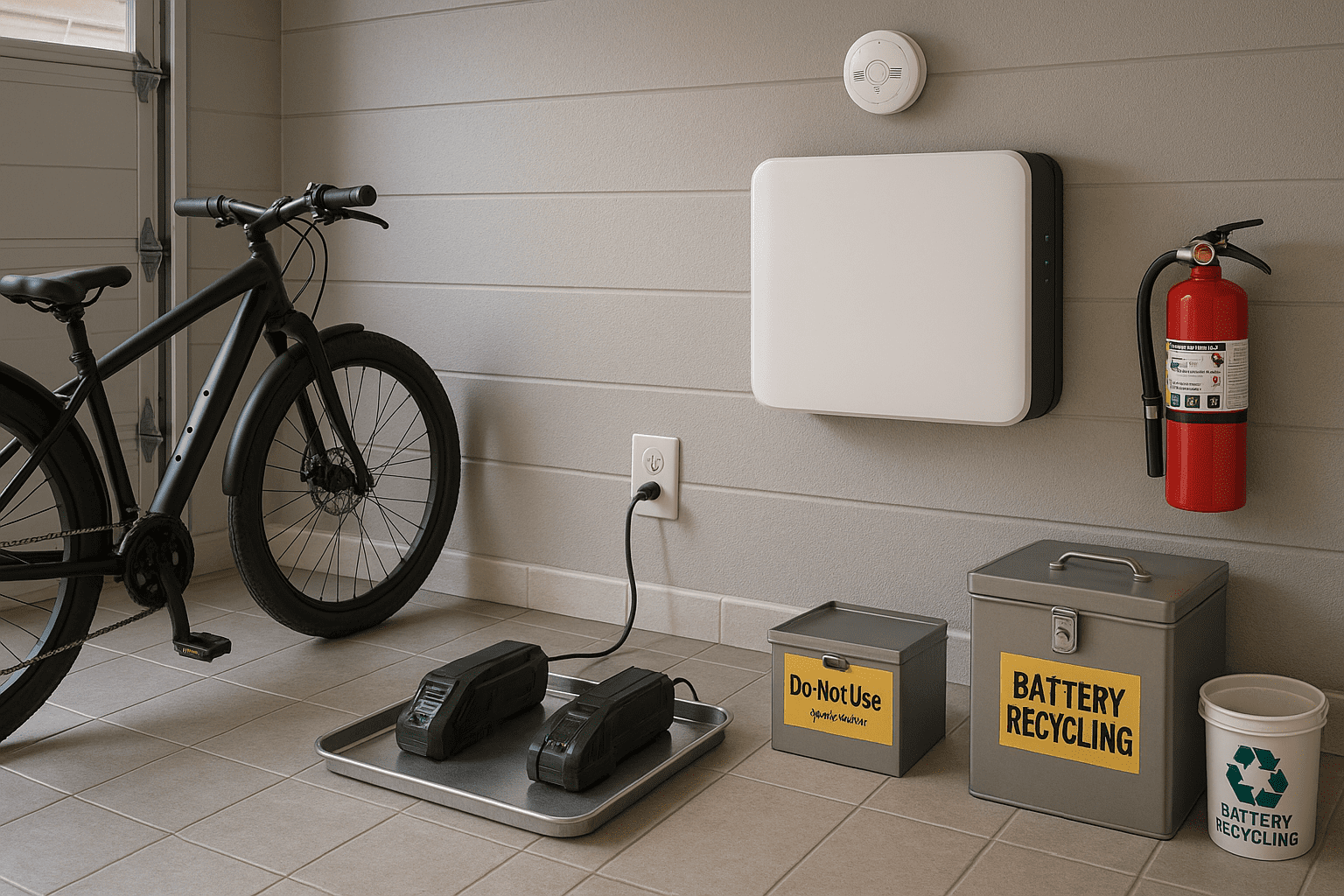
Set up a charging zone that works for safety, not for decor. Bare concrete. A metal shelf. A ceramic tile top. Clear space around the pack. No rags. No piles of sawdust. No gas can hiding nearby. No drapes flirting with the pack. Keep the station away from your exit door. You never want a live battery fire blocking your path. Stay present while packs charge. Do not plug in before bed. Do not leave the house with packs on charge. USFA repeats this point for good reason.
Temperature is not fluff. Charge at room temperature. Avoid charging right after a hot job or a cold truck ride. Let packs rest until they feel neutral to the touch. Then charge. Do not park chargers in attics or unconditioned sheds that swing from freezing to oven hot. Packs hate that routine.
Inspect packs during use and before charge. Look for swelling. Look for cracks in the case. Feel for hot spots during use. Pay attention to new smells. A sweet chemical odor or a burning plastic scent is a red flag. Clicking or hissing from a pack is also a sign of internal trouble. If you see wispy smoke, stop. Move the pack away from things that burn if it is safe. If it starts to flare, leave. Call 911. The Fire Safety Research Institute summarizes these early signs at Battery Fire Safety.
Skip aftermarket tool batteries that promise a few extra amp hours. Makers warn for a reason. Makita has published a warning that non genuine or altered packs can defeat safety communication between the pack and the tool or charger. That can lead to fire. Their notice is posted on the Makita site.
How to confirm a real UL listed lithium ion charger
Look for the UL mark printed on the charger label. The modern mark may say UL Certified. That covers Listed products. Near the mark you will see a control or file number. You will also see the charger model number and its ratings for input and output. Those ratings must match your battery pack.
Open UL Product iQ. Create the free account. Search by the brand and model or by the control number near the mark. Match the exact model listed. Check the category. For many chargers you will see Class 2 power unit or similar. If the database does not show your model, pass. Move on to a charger that does. Product iQ is linked from the same UL page above.
Quick charging habits that pay off
- Use the OEM charger. Match model to model. No universal chargers.
- Charge on a hard surface that does not burn. Keep space around it.
- Stay in the room. Unplug when the pack is full.
- Let hot or cold packs rest to room temperature before charge.
- Retire packs that swell, smoke, or smell odd. Call 911 if a fire starts.
E bike and scooter battery safety
E bikes bring smiles. They also bring high energy packs into small living spaces. Reduce risk with three core choices. Buy a system certified to UL 2849. Use a battery that meets UL 2271. Charge only with the charger that came with the bike. No swaps. No universal chargers. The CPSC has hammered this point after fires tied to uncertified packs and chargers, as you saw in their warning link above.
Pick a charging location with intention. Outside is best if that works for you. A detached garage is a strong second choice. If you must charge inside, keep the bike or pack away from exits and soft furnishings. Install working smoke alarms near the charging area. New York City fire officials have told residents to store and charge lithium ion bikes outside where possible. See their PSA on the FDNY site.
Do not charge overnight. A sleeping homeowner is a slow response. The first sign of trouble is often a small wisp of white smoke. You want eyes on that. You also want a clear path out if the pack flashes. This is a repeat theme from USFA and from fire departments across the country for good reason.
Watch for recalls. That shiny bike you bought last season might be on a list. Wiring faults. Overheating packs. Bad chargers. The CPSC maintains recall pages with specific models and fixes. Scan the recall list before charging a new to you bike or a used battery. The CPSC recall index is on the same warning page linked earlier.
Live in an apartment. Keep the pack on a non combustible surface. Charge during daytime. Do not block exits. Add a photo of the charger label to your phone for quick reference. Keep a dry chemical extinguisher nearby for any small spot fire that is not the battery itself. If the pack ignites, leave. Lithium ion battery fires grow fast. Do not try to fight a growing battery fire with a small extinguisher. Get everyone out. Call 911. The USFA guidance covers this approach on their home battery safety page.
E bike charging habits that reduce risk
- Pick bikes that carry UL 2849 on the system label with batteries that meet UL 2271.
- Charge outside when possible. If inside, keep away from exits and combustible items.
- Never charge overnight or while away.
- Stop using packs that show swelling, odd odor, heat, or smoke.
Home energy storage basics
Home energy storage systems look like a slim cabinet on a wall. They store power for backup or for time of use savings. They also require real safety design. Look for a system certified to UL 9540. This is the baseline for residential units. Installers and local fire officials use test data called UL 9540A or UL 9540B to pick safe locations and spacing for your specific unit. UL explains these markings for home use in a clear guide on their site.
Work with a qualified installer. Your local authority having jurisdiction sets rules for placement. Codes like NFPA 855 guide clearances, separation from living space, and maximum energy per unit. Many residential units limit energy storage per cabinet or unit. Your installer will coordinate with the city to sign off on placement. Keep our talk here at a homeowner level. No code quoting in a blog post will cover every case. Ask questions. Get answers in writing.
Day to day ownership is simple. Keep the area clear of storage. No lawn chairs leaning on the cabinet. No gasoline cans nearby. Follow the maker’s schedule for visual checks and firmware updates. Add smoke or heat detection in line with your local fire department’s advice. The UL link above also points to updates on test methods. That is how you know the industry is learning and improving.
Before you sign a contract, ask these questions. Is the system UL 9540 certified. Do you have UL 9540A or UL 9540B test data for this exact model. Where will you locate the unit. How much clearance does the maker require. What detection or alarms do you plan for this space. Who will service the unit. What emergency contact steps should I post near the unit. Those questions get you a clear plan that holds up during permit review.
Homeowner tips for ESS safety
- Confirm the system label shows UL 9540.
- Mount in the location your installer and AHJ approve. Keep exits clear.
- Keep combustibles away. Maintain any ventilation paths the maker lists.
- Schedule periodic checks. Update firmware as directed by the maker.
Warning signs and your next move
Early signs of trouble look and smell a certain way. A battery that feels much hotter than normal. A case that bulges or splits. A chemical or sweet odor that hits the nose. Clicking or hissing from inside the pack. Wispy white or gray smoke that rises in a thin stream. If you see one of these signs, stop charging. Unplug if it is safe. Move the device to a clear area with non combustible surfaces if you can do that without touching hot parts. Watch it. If the pack ignites or the smoke thickens, leave. Call 911. The Fire Safety Research Institute and USFA remark on these warning signs and actions on the sites linked above.
Do not put a smoking pack in water inside your home. Water will not always stop this type of reaction. It can spatter hot material where you do not want it. Firefighters will use large water flows to cool cells and control the fire. Let them handle that part. Your job is to get out fast. Close doors behind you as you leave if it is safe. That slows spread until help arrives.
Battery smoke is ugly on walls and in lungs. It carries acids and fine particles. If a small pack overheats without catching other items, you can sometimes move it by using tongs or a shovel to a fire safe spot away from the house. Only if it is not flaming. Only if you have an outdoor spot that will not burn. Keep distance. Many packs can flare again. When in doubt, wait outside for the fire department. Better a ruined pack than a ruined kitchen.
Dos and donts for home and garage
Keep it simple. Small habits stop fires.
- Use a UL listed lithium ion charger that matches your pack. Verify it in UL Product iQ.
- Charge on concrete, metal, or tile. Clear space around the pack.
- Do not charge while sleeping. Do not block your exit.
- Do not stack chargers near solvents or fuels.
- Stop using packs that swell, smoke, hiss, or smell odd.
- Store loose batteries in cases. No keys or screws in the same drawer.
- Install working smoke alarms near charging zones.
- Keep kids and pets away from charging areas.
Recycling and disposal without risk
Do not throw lithium ion batteries in the trash. Do not put them in curbside recycling. Packs can short in the truck and cause a fire. The Environmental Protection Agency explains the right way on their lithium ion battery FAQ page. Tape over the terminals or bag each battery in a separate clear bag. Then take them to a household hazardous waste site or a retailer that collects them. Read the EPA guidance at EPA Lithium Ion Battery FAQs.
Damaged batteries need extra care. If you see swelling, cracks, or leaks, do not carry the pack in your pocket or toss it in your car trunk loose. Place it in a non flammable container like a metal bucket. Keep it away from things that burn. Take it to your local household hazardous waste drop off. Call ahead and describe the condition. Staff can guide you to the right bin or schedule.
Old tool packs and e bike batteries can go to battery recycling programs. Many cities host events for household hazardous waste. Retailers who sell batteries often accept them back. Bag or tape them first. Keep them out of your regular trash stream forever.
After a battery fire
Once the scene is safe, your next move is cleanup and recovery. Battery fires leave sticky soot and corrosive residues on walls, floors, and ceilings. Do not wipe them with a wet rag. That can stain surfaces. Start with ventilation if the fire department allows that. Photograph the damage for insurance. Then bring in help.
Our team provides Fire Damage Restoration in Texas with 24 hour response. We handle soot removal, odor control, and contents cleaning. We also offer Emergency Board Up Services if the fire compromised doors, windows, or the roof. If you want a primer on what smoke does to different materials, read our homeowner guide on Understanding Smoke Damage. For a step by step plan from day one to rebuild, see Navigating Fire Damage Restoration in Your Home. Insurance can feel like a maze after any fire. We shared practical tips in Filing Fire Damage Claims.
Own a small business or manage a property. Battery risks extend to fleets of tools and e bikes in storage. We help build response plans and staging layouts that reduce risk. Learn more in our Disaster Planning and Consulting section.
Lithium ion safety FAQs
What does UL listed or UL Certified mean for my charger
It means the charger model was tested by UL to safety standards for that type of device. The modern UL mark often reads UL Certified and covers Listed products. Check the physical mark on the charger label. Then confirm the model in UL Product iQ. The UL page on the Enhanced Certification Mark explains how the mark works and how to verify models. You can read it at UL.
Is it safe to leave power tool batteries charging overnight
No. Stay in the room while charging. Unplug when the indicator shows full. This advice matches USFA guidance for home battery safety which you can review at USFA.
Where should I charge an e bike at home
Outside is best. A detached garage is also good. If you must charge inside, keep the bike or pack away from exits and from combustible items. Charge during the day while you are awake. FDNY has urged residents to charge and store outside when possible. Their PSA is posted at FDNY.
How do I dispose of a swollen or dead lithium ion battery
Do not put it in curbside recycling or household trash. Tape the terminals or place the pack in an individual bag. Take it to a household hazardous waste site or a retailer that collects batteries. The EPA explains these steps at EPA.
What certifications should a home battery system have
Look for UL 9540 on the system label for residential use. Local officials and installers use UL 9540A or UL 9540B test data to pick safe locations and clearances for that specific model. UL outlines these marks and what they mean for homeowners at UL.
What are signs a lithium ion battery is failing
Heat that feels unusual. A bulging case. Odd odors. Hissing or clicking. Wispy white or gray smoke. If you see any sign of failure, stop using the device. Unplug if safe. Move it away from items that burn. If smoking or flaming, evacuate and call 911. The Fire Safety Research Institute covers these signs at Battery Fire Safety.
If a battery catches fire should I use an extinguisher
If the battery itself ignites and is growing, leave. Call 911. Do not try to fight a spreading battery fire with a small extinguisher. If a nearby item catches a small spot fire and it is safe to do so, a dry chemical extinguisher can help. USFA guidance on when to evacuate is at USFA.
A few closing thoughts
You do not need fear to live with lithium ion tech. You need good habits. Use the right charger every time. Verify marks. Charge on surfaces that do not burn. Stay nearby while packs charge. Watch for warning signs. Keep exits clear. Recycle packs the right way. Installers should provide ESS units and locations that match UL certification and local guidance. Small choices stack up to big risk reduction. If a fire does happen, step outside fast. We can help with the mess after the smoke clears. Your tools can be replaced. Your garage can be cleaned. Your life cannot be replaced. Charge smart today.