
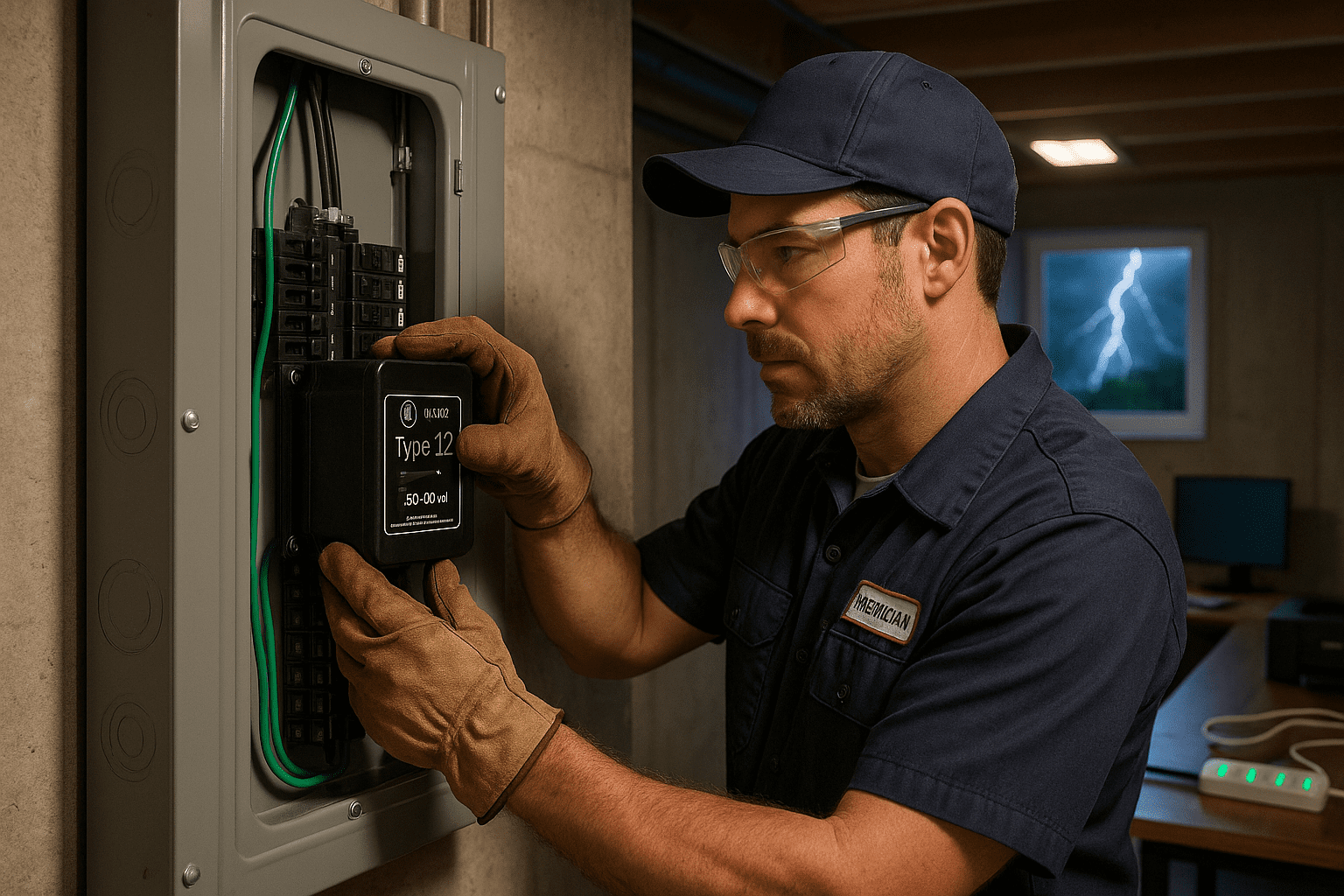
You bought a nice TV. Your fridge has a computer in it. Your HVAC board costs more than a weekend in Galveston. Then storm season hits. Power flickers. A nearby strike lands. Your lights come back on, but something smells hot, and your router is toast. That is the story I hear after every big thunder day in Texas. The fix is not magic. Whole home surge protection, solid grounding, smart use of plug in strips, and a few installation details that make all the difference.
Quick answer at a glance
Type 1 and Type 2 surge protectors do not compete. They stack. Type 1 sits at the service entrance, even at the meter if your utility allows it. It catches utility side hits and the first punch from lightning energy before it heads to your main panel. Type 2 mounts on the load side, usually on a two pole breaker in the main or a subpanel. It cleans up what gets past the service, plus all the surges that your home creates when large motors kick on. Plug in Type 3 strips protect sensitive gear like TVs, PCs, and networking gear right at the cord. This layered setup is what the pros use, and what national guidance calls for. The National Institute of Standards and Technology calls this staged protection with service, panel, and point of use devices, with attention to cable and phone lines too. You can read that homeowner guide from NIST in Surges Happen at nist.gov.
One more big thing. Short leads from the surge device to the bus and ground. Inches matter. Every extra foot raises the let through voltage by about 100 to 170 volts according to a Schneider FAQ at se.com. We will hit that again, because that little detail decides if your electronics ride out the blast or not.
What the code requires
Surge protection for homes is not optional in modern code. The National Electrical Code section 230.67 requires a Type 1 or Type 2 surge protective device on services that supply dwelling units. That rule arrived in the 2020 edition. It applies to new services and service replacements. Electrical Contractor Magazine covered the rule and the allowance to place the device on a feeder panel in some layouts at ecmag.com.
The 2023 NEC pushed clarity further. It kept the dwelling service requirement, set a minimum nominal discharge current of 10 kiloamps for the device used on the service, and highlighted shorter lead connections. Mersen’s digest of 2023 changes summarizes those items well at us.mersen.com.
Local adoption varies. Some cities move fast. Some take years. Always check with your Authority Having Jurisdiction. If you are in Central Texas, most jurisdictions have adopted at least the 2020 requirement. Either way, protection is a smart move even if your area still uses an older code cycle.
UL 1449 basics
The label tells the story. UL 1449 is the safety and performance standard for surge protective devices. Devices are listed by Type, and include several key ratings. NEMA gives a plain language overview of Types, applications, and product families at nema.org. The UL Type definitions and test scope appear at standards.globalspec.com.
Here is how to read the common ratings.
Voltage Protection Rating or VPR. This is the clamping level measured under the UL combination wave test of 6 kilovolts and 3 kiloamps. Lower VPR means tighter limiting of the surge voltage. A lower number gives your gear a better chance to survive. See a concise explainer on these terms at studyres.com.
Maximum Continuous Operating Voltage or MCOV. This is the highest steady state line voltage the device can tolerate without starting to conduct. For a North American 120 by 240 split phase system, you want MCOV selections that fit line to neutral and line to line. A quick primer on MCOV is posted by Hubbell at hubbellpowersystems.uservoice.com.
Nominal discharge current or In. This is the 8 by 20 microsecond surge current that the device can pass multiple times and keep working. The 2023 NEC calls for In of at least 10 kiloamps for the device at the dwelling service. Higher values speak to more margin in harsh conditions. Mersen’s digest calls out that 10 kiloamp minimum at us.mersen.com.
Short circuit current rating or SCCR. This is the fault current that the device and its leads can withstand without blowing apart. The SCCR of the SPD must meet or exceed the available fault current where it is installed. Your electrician can check the panel label and utility data to pick an appropriate unit. A primer on SCCR in SPDs is at studylib.net.
Choosing Type 1 or Type 2
Type 1 can land on the line side of the service disconnect in equipment rated for that connection. It can also sit on the load side. It is designed to take energy from utility side events before that energy reaches the main breaker. Some utilities allow a meter socket device that wraps around the service at the meter location. Schneider Electric’s FAQ on location and Type difference spells this out at se.com.
Type 2 installs on the load side. It connects via a dedicated two pole breaker in the main panel or a subpanel. It reacts fast to transient energy that is already on the bus. It also mitigates daily switching surges from motors, compressors, and variable speed drives inside your home. Type 2 is the workhorse for most houses.
So which should you pick. In Texas where storms roll hard, I like both. A Type 1 at the service or meter if permitted. Then a solid Type 2 at the main panel with very short conductors. That paired setup gives your system a first wall and a second wall. If budget forces a choice, put a high quality Type 2 on the main panel. Then add point of use protection where it counts. That strategy mirrors NIST’s staged protection guidance at nist.gov.
Plug in strips in the plan
Plug in strips do not replace a whole home protector. They are the last layer. They also add signal to power coordination at the device level. That matters for TV setups, modems, routers, and gaming rigs where damage often comes from a voltage difference between the coax or phone line and the branch circuit. Use quality UL listed relocatable power taps with integrated surge components. UL explains what it takes to call a strip a surge protector at ul.com.
Key tips for strips. Do not daisy chain them. Do not run space heaters, fridges, or window units from them. They are for low current electronics. Many fire calls start with an overheated strip tucked behind a couch. If you want a quick primer on what to do if a strip smokes, keep our guide on how to put out an electrical fire safely bookmarked.
Grounding and bonding
Grounding and bonding decide how well a surge system performs. Your electrician will check that the service neutral to ground bond is at the service equipment only. Subpanels must keep neutrals isolated from grounds. The grounding electrode system should be tight, corrosion free, and sized for your service.
Communication lines must also tie into the same grounding electrode system. Cable and phone bonding conductors should be as short as practical. For one family and two family dwellings the code limits that run to 20 feet. If the line cannot reach the main grounding system within that length, a separate communications electrode can be installed and bonded back to the main electrode system with six gauge copper. EC and M explains the 20 foot rule at ecmweb.com.
Look for an intersystem bonding termination near the service. This small bar gives cable and phone installers a spot to land their bonding conductors to the same grounding electrode system that your electrical service uses. EC and M covers the IBT requirement in section 250.94 at ecmweb.com.
Last, lead length. Install the panel mounted SPD with the shortest and straightest conductors possible. Extra lead length acts like an inductor. It adds let through voltage. Schneider’s field tech note pegs the penalty at roughly 100 to 170 volts per foot. That is not a rounding error. Keep the leads short. Keep bends gentle. Twist the conductors if the manufacturer calls for it. The FAQ link is at se.com.
Installation tips that matter
Mount a Type 2 surge device close to the main breaker. Use a dedicated two pole breaker sized as the manufacturer requires. Place that breaker in the top spots nearest the main lugs when the panel design allows it. Cut the leads to the shortest practical length. Keep the runs straight. Many manufacturers advise twisting the pair to reduce impedance. Eaton’s manual for a common residential unit shows the layout, the use of a 50 amp breaker for the full rating on that model, and the twist guidance. You can read that install note at device.report.
For Type 1 at the meter, never install a meter socket device without utility approval. Many co ops and investor owned utilities offer a meter based surge program. Those devices can be effective as a first stage. They do not replace a panel device or plug in protection. Georgia Power shows how these programs work at georgiapower.com.
Confirm the available fault current at your panel. Match or exceed it with the SPD short circuit rating. That keeps the device intact if a fault occurs during a surge event. Your electrician can pull this data from the panel label or the service equipment specs. A quick primer on SCCR was linked earlier at studylib.net.
If your home flooded, do not re energize anything until a licensed electrician inspects the system. Water and energized gear do not mix. We keep a checklist for families after a flood. It includes an electrical safety section. See the step to have an electrician inspect your electrical system after flooding before you flip a single breaker.
Maintenance and safety
Surge devices do not last forever. The protective components take hits and slowly degrade. Many units have a green light for OK and a red or no light for service required. After a storm, take a look. If the light shows failure or the audible alarm sounds, schedule a replacement. Intermatic explains the typical status light logic at intermatic.com.
Plug in protectors deserve a glance too. Replace devices with charred plastic, sticky switches, or loose sockets. Give them breathing room. Do not pinch cords under furniture. Never cover them with rugs. Avoid daisy chains. The Consumer Product Safety Commission has warned about unsafe power strip practices for years, and UL runs a listing program for relocatable power taps. Their page describes proper listing for strips and for strips that include surge components at ul.com.
Keep a plan for what to do if you smell melting plastic or see smoke at an outlet. Kill power at the breaker. Use a Class C rated extinguisher for energized electrical fires only if it is small and you have a clear exit. We wrote a plain language guide on how to put out an electrical fire safely. Clip it to your family plan. It could save your home.
Watch for warning signs of overheating. Frequent breaker trips. Scorch marks at receptacles. Buzzing from the panel. Hot smells that come and go. If you notice any of those, hit our piece on warning signs of electrical fire and call a licensed electrician.
Texas claim costs
Texas storms carry a price tag. The Insurance Information Institute reported more than one billion dollars in lightning claim payouts nationwide in 2024. The national average claim sat under twenty thousand dollars. Texas topped the charts for average cost per claim at over thirty eight thousand dollars. That jumps right off the page. It means bigger ticket loss events in our state. The report is at iii.org.
I see the same story on the ground. Smart surge protection cuts the chance of a claim. It also lowers the scope when something slips through. Cheaper than a new HVAC board. Cheaper than rewiring after an electrical fire. Cheaper than weeks of downtime while replacement parts ship.
FAQs
What is the difference between Type 1 and Type 2
Type 1 can land on the line side of the service or on the load side. It guards the service entrance and catches utility side hits before they reach the panel. Type 2 sits on the load side. It connects by a two pole breaker and protects the panel and branch circuits. Most homes do best with both, plus plug in Type 3 strips at sensitive devices. NEMA and UL define those locations and use cases. See NEMA at nema.org and UL 1449 at standards.globalspec.com.
Is surge protection required by code for homes
Yes in modern code cycles. NEC 2020 section 230.67 requires a Type 1 or Type 2 device on dwelling services. NEC 2023 keeps that rule and adds a minimum In of 10 kiloamps for the service device. Electrical Contractor Magazine covers the rule. Mersen summarizes the update. Read more at ecmag.com and us.mersen.com.
Do plug in strips replace a whole home protector
No. Use both. A service or panel device reduces big surges. A plug in device protects the last few feet and helps coordinate power with coax or phone. NIST explains that most equipment damage comes from differences in potential between power and signal lines. That is why bonding and point of use protection matter. See the NIST guide at nist.gov.
What ratings should I look for on the label
Look for a low VPR at your system voltage, a proper MCOV for 120 by 240 service, a nominal discharge current In of at least 10 kiloamps for the service device, and an SCCR that meets or exceeds your panel fault current. Those ratings reflect UL 1449 testing. Read a quick explainer at studyres.com.
What installation detail pays off the most
Lead length. Short and straight leads. Twist them if the maker says so. Each extra foot adds about 100 to 170 volts of let through voltage. Schneider covers that in a field FAQ at se.com. Eaton’s residential manual shows best practice lead routing at device.report.
Will a whole home device protect my cable modem or TV
Only if the cable or phone ground is bonded to the same grounding electrode system. Add a coax or phone protector at the service entry, then route those bonds to the IBT. EC and M shows how the 20 foot rule and the IBT requirement work at ecmweb.com and ecmweb.com.
How long do surge devices last
There is no set calendar life. It depends on surge exposure and utility quality. Many devices have status lights. If the light turns red or goes dark, it is time to replace. After major storms, walk by and look. Intermatic explains typical status light behavior at intermatic.com.
Can I get a meter based protector from my utility
Many utilities offer that option. It can be a strong first line of protection. It does not replace panel or point of use protection. Georgia Power gives a clear example of such a program at georgiapower.com.
Real world buying advice
For most homes, install one UL 1449 Type 2 device on the main panel from a known brand. Pick a model with a low VPR, proper MCOV for your split phase system, and an In rating that meets the 2023 NEC minimum for service use if you place it there. Match or beat your panel fault current with the device SCCR. Mount it near the main breaker on a dedicated two pole breaker. Keep leads short. Twist them if the maker calls for it. Add plug in Type 3 protection at expensive electronics. Use coax and phone protectors where needed. Tie cable and phone bonds to the IBT within 20 feet of the service. If your utility approves a meter socket device, install that as a first stage in high lightning areas. Schneider and NEMA have clear explanations of device Types and locations at se.com and nema.org.
If a storm already hit your home, you might also need exterior protection. We can help with board up before severe weather so broken glass and rain do not add to the mess.
Why whole home protection matters
SPDs do not promise to stop a direct lightning strike every time. Nothing does. They cut harmful voltage spikes to a safer level and divert surge current to the grounding system. That protection only works well when the grounding and bonding are correct, the device is installed with very short leads, and the gear downstream is coordinated with point of use protectors. Think layers. Think inches. Think bonding. That recipe turns a scary hit into a shrug for most modern systems.
Do not let small details slide. Long pigtails at the SPD waste your money. Loose or corroded ground clamps raise risk. A cable ground that lands on a water pipe twenty feet from the panel can blow a modem during the next thunder day. Fix the small stuff once. Sleep better every time the radar turns red.
If you have already had smoke or soot inside after a surge event, call a pro. We inspect, document, and speak insurance. If you need help to file a storm damage insurance claim, we have you covered. If the panel burned, we also coordinate with licensed electricians and your carrier to get you back online fast.
Get help
Before the next round of storms, take ten minutes. Check your whole house surge protector status light. Verify your cable and phone bonds land at the intersystem bonding bar. Look behind your TV stand and retire sketchy power strips. If any device shows a fault, call a licensed electrician. If a surge event led to smoke or fire, call Blackhill Restoration. We are here to inspect the damage, photograph the scene, and provide insurance ready documentation. We work in Austin, San Antonio, and across Central Texas. If a storm is inbound and you need temporary protection, call us about board up before severe weather. We take your call 24 by 7.
Whole home surge protection is not a luxury in Texas. It is a seatbelt for your electrical system. Pick the right devices. Install them the right way. Keep the leads short. Bond everything to the same grounding system. Use plug in protectors where it makes sense. Check status lights after storms. If something goes wrong, you know who to call.