
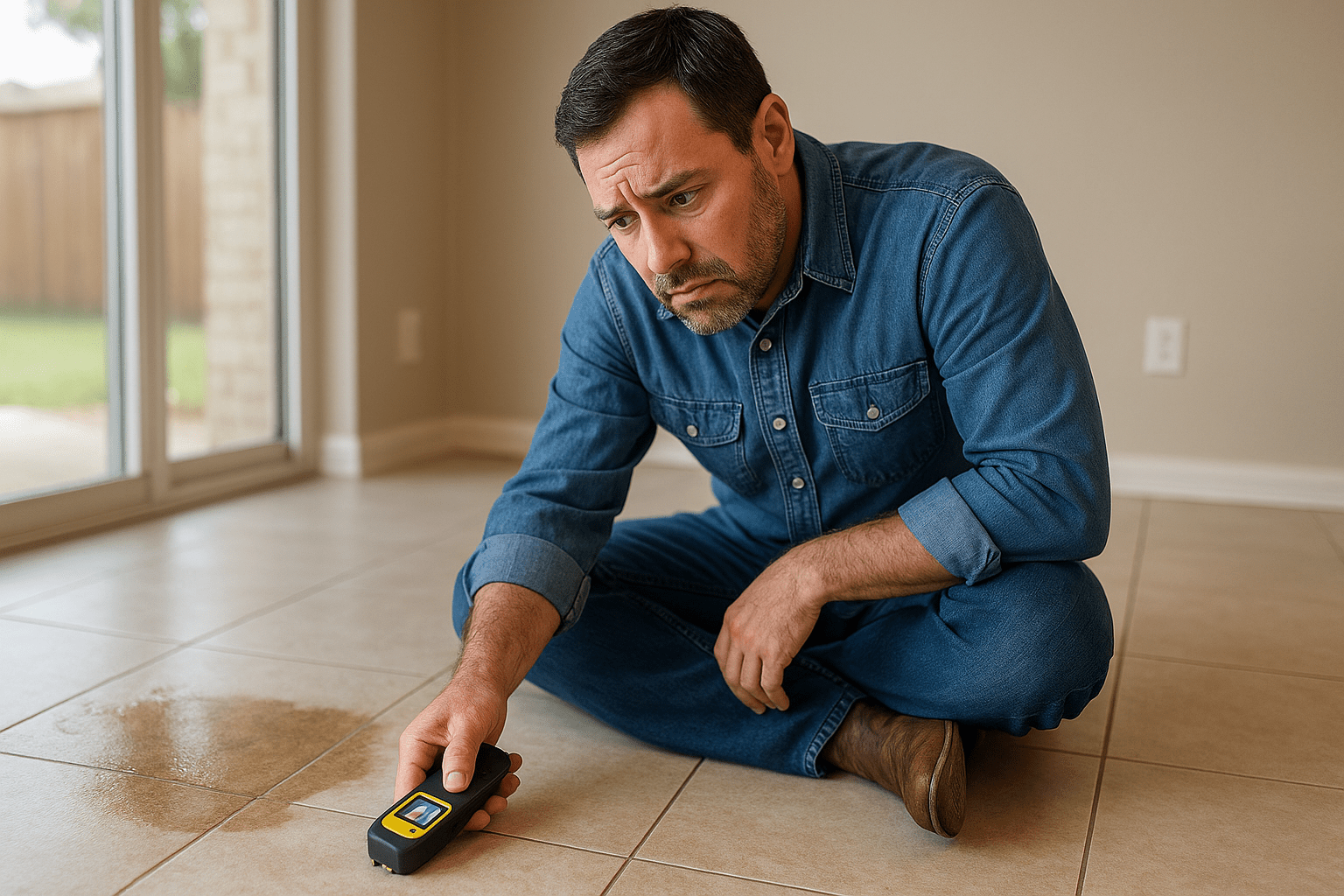
Slab leaks do not send a calendar invite. One day your floor feels toasty in a weird way. Then the next utility bill looks like it is trying to fund a new city park. Maybe you catch a musty odor that refuses to leave even after a deep clean. This guide breaks down the early slab leak signs Texas homeowners see most, the risks to your foundation and indoor air, plus the right first moves that stop the bleeding fast. I will also show how pros track leaks inside concrete without turning your home into a construction zone, the repair choices that make sense for different homes, and how to approach insurance like a calm pro instead of a panicked homeowner. If you need help now, our team at Blackhill Restoration handles water damage every day for real families in Central Texas. You can always reach our water damage restoration & emergency response team at any hour.
Common slab leak signs
Let us start with the signals that tip you off. Hot or warm floor spots are a classic clue, especially over tile or concrete. When a hot water line leaks under a slab, the heat radiates through the flooring above it. You might notice a patch that feels like the family dog chose a favorite nap spot, except it is the plumbing doing the cuddling. Leak detection specialists have documented this pattern for years, and it remains one of the fastest ways to suspect a hot water line issue. See the overview from American Leak Detection for a simple explanation of why surface heat gives the game away.
Next clue. A sharp spike in your water bill with no lifestyle change to explain it. No extra laundry. No new irrigation schedule. No surprise tenants. Just a jump in usage that sits there mocking your budget. Trident Plumbing explains that a continuous hidden leak often shows up first in billing since the meter records every drip even when you do not hear a thing.
Do not ignore stubborn musty odors, mildew notes, or visible darkening near baseboards. Moisture that wicks into drywall or wood creates a playground for mold. If you notice staining or fungal growth low on walls or right at the floor line, your slab may be wet beneath you. I wrote about this in our guide on how to spot hidden water damage, which covers the way odors and discoloration reveal what the eye misses. You can read that piece for more real world examples at spot hidden water damage.
Your ears offer clues too. If you hear hissing or a faint rush of water when all fixtures are off, do not chalk it up to your house wanting to be by a river. Techs listen for that very sound through concrete during inspections, because pressurized lines sing when they leak. The American Leak Detection resource also notes how listening equipment can isolate that noise pattern.
Watch the floor. You may see localized wet spots, soft sections in wood, or tile that begins to lift or buckle. Flooring adhesives fail when moisture intrudes, which causes that flat, tidy surface to warp or separate. That change rarely happens overnight without a water source below it. It is a visual red flag that calls for fast action.
One more long term signal involves your foundation or walls. Leaks under a slab feed moisture into surrounding soils. Texas soils often expand when wet, then contract hard during dry spells. That cycle places stress on your slab. Over time you can see new cracks in walls or floors or notice doors that stop fitting right. BillyGo and other plumbing pros caution that slab leaks and foundation movement sometimes go hand in hand. When that happens, the water problem becomes a structural problem. That is when small leaks get very expensive.
What to do immediately
First move. Stop the water. Find the main shutoff valve and close it. If you suspect a hot water line, switch off the power or gas to the water heater and close its supply valve. Cutting the water buys time and prevents more damage. The Texas Department of Insurance advises homeowners to act quickly to halt the source in order to limit damage and avoid further losses.
Second move. Document everything that is safe to document. Take photos and video of wet areas, floor changes, wall cracks, and any standing water. Snap the water meter reading before and after you shut off the valve if you can do so safely. Note dates and times. Save receipts for any emergency purchases such as fans, small pumps, or tarps. TDI guidance points out that this documentation supports your claim later and helps an adjuster understand what happened and when it started.
Third move. Begin safe drying and cleanup. Pull up small rugs or removable carpets that are damp. Open windows for airflow if outdoor conditions allow it. Use fans to move air across wet surfaces. Mold can begin growing within twenty four to forty eight hours after a moisture event. The Environmental Protection Agency calls for quick drying to reduce mold growth and protect indoor air quality. If the wet area is large or materials stay wet, bring in a restoration team.
Fourth move. Call for professional help. A qualified leak detection specialist can confirm the problem and narrow the location. A restoration team can handle moisture mapping, structural drying, and mold prevention. If you need a crew now, reach our water damage restoration & emergency response team at Blackhill Restoration. We work twenty four seven in Central Texas and coordinate with your plumber to move fast.
If you want to try a quick check before the plumber arrives, we wrote a guide with simple meter tests that can reveal a hidden leak. It covers the dye method for toilets, the meter wheel test for line leaks, and other easy steps. You can find it at hidden water leak detection tips. Keep safety first. Do not open slabs or dig without a pro on site.
How pros detect slab leaks
Good detection starts with listening. Acoustic gear maps the unique sounds a pressurized line makes when water escapes into soil or voids. A tool called a leak noise correlator places sensors along the plumbing run. Software compares the time it takes for the sound to reach each sensor to estimate the location. The concept sounds geeky, but it prevents random cuts. You can read an entry about leak noise correlators that explains the method in simple terms on Wikipedia.
Thermal imaging gives another layer of evidence. Infrared cameras show temperature differences on floor surfaces, which helps locate hot water leaks. Inspectors scan tile or concrete for hot zones that match plumbing paths. InterNACHI has a handy primer on infrared reporting that shows how temperature mapping reveals what eyes cannot see through a slab. Thermal scanning is fast, non destructive, and especially useful for hot water lines under concrete.
Pressure tests confirm what listening or imaging suggests. The plumber isolates sections of the system, then watches for pressure drops that indicate a leak. Electronic methods sense subtle changes in current or micro voltage caused by moisture. These tests are valuable when chasing leaks that do not create obvious sounds or heat. Leak Chasers describes how multiple approaches together cut time and reduce guesswork.
Some cases call for advanced methods. Tracer gas detection uses a safe gas mix introduced into the pipes, which then escapes through the leak. Sensors above the slab pick up the gas to pinpoint the spot. Ground penetrating radar can map utilities or voids to support planning before any cutting. These techniques cost more and are less common for smaller homes. They still have a place when other tools leave questions. PCLA in the United Kingdom has a plain language guide on when thermal and other methods make sense.
Pros rarely rely on a single tool. The fastest results come from layering methods. A tech listens, scans, tests pressure, then confirms with one more pass. That mix narrows the target zone and limits invasive work. Leak Chasers notes that a combined approach reduces unnecessary penetrations and speeds up the whole job. Fewer holes. Faster repairs. Less stress for you.
Slab leak repair options
Once the leak is confirmed, the repair conversation starts. The right path depends on the age of the system, the pipe material, the number of leaks found, the layout of the home, and your long term plans. Think short term fix versus long term stability. Your budget matters too, but so does the risk of repeat leaks. Here are the common choices you will hear about during a site visit.
Spot repair means cutting the slab right above the leak, exposing the pipe, and replacing the failed section. The benefit is speed when a single leak is located and the rest of the system looks healthy. The downside is cutting concrete, patching it after, then repairing flooring. It solves the immediate problem but leaves older piping under the slab in place. Karney Plumbing has a clear description of this process and when it works best.
Reroute or bypass creates a new path for that line through walls or ceilings. Plumbers often use modern materials such as PEX for these new runs. The existing slab line gets abandoned or capped. This avoids future slab leaks along that path. It replaces a weak section with a new run in accessible spaces. Repipe specialists often recommend this choice when pipes under the slab show age or when multiple leaks have appeared. Repipe dot com has an article that helps explain when reroutes beat opening concrete again.
Full repipe takes the reroute concept across the whole house. All main domestic lines get replaced with new material run through walls, ceilings, or attics. You stop relying on aging lines in buried concrete. This costs more upfront, but it cuts the chance of another slab leak in six months or a year. If your home has a known problem material or a history of repeat leaks, a full repipe is often the cleanest path forward. Repipe dot com discusses common questions homeowners ask about this choice.
Pipe lining or epoxy restoration can work when pipe interiors are stable enough to accept a coating. A resin cures to seal small leaks from the inside. Not every pipe is a candidate. Collapsed sections or large breaks do not respond to coating. Surface prep and application quality matter. Karney Plumbing notes that lining is a tool in the kit, but not a cure all.
Trenchless pipe bursting helps when an underground run outside the home is failing. A new pipe is pulled through while the old one fractures and expands. This method reduces the need to trench the entire yard. Access points still matter. Cost varies with depth and distance. It shines when you want less surface disruption compared to old school excavation. Again, Karney Plumbing provides a helpful walk through of these trenchless options.
What does all of this cost. Expect detection to range between a few hundred dollars up to the mid hundreds for typical homes. Spot repairs often land in the hundreds or low thousands depending on depth, flooring, and site complexity. Reroutes and repipes vary widely with size of home and material choice, from several thousand into the tens of thousands for large or complex projects. Repiping Plumbers offers a general cost overview, but quotes matter. Your layout and access drive the final number.
| Repair option | Where it shines | Tradeoffs to consider |
|---|---|---|
| Spot repair | Single known leak in a healthy system | Involves cutting slab and floor patching later |
| Reroute or bypass | Old slab lines or repeat leaks on one run | New piping through walls or ceilings, small access cuts |
| Full repipe | Multiple leaks or aging problem material | Higher upfront cost, but stops future slab leaks |
| Pipe lining | Eligible pipe with minor leaks | Not suitable for collapsed or badly broken sections |
| Trenchless bursting | Underground exterior runs that need replacement | Access points required, cost depends on layout |
Foundation and indoor air risks
Texas soils bring a special wrinkle to slab leaks. Many neighborhoods sit on expansive clay. That soil swells when wet, then shrinks when dry. A slab leak adds a constant drip of moisture to one section under your home. The soil expands in that pocket, which transfers force into the slab. Cracks show up. Doors stick. Settlement patterns change. Leon Foundation Repair shares a simple primer on expansive clay in Texas that explains why extra moisture is such a problem. This is why early Texas slab leak detection matters. Quick action does not only save water. It protects your foundation from stress that starts below your feet.
Indoor air quality suffers too. When slab leaks wet the base of walls and floors, mold spores find the conditions they want. Warmth. Moisture. Food sources in paper and wood. The EPA notes that mold can begin within twenty four to forty eight hours after water exposure. Musty odor is often the first sign. Sensitive people feel symptoms faster. Those with asthma or allergies may react quickly. Control moisture or expect mold growth to accelerate. If you see visible mold or a large area stays damp, call a remediation pro. Our post on hidden damage expands on the early checks you can do at home. It is right here again for quick reference at spot hidden water damage.
Some homeowners try to mask odor with candles or room sprays. That treats the nose, not the cause. Focus on drying the structure. Fix the leak. Move air across surfaces. Pull moisture from the air with dehumidifiers. Then test for remaining moisture before closing walls or installing new flooring. A restoration team uses moisture meters and thermal imaging to confirm drying, so you do not trap water inside your home.
Insurance and claims in Texas
Insurance feels confusing in the middle of a leak. The Texas Department of Insurance offers clear guidance. Most homeowners policies cover sudden and accidental water damage, like the outcome of a burst pipe. Many policies exclude slow, ongoing seepage that was not reported or addressed. Mold coverage often hinges on whether the original water event was covered along with how quickly you acted to reduce damage. Call your insurer as soon as you discover the problem. Send your photos and videos. Keep receipts for emergency mitigation work since temporary repairs are encouraged to protect the home.
Ask your agent about a foundation or slab endorsement on your policy. Some Texas policies include special endorsements that help with tear out, access, or foundation work up to set limits. The terms vary by carrier, so ask direct questions. The TDI site has public guidance on endorsements related to foundation and slab coverage in Texas. The key point is simple. Early reporting helps. So does good documentation.
We wrote a homeowner friendly guide that explains mold coverage questions for Texas. Read it before you talk with an adjuster so you can use clear language and avoid common pitfalls. You can find it at insurance & mold coverage in Texas. Every policy is different. If you run into a dispute, TDI offers complaint resources and consumer help lines.
One more tip. Do not rush permanent repairs before an adjuster inspects major damage. Temporary measures to protect the home are fine. Keep receipts and photos so the carrier sees what was done, when it happened, and why it was necessary.
FAQs
What are the first signs of a slab leak
Warm floor spots from hot water lines, a sudden spike in the water bill, musty odors near floors, hissing or running water sounds when fixtures are off, or flooring that buckles without a spill. Cracks in walls or floors can follow if the leak continues. American Leak Detection outlines these early signs, and local plumbers in Texas echo the pattern.
Why do slab leaks happen in Texas more often
Plenty of Texas neighborhoods sit on expansive clay that moves with moisture changes. Leaks feed soil movement under a slab, which stresses pipes and structures. Temperature swings and aging materials add to the risk. The soil factor makes Texas slab leak detection a must, since moisture below a slab affects both plumbing and foundation.
Can I find a slab leak myself
You can run simple checks that raise or lower suspicion. Shut off all fixtures then watch the meter. If the small leak indicator still spins, water is moving when it should not. Feel for warm spots on tile or concrete. Listen for a faint hiss in quiet rooms. These checks help but do not replace pro tools. For do it yourself steps, visit our guide at hidden water leak detection tips.
Will homeowners insurance cover a slab leak in Texas
Policies often cover sudden and accidental water damage. Long term seepage or neglect is usually excluded. Coverage for tear out and foundation access varies by policy and by endorsement. Contact your insurer quickly, document everything, and ask about any slab or foundation endorsements. TDI maintains current advice for Texas homeowners on these topics.
How fast does mold grow after a slab leak
Under the right conditions it can start within twenty four to forty eight hours. That is why early drying and cleanup matter. Remove wet materials when possible. Increase airflow. Use dehumidification. The EPA provides consumer guidance on moisture and mold growth timing along with health effects for sensitive groups.
What repair options exist for leaks under concrete
Spot repair for a single leak, reroute or bypass for a run that keeps failing, full repipe when the whole system needs replacement, pipe lining in select cases, and trenchless pipe bursting for exterior runs. Repipe dot com and Karney Plumbing offer clear overviews of each method. A site visit will match the option to your home.
How much does detection and repair cost
Detection often runs a few hundred dollars. Spot repairs reach into the hundreds or low thousands depending on depth and flooring. Reroutes and repipes range from several thousand up to higher figures for large or complex homes. Repiping Plumbers shares general ranges, but site specifics control the final number. Ask for a written estimate after an inspection.
Can I keep living in the home during repairs
Most families do. Water service may be interrupted during specific steps. Noise from cutting and drying equipment is part of the process. Crews isolate work areas to limit dust and debris. Full repipes may require short periods without water. Your contractor should map out a schedule that fits your routine as much as possible.
Do slab leaks always require cutting concrete
No. Reroutes often avoid opening the slab. Exterior runs can be replaced with trenchless methods. Even when a slab cut is needed, detection tools help keep that cut small. That is the value of acoustic, thermal, and pressure methods used together.
How can I reduce the chance of a future slab leak
Fix the current leak quickly. Insulate hot water lines where accessible to reduce thermal stress. Address high water pressure with a regulator if your plumber recommends it. Consider reroutes or repiping when lines show age or repeated failures. Watch your bill and your floors for early signs. Fast action prevents a small leak from turning into a foundation or mold problem.
Service across Central Texas
Our team at Blackhill Restoration responds across Central Texas every day. If you live in Bryan, College Station, Temple, Waco, or nearby towns, we can help. View our service map and contact options at Blackhill Restoration , Central Texas service area. Need city level help now. Visit the page for water restoration in Bryan, TX. If you prefer the phone, call 800 931 1962 for twenty four seven response. A real human will answer. A tech will follow.
During a slab leak, fast drying stops secondary damage. Our crews bring thermal imaging, moisture meters, and drying gear that removes water from floors, walls, and cavities. We coordinate with your plumber, document the loss for your adjuster, and help you understand what happens next. The goal is a safe, dry home without extra drama.
If you only remember one thing from this guide, let it be this. Act early. Small signs usually show before a slab leak becomes a money pit. Warm floor spots. A water bill that makes no sense. A musty odor that will not quit. Texas slab leak detection is not a luxury. It is a smart first move that protects your foundation and your indoor air. If you need help right now, call Blackhill Restoration at 800 931 1962 or reach our team through the site. We will take it from there.
References and helpful reading
American Leak Detection on slab leak signs
Trident Plumbing on water bill spikes
BillyGo on slab leaks and structural effects
InterNACHI on thermal imaging
Leak noise correlator overview
Expansive clay in Texas
EPA on mold and moisture
Texas Department of Insurance on coverage
TDI order with endorsement references
Repipe Specialists slab leak FAQ
Repipe Specialists on repair options
Repiping Plumbers on cost ranges
Karney Plumbing on repair methods
Leak Chasers on detection methods
PCLA on thermal and tracer gas
Need fast help. Call 800 931 1962 or reach our water damage restoration & emergency response team now. We are ready to help your home dry out and stay that way.