
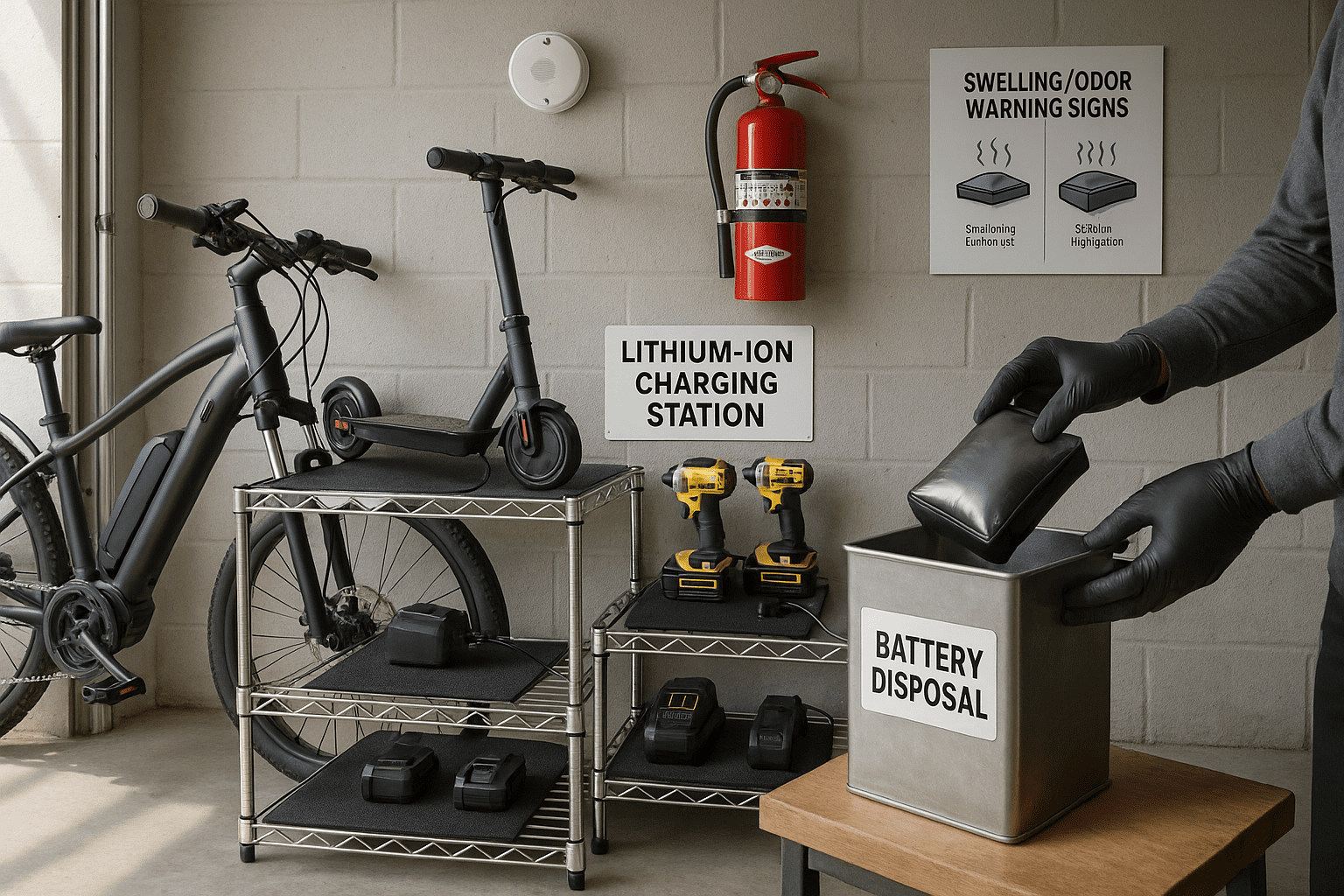
You brought an e bike home. Your teenager is saving for an e scooter. Your garage is full of cordless power tools. That is modern life. It also means rechargeable packs everywhere. This guide gives you a simple plan to set up a safe charging area, spot lithium ion battery thermal runaway signs early, store packs the right way, plus safe disposal of lithium ion batteries without risking your home. I run a restoration company. I have cleaned the aftermath too many times. So I am going to be blunt where it counts, then show you how to keep the fun wheels rolling without lighting up your living room.
Thermal runaway at home
Thermal runaway sounds like something from a sci fi movie. It is not. It is a runaway heating loop inside a rechargeable cell. Heat rises inside the battery faster than it can escape. Internal reactions speed up. The pack vents flammable gases that can ignite. In a small room this can escalate fast.
Why you should care at home. E bikes, e scooters, and power tools use high energy lithium ion cells. They pack a punch for their size. That is great for range and torque. It is unforgiving when a pack fails. Charging indoors multiplies the risk. Sleeping while charging doubles the danger. Thermal runaway in a micromobility pack can throw flames, hot metal, and toxic smoke. The U S Fire Administration explains the risks, the warning signs, and why some packs re ignite even after flames go out. Read their overview for a solid foundation on what is happening inside the pack and why fast action matters. USFA guidance is the national benchmark.
What tips packs into trouble. Physical damage from a crash or drop. Cheap or mismatched chargers. Counterfeit or modified packs. Charging near heat sources. Water intrusion. Manufacturing defects. A single weak cell inside a series string can start the spiral. The warning signs below are your early alerts. Catch them and you cut your risk by a mile.
Warning signs you can sense
You do not need a lab. Your senses give you the most reliable early cues. If one or more of these show up, stop using the device. Move people away. Treat it as a serious hazard.
- Sudden or rising heat during use or charging. If it is too hot to touch, that is a red flag.
- Bulging, swelling, or blistering on the pack or device case. Any change in shape is a problem.
- Discoloration on the case or charger. Melt marks near connectors.
- Hissing, popping, whistling, or crackling sounds.
- Sharp or unusual chemical odor that was not there before.
- White or gray wispy smoke or vapor near the pack. If you see smoke, conditions are already dangerous.
New York State’s Buy Safe Charge Safe campaign echoes these same cues for everyday users. Their public safety push focuses on spotting odd noises, strong odors, and visible fumes as get out now signals. You can read the state messaging on the Governor’s site.
If you see smoke or flames, evacuate at once. Call 911. Do not waste time filming a viral video. Life safety wins every time.
Set up a safe charging area
Pick the right spot first. Best case, charge outside in a covered space that keeps rain off the charger. A shed or a carport works. Keep clear of vehicles or anything that burns. If you must charge indoors, use a flat, dry, noncombustible surface such as tile, concrete, or metal. Keep the charger away from soft furniture, bedding, curtains, and cardboard. Leave space around the setup for airflow. Never block an exit. Never charge in a hallway or sleeping area.
Use the right gear. Plug the factory charger directly into a wall outlet. Skip power strips or extension cords. A long run adds heat and creates loose connections. Charge only one device per outlet. Keep the charger and pack uncovered so heat can vent. Follow the manual. Use only the charger that came with the device or an exact replacement from the maker. No mix and match packs. No cheap chargers from a random online seller. A mismatched charger can overcharge a pack. That is how many failures start.
Watch while it charges. Supervise the session. Do not charge overnight. Unplug when full. Keep children and pets away. Inspect the cord and the pack before you start. If you smell a strong chemical odor or feel unexpected heat, stop and move away.
Big city fire services put it plainly. The FDNY has urged residents to store and charge outside when possible due to a surge of lithium ion related fires. See their public messaging on the FDNY site. The U S Fire Administration also offers a simple one page handout for households that covers charging steps you can post where you charge. Grab the handout from USFA. For e bikes and e scooters, the Electrical Safety Foundation has consumer friendly charging tips on their site.
Quick tip if your space is small. Use a metal tray or a concrete paver under the charger and pack. Keep a clear zone around the setup. Do not park the device in front of your only exit while it charges. That is a trip hazard during a rush to get out.
Smart storage at home
Store packs and devices at room temperature. Keep them away from direct sun or heaters. Do not leave them pressed against cardboard or fabric. Allow space around the pack. Keep storage areas clear of exits.
Check your packs on a schedule. Look for dents, swelling, leaks, stains near seams, or odd odors. Touch the pack after it has been sitting. Any warmth without recent use is a warning sign. Check cords for cuts or loose prongs. If a pack got soaked, let it dry fully before any attempt to charge. If you see any of the warning signs in this guide stop using the pack and move it to a safe isolation area while you arrange proper disposal.
Keep gear original. Do not modify packs. Do not swap parts between brands. Do not charge a pack with an aftermarket charger unless the maker states an exact match. That shortcut saves dollars up front, then costs you your garage. UL Solutions has a consumer page that explains why certified systems matter for micromobility safety. Their summary ties back to current safety standards and code updates. Read it on UL Solutions.
Longer storage is simple. Aim for a partial charge. Middle of the gauge is fine. Store in a cool dry place. Check the pack monthly. Top up slightly if it falls low. Never leave a dead pack for months. Cells can drift out of balance. That makes the next charge risky.
Buy safer devices and batteries
Safety starts at the shopping cart. Look for third party certification by a Nationally Recognized Testing Laboratory. For e bike systems the benchmark is UL 2849. For personal micromobility devices such as hoverboards the benchmark is UL 2272. For light electric vehicle battery packs look for UL 2271. One more tip that buyers miss. A label that says tested to UL is not the same as certified. You want a certification mark from an NRTL. It proves a full evaluation to the standard with production oversight. That is what reduces risk.
How to spot legit certification. Scan the device for a certification mark from UL, Intertek, TUV, or another NRTL. The mark is usually near the power input or on the battery compartment. Match the model number on the label to the listing you can find on the lab site. If a seller cannot or will not provide this, walk away. An NRTL evaluated system costs more. It buys you sleep at night.
Codes are catching up. The 2024 International Fire Code and NFPA 1 added listing requirements for micromobility devices. New York City now requires third party certification for devices and batteries sold in the city. Momentum is clear. The goal is fewer fires. You can read more on UL 2849 services and the role of an NRTL on UL Solutions.
Buy from reputable retailers. Keep the receipt and the manual. Register your device. Watch recall notices from the maker and the Consumer Product Safety Commission. Cheap packs from unknown brands show up with tempting prices. They also show up in news photos after a fire. Your call.
If a pack overheats
Your goal is simple. Keep people safe. Keep fire from spreading. Move fast with calm steps.
Step one. If it is safe, unplug the charger or turn the device off. Do not lean over a hissing pack. Do not poke it. Distance buys you time.
Step two. Move it away from anything that burns. If you can do so safely, slide or carry it onto a noncombustible surface. Outdoors is better. Use thick gloves or a tool to avoid handling a hot case. Do not set it near a vehicle. Keep it away from doors you may need to use.
Step three. Monitor from a safe distance. If you see smoke, flames, or intense heat, evacuate now. Call 911 from outside.
Step four. For a small fire that has just started and you have a clear exit, use a portable extinguisher rated ABC or CO2. Cooling is key with lithium ion. Firefighters often apply large amounts of water to cool a pack below run rate. That is different from lithium metal which reacts with water. As a homeowner your priority is to get out. If you try anything, keep your path to the door clear and short. The Society of Fire Protection Engineers has a good myth buster on water use for lithium ion fires on their site. The U S Fire Administration stresses rapid evacuation because packs can re ignite after flames seem out. They repeat that message in their Battery Fire Safety guidance.
What not to do. Do not cover a hot pack with a blanket. You trap heat that fuels the runaway loop. Do not move a flaming pack through a tight hallway if you can avoid it. Do not throw it in a tub. Splashing spreads burning electrolyte. Distance, cooling, and professional response win.
Safe disposal and recycling
Never put lithium ion batteries or devices in household trash. Never drop them in curbside recycling. That practice causes fires in garbage trucks and sorting facilities. The Environmental Protection Agency states this clearly. They also give a simple prep checklist for drop off. Read their consumer page on EPA.gov.
Prep a pack for drop off. Tape the terminals with clear packing tape or electrical tape. Or place each pack in a clear plastic bag. This prevents short circuits in transit. Keep each battery or device separate. Do not toss loose packs in a box that can bounce around in your trunk. Then take them to a household hazardous waste site or a certified battery recycler.
Where to take an e bike battery. The bicycle industry created a national network that accepts end of life e bike packs through Call2Recycle. Use their locator to find a participating shop near you. The program has grown past two thousand locations in the United States. It has already collected tens of thousands of pounds of spent packs. That convenience cuts home fire risk. Industry updates show the growth of the program and the weight collected. A recent milestone was covered by Bicycle Retailer in this announcement.
Damaged, defective, or recalled packs need special handling. Many drop off sites cannot accept them over the counter. State agencies give specific instructions for these DDR packs. New York’s Office of Homeland Security and Emergency Services lists options and kits for shops that must isolate and ship them safely. See their guide on the NY DHSES site. Your county HHW program will have similar rules. Call first.
Search tips if you are typing battery recycling near me. Use the Call2Recycle locator for e bike packs. Check your county HHW website for small packs from tools and electronics. Some big box home centers accept smaller packs through partnership drop bins. Confirm first, since policies change. Bag or tape each pack before you leave home.
After a battery fire
Lithium ion battery fires do not just burn the room. They leave corrosive smoke and fine particulates that attack metal, electronics, and HVAC interiors. White or gray smoke carries metal oxides and acidic byproducts. Soot sticks to surfaces and starts corrosive reactions within hours. Breathing that mix is rough on lungs. Wiping it with a dry cloth smears residues deeper into paint and fabric.
Professional cleanup protects your home and your health. Firefighters cool the pack and stop the blaze. The next steps involve secure containment, large scale deodorization, soot removal, and filtration. HVAC systems need attention to prevent cross contamination across rooms. Our Smoke Damage team uses HEPA filtration and targeted cleaning agents to neutralize acids and remove residues. For a walk through of how smoke moves through a home and why HVAC cleaning matters, read our post Understanding Smoke Damage and Its Aftermath.
If you had a battery related fire, we can help secure, clean, and restore your property. We respond 24 hours a day. Get service details on our Fire Damage Restoration page. Insurance questions come next for most families. We wrote a plain language guide to speed documentation and approvals. Read it here Navigating Insurance Claims for Restoration.
Texas battery resources
Live in Texas. Keep the national guidance from EPA and Call2Recycle as your base. Then check your county Household Hazardous Waste site for drop off hours and accepted items. Many counties host periodic events for small electronics and battery packs. Bring packs taped or bagged as described above.
Frequently asked questions
What are the first signs of lithium ion battery thermal runaway at home
Heat that rises fast. A pack or device that becomes too hot to touch. Swelling or bulging on the pack case. A strong chemical odor. Hissing or popping sounds. White or gray wispy smoke. At the first sign, stop using the device and move people away. If you see smoke or flames, evacuate and call 911. The U S Fire Administration and New York’s Buy Safe Charge Safe campaign both list these cues for households. You can review USFA’s summary on their site and the state campaign page on ny.gov.
Where is the safest place to charge an e bike battery
Outside when you can. A covered area with no combustibles nearby is ideal. If you must charge inside, set up on tile, concrete, or metal with open space around it. Keep the setup away from exits. Plug the factory charger directly into a wall outlet. Supervise the session. Do not charge overnight. FDNY has urged residents to store and charge outside when possible due to rising incidents. See their PSA on the city site. USFA’s printable handout also covers safe charging basics on USFA.gov.
Can I use water on a lithium ion battery fire
Your first move is to evacuate and call 911. Firefighters often use large amounts of water to cool lithium ion packs because cooling stops the runaway reaction. That guidance is different from lithium metal which reacts with water. If a small fire starts and you attempt to act, use a portable ABC or CO2 extinguisher and keep your exit clear. Prioritize life safety. The Society of Fire Protection Engineers published a piece that explains the water cooling concept for lithium ion packs on their site.
How do I dispose of an old or damaged e bike or power tool battery
No household trash. No curbside recycling. Tape the terminals or place each pack in a clear plastic bag. Take them to a household hazardous waste site or a certified drop off partner. Use the Call2Recycle locator for e bike batteries on their site. Damaged or defective packs may need special handling kits. Check your local HHW or your state guidance. The EPA explains the basics on preparation and drop off on EPA.gov.
Which certifications make e bikes and their batteries safer
Look for NRTL certification for the whole system. For e bike systems the standard is UL 2849. For personal micromobility devices the standard is UL 2272. For light electric vehicle battery packs the standard is UL 2271. A mark that says tested to UL is not the same as certified. Seek an NRTL certification mark. UL Solutions has a consumer page that explains these standards on their site.
A few pro tips you will actually use
Park e bikes where you can roll them straight outside if the pack gets hot. Treat a strong chemical odor as a get out cue. Allow packs to cool to room temp before charging after a ride. Do not toss hot packs into a trunk in summer. Keep pets from chewing cords. Put a smoke alarm in rooms where you charge. Keep an ABC extinguisher near the exit door. Teach teenagers the warning signs. Make safe charging part of your house rules.
Why I care as a restorer
I love the tech. I also see the damage it leaves behind when things go sideways. Battery fire smoke is different. It is sticky, acidic, and full of fine particles. It slips into wall voids and supply ducts. It coats plastic and metal with corrosive residue that eats wiring and electronics. Cleaning it right requires containment, filtration, and chemistry that neutralizes acids. That is what we do every day. If you need help after an incident, call a firm that understands the difference. We are a one stop certified team. See all of our Restoration Services to understand how we bring homes back after fire, smoke, water, or storm.
Image alt text ideas for your post
- e bike battery charging on noncombustible surface
- bulging lithium ion battery warning sign
- taping terminals before battery recycling drop off
You do not have to fear your gear. Set up a smart charging spot. Pick certified devices. Watch for lithium ion battery thermal runaway signs. Recycle old packs the right way. Small steps stack up. That is how you keep the ride fun and your home safe.