
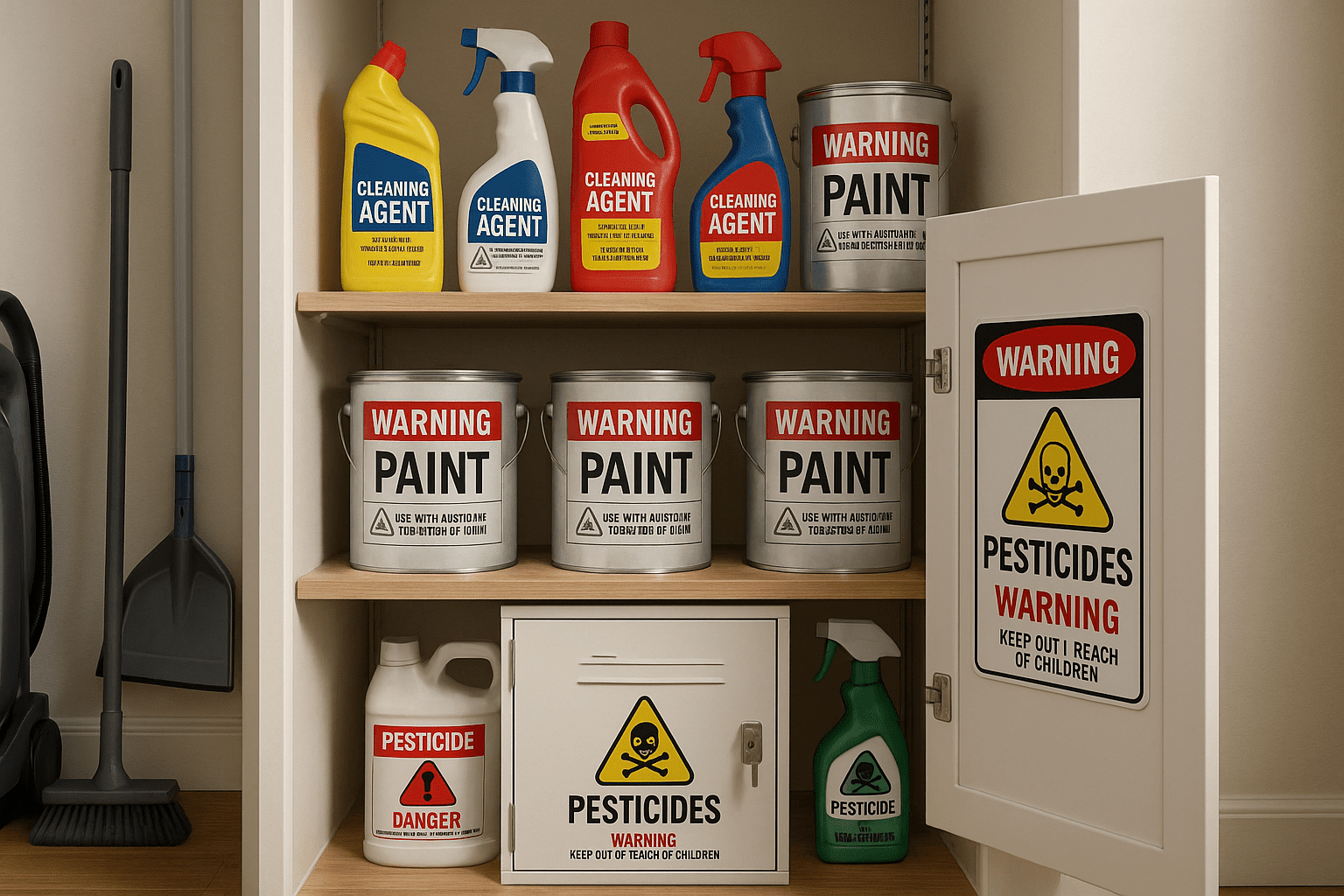
Let’s talk about the stuff under your kitchen sink, that closet exploding with cleaning bottles, and those mysterious jugs in your garage you swear you need “just in case.” Chemical storage matters. The wrong move can turn your home into a toxic minefield, hidden hazards lurking in plain sight. Accidents like poisonings, fires, or hazardous spills disrupt lives, cost big bucks, and can destroy precious memories along the way. If you want to avoid calling the fire department, the restoration pros, or a hazmat squad, you’re in the right place. This guide cuts through the confusion, exposes mistakes people make every day, and brings you real-world household chemical safety tips you won’t forget. Safe, practical solutions just ahead.
Why Household Chemical Safety Is No Joke
People buy colorful bottles of cleaning sprays, pesticides, polishes, paint thinner, weed killers, pool chlorine, and more without a second thought. After you lug them home, it’s easy to shove them in whatever cabinet or shelf is free. No time to read the label. Too busy to lock up chemicals. Let’s face it, most folks treat safety warnings as an annoying afterthought.
The risks hit hard. Fumes rise from badly stored chemicals, filling the air with invisible hazards. Accidents involving mixing incompatible products can lead to deadly gases. Curious toddlers open an unlocked door and swallow something dangerous before you even finish that cup of coffee. Pets get into antifreeze and pesticides. Fires start with a spark near flammable products not properly tucked away.
Property damage, life-threatening injuries, and gut-wrenching scares are not rare incidents. Poison Control gets over two million calls a year related to household exposures. If you restore homes for a living like I do, you know scenes of chaos, ER trips, entire rooms gutted from fires, and families traumatized by preventable accidents. Most tragedies start with habits you can break right now.
Best Chemical Storage Tips for a Safe Home
The first line of defense for household chemical safety starts with where you keep these products. Proper storage stops accidents before they ever happen. So where do things go wrong?
Most people cram chemical bottles in places they don’t belong. Someone grabs a jug of bleach, tosses it under the kitchen sink, and covers it with a stack of grocery bags. A kid’s juice box shares shelf space with a can of insect spray in the pantry. The garage shelf is loaded with mismatched cans stacked higher than your last bar tab.
Get this: storing chemicals in original containers saves lives. You always know what’s inside, with clear labels, safety warnings, and the little skull-and-crossbones icon you shouldn’t ignore. Mystery liquids in unmarked bottles turn curious kids into detectives, never a good idea. Resist the urge to transfer cleaning solutions into unlabeled jars “just to save space.”
Location is everything. Choose cool, dry, and well-ventilated spots. Attics cook in the summer. Garages get freezing in the winter or humid and steamy. Heat boosts the risk of combustion and chemical breakdowns. Sunlight turns some products toxic before you can say “oops.”
Lock up anything hazardous. Use cabinets designed for chemicals or slap on a sturdy childproof lock, even if you think “my kids are old enough to know better.” Curiosity isn’t something we grow out of. High shelves keep products away from grabbing hands. Do not stack cleaning agents next to food or kitchen supplies. Cross-contamination does not just happen in restaurants. An accidental splash, a leaky bottle, or the classic “Oops, I grabbed the wrong one” mix-up sends people to the ER every week.
If you store chemicals in the basement, make sure it’s ventilated. Strong odors can seep up and circulate, affecting indoor air quality. Don’t block vents with boxes and random junk; let fumes escape. Never put chemicals near HVAC units, water heaters, or any device that sparks or heats. That’s how explosive stories are born, and restoration crews earn their keep.
How to Use Chemicals Safely Every Time
Grab a bottle, spray it everywhere, and call it a day. That’s the playbook for a lot of homes. The instructions are tiny, directions a mile long, and sometimes in a different language. People skip reading, then mix products together without a second thought.
Huge mistake. Some combinations release poisonous fumes. Bleach and ammonia? That is a recipe for disaster. Don’t make a science experiment out of housework. Always read the label from top to bottom before the first spray or pour. Those long paragraphs include everything you need to know, especially about what not to do.
Gear up for battle, not ballet. Gloves protect skin from burns, rashes, and long-term exposure to harsh solutions. Eye protection prevents accidental splashes from ruining your day (or your sight). Masks keep you from inhaling toxic particles or gases, especially in poorly ventilated areas.
Open windows when cleaning. Use fans to keep the air moving. Avoid spraying chemicals when your home is closed up tight. Lingering fumes don’t just smell bad, they pollute your air, trigger allergies, and cause headaches. After you finish, ventilate for at least thirty minutes, longer if you used anything with heavy solvents or bleach.
Keep open flames and smoking materials away when using flammable products. One stray spark near paint thinners or aerosol cans sends things sideways fast. Read labels for specific warnings about temperature, sunlight, and what to avoid.
Some products require mixing with water or another agent, never guess the ratio or substitute substitutes unless the label says so. Even switching spray tops between brands can be a bad move, as leftover residue may trigger dangerous reactions. Consistency saves you money, time, and a call to 911.
Childproofing: Keeping Kids and Pets Safe
Kids have radar for forbidden things. Dogs and cats get curious about strange new smells. If you think putting a bottle behind closed doors is safe enough, you’re playing with fire.
Any area storing chemicals must stay locked. Cabinets with safety latches add a barrier, so even the most determined toddler or golden retriever comes up empty. Place high shelves well out of reach, not just above a child’s eye level. Kids climb, and the tallest chair instantly becomes a chemical-hunting ladder.
Education works. Tell children directly, in plain language, what chemicals are, what they do, and why touching or tasting them is a bad idea. Use age-appropriate warnings, not scare tactics. Explain what those hazard symbols mean; they may look like pirate flags, but they spell trouble. Teach kids to call a trusted adult if they see a broken bottle, odd spill, or unfamiliar spray.
Store chemicals separately from toys, snacks, pet treats, or anything else remotely edible. One wrong grab costs more than a ruined dinner. Secure loose powders, laundry pods, capsules, and gels that look like candy or toys. Use child-resistant packaging when available, and never trust it alone. Adult supervision always wins.
Keep garage and basement doors locked if these spaces store household chemicals. Remove keys or hide them where only responsible adults can access. Even smart teens get it wrong sometimes. You want simple, fail-proof barriers between dangerous products and curious hands or paws.
Dealing with Chemical Spills and Bad Disposal Habits
One leak or unexpected splash can turn a dull Saturday into a full-blown hazardous cleanup. When accidents happen, speed is the secret weapon. Put on gloves, protect your eyes, and avoid contact with bare skin. Use absorbent rags or paper towels to contain liquid. Scoop solids directly into disposable containers. If fumes are strong, leave the area and let the air clear before returning.
Use soap and water only if the product label says it is safe, and never attempt to neutralize a chemical unless you know exactly what it is. Mixing household products to “cancel out” a spill can create more problems instead of solving them.
Never hose chemicals down the drain, toilet, or outside into the dirt unless local waste authorities approve it. Many household chemicals damage pipes, destroy septic systems, or seep into ground water. Certain products like paint, pesticides, old gasoline, batteries, and solvents must be taken to a hazardous waste facility or a community drop-off day. Call your city or county for the next available disposal time.
Label containers before tossing, especially when partially full. Keep incompatible chemicals apart in your trash. Acids and bases, fuels and oxidizers, these pairs can spark fires or release fumes if mixed. If you’re unsure, do not dump it. Wait for the professionals.
For larger spills or if in doubt, leave the area, close the door behind you, and call specialists. No chemical disaster is worth risking your lungs or eyesight.
First Aid: What to Do When Something Goes Wrong
When chemical accidents happen, seconds matter. Keep the Poison Control Center number (800 222 1222) taped above your phone or programmed into your contacts. Quick thinking can mean the difference between a scary story and a tragedy.
If a chemical splashes on your skin, rinse under running water for at least fifteen minutes. Remove contaminated clothing. If it gets in your eyes, flush immediately with cool water; do not stop to read the label first, just rinse and rinse.
For accidental ingestion, never force vomiting unless a medical professional tells you to. Have the product container on hand for emergency responders. They need to know what was swallowed to treat the problem correctly.
If you inhale fumes and begin to cough, wheeze, or feel dizzy, get to fresh air immediately. Call emergency services if symptoms don’t stop after stepping outside. Some chemical inhalation injuries take time to appear, so do not wait for things to get worse.
Call 911 without second thoughts for severe reactions. Keep pets out of contaminated areas and take them to a vet as soon as possible if they show any signs of distress after exposure.
You can find excellent first aid advice on your local health department or government sites. These details often match the label instructions but offer more context, plus, they’re based on real-world poison control experience.
Common Mistakes That Create Hazards
Think safety slips only happen to “other people?” Most chemical accidents begin with small, sneaky mistakes. Throwing out paint thinner with regular trash. Forgetting to close the lid tight, leading to slow leaks. Letting old, forgotten jugs collect dust right next to the water heater. Using empty drink bottles for “just a little leftover bleach.” Skipping the warnings and thinking “it’s just cleaning spray.”
Maybe you store everything in the garage by the gas can. Maybe your laundry detergent sits by last night’s dinner leftovers. House guests, neighbors’ kids, even your friends can all stumble into exposed hazards, sometimes without you realizing it.
Forgetting about product expiration dates is a classic trap. Chemicals can lose effectiveness or turn into toxic byproducts long past their prime. Check labels, and if you can’t read the date, replace the product. Never combine two old bottles just because one seems half full.
Never leave open containers around, even for a minute. One stray gust of wind, one curious animal, or one distracted phone call is all it takes. Keep your workspace clear when using chemicals; accidents like spills, splashes, and wrong grabs happen when surfaces are cluttered and you’re juggling multiple jobs at once.
These common mistakes sound small until your kitchen fills with smoke or the family dog ends up at the vet. Take a few extra seconds to do things the right way.
Training the Whole Household in Chemical Safety
Household chemical safety is not just an adult responsibility. Every family member, including older children and teens, needs hands-on training. Start by running “what if” drills. What if there’s a leak? What if someone feels dizzy after cleaning? Where’s the first aid kit, where’s the emergency number? Walk through these steps now, not in a real crisis.
Post warning signs on chemical cabinets or storage closets. Clear rules about who gets the key or the code save confusion later. Make sure everyone, from grandma to the babysitter, knows your safety plan. Consider regular reminders, especially around spring cleaning and moving seasons when accidents spike.
Inspect your chemical storage areas together once a month. Rotate out old bottles, wipe containers clean, and double-check locks. Involve kids by showing them how to recognize hazard symbols and teaching them that if it smells strong or looks strange, they need to ask for help.
Don’t forget about guests and visitors. Let people know where chemicals are stored, especially if they are helping with chores or bringing pets or small children into your home.
The Benefits of Getting It Right
Putting the right household chemical safety measures in place saves lives and property. It keeps air cleaner, keeps your plumbing and disposal systems running as intended, and cuts down on emergency calls. Safe chemical storage adds peace of mind. Families get to worry less about hidden risks and enjoy the home for what it’s meant to be, a place of comfort, not fear.
You avoid expensive mistakes. Fire, water, or contamination damage usually brings insurance headaches, repair costs, and days or weeks of interrupted life. Keeping chemicals stored the right way is cheaper than any trip to the ER, cleanup bill, or lost memories from a burned or ruined room.
Prevention takes minutes. Recovery can take months. Make every decision count, from storage to disposal to emergency response. If you want your home to run safely for years to come, these habits are as basic as locking your door or replacing dead batteries in the smoke detector.
Don’t let your home become the cautionary tale friends talk about at the next barbecue. Lock up those chemicals. Study the labels. Keep the number for Poison Control close. Build safety into your routine and keep your sanctuary accident free.
If you need professional help cleaning up chemical messes or have suffered property damage from accidents, reach out to a trusted specialist for restoration. Your well-being, and your peace of mind, deserve top priority. Feel free to contact our team for expert support or emergency restoration services.