
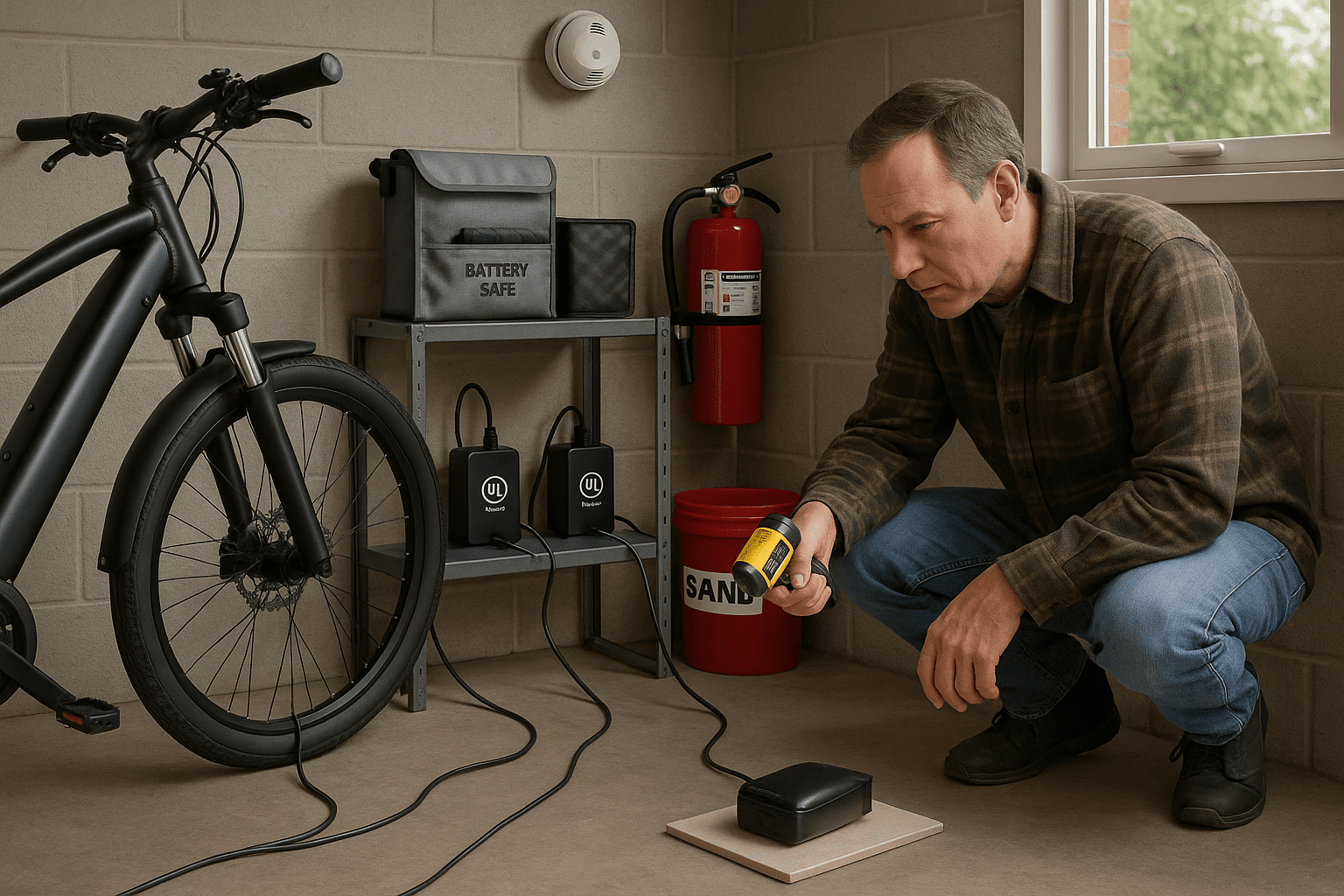
As a restoration pro who has cleaned up after more than a few battery flare ups, I can tell you this with a straight face. The smoke from a lithium battery fire hits hard. The heat moves faster than you think. The smell sticks to everything. This guide gives you practical home lithium battery fire safety steps for ebikes, scooters, phones, tablets, and those chunky power banks. You will see what to buy, where to charge, what to avoid, warning signs to act on, and what to do if a pack heats up or vents. Keep your gear. Keep your home. Keep your exits clear.
Why lithium battery fires spread fast
Lithium ion cells pack a lot of energy into a small space. When a cell fails, that energy can dump as heat. Heat drives more failure, which drives even more heat. That chain reaction is called thermal runaway. Once it starts, it moves fast. The smoke turns thick and toxic. A room can fill in seconds. This risk has been growing inside homes as more ebikes, scooters, power tools, laptops, and power banks plug in at night.
Big city fire departments have been sounding the alarm. FDNY reported a sharp rise in structural fires linked to lithium ion batteries in early 2025. The department launched a public service push that urges storage and charging outside when possible. Also never charge near exits or block your way out. That message sets the tone for every home, whether you live in a walk up or a ranch. You can read that PSA on the NYC site for context and urgency at FDNY PSA.
Different devices bring different risks. An ebike pack holds far more energy than a phone. A scooter pack sits inches from charging surfaces. A power bank travels in bags and pockets that trap heat. Household power tool packs get swapped and tossed into drawers. The hazard grows when chargers do not match. Cheap gear sneaks past safety testing. Charging takes place near pillows, curtains, cardboard, or stacked laundry. That is a recipe that does not need much spark to go wrong.
This is not scare talk. This is prevention talk. Your setup and your choices cut risk down to size. You do not need fancy gear. You need a hard surface, the right charger, a little patience, and a nose for early warning signs.
What safety certifications to look for
Start with safer products. A certified system signals that a third party hammered on it in a lab. That does not make the product invincible. It does raise the floor on quality and safety controls. Look for these marks and model identifiers before you buy. If you already own the device, check the charger, the battery case, and the product page for the listing file.
For ebikes, look for UL 2849 which covers the complete electrical system including drive unit, battery, and charger. Learn what that standard covers at UL 2849 overview. This is the gold standard right now for consumer ebike systems. Many cities use it as their benchmark for legal sale. That should be your benchmark for home safety as well. Some ebike batteries may also show UL 2271 on the battery pack itself. That standard focuses on battery packs used in light electric vehicles.
For e scooters and hoverboards, look for UL 2272. This standard addresses electrical and fire safety in personal mobility devices. It saw updates in 2024 to tighten battery and charger requirements. See the standard scope on UL Solutions at UL 2272 for e mobility, and an overview of the updates at ULSE standards update.
For general rechargeable battery packs used in household or commercial devices, the relevant safety baseline is UL 2054. You will see that mark on many standalone battery packs and some power banks. You can review the scope on the ANSI listing page at UL 2054 scope.
Now for the part most folks skip. Verification. Counterfeit marks exist. Do a 60 second check if you spot a UL mark and a file identifier on the label. Create a free account and search the file or model on UL Product iQ. If the file does not exist, move on to a different product. If the seller brags about testing but cannot supply a file number, that is a red flag. No certificate, no sale.
One more purchase tip. Stick to the charger listed for that exact system. The U.S. Consumer Product Safety Commission has warned that universal ebike chargers and reworked packs pose serious fire risk. That is not a mild suggestion. You can read the warning from the Commission at CPSC universal charger warning.
Set up a low risk charging area
Setups save homes. A smart charging area cuts ignition sources, isolates heat, and keeps exits clear. You do not need to install anything. You do need to pick your spot with purpose. A garage, porch, or shed wins for large devices. A ground floor room with a tile or concrete section can work if outdoor space is not an option. Charging on a soft rug or stacked cardboard does not cut it. Charging in a hallway is a hard no. That space is your exit path.
The fire service points to simple steps that reduce risk in real homes. FDNY’s consumer page pushes outdoor charging for micromobility where possible. It also warns against charging near doors and in bedrooms. Read those tips at FDNY Smart battery safety.
Use this quick checklist to set your spot. It doubles as a feature box on your fridge if you want to print it.
- Pick a hard non combustible surface. Tile. Concrete. A metal tray. No fabric or wood.
- Keep a clear three foot radius from curtains, sofas, bedding, or boxes.
- Do not block exits. Never in hallways or doorways. Never in stairwells.
- Plug chargers directly into a wall outlet. Skip power strips. Skip extension cords. Mass.gov writes this rule plainly in its public guidance. See the full list at Massachusetts lithium battery safety.
- Charge while you are awake and in the room. Do not set it and sleep. Charging needs a chaperone.
- Place a working smoke alarm in the area. Test it once a month.
- Keep the room at normal indoor temperature. Avoid charging below 32 F or above about 105 F. That range comes from U.S. Fire Administration guidance on home battery safety which you will see linked later in this guide.
If you charge ebikes indoors, give them a parking bay on concrete or a metal pan. Keep the pack on the bike only while charging. Store spare packs in a cool dry room on a hard shelf or cart. No window sills or sun soaked corners. Do not stack laundry or boxes near your charging area. Clutter turns a small incident into a room fire in seconds.
Daily charging and storage tips
Most problems start with small shortcuts. The wrong cord. A tired outlet. A chair piled close to the charging spot. Chop the risk by building better habits that do not slow you down.
Use only the manufacturer’s charger and cable for each device. That is non negotiable for ebikes and scooters. The electronics control charging rate, cut off at full, and pack protection. A mismatch can overcharge cells or bypass safety. The CPSC has called out universal chargers for this reason. The warning linked above tells the story without sugar coat.
Plug directly into a wall outlet in good condition. Look for solid blades on the plug, a snug fit, and no wobble. Skip power strips or extension cords. Those add heat and create failure points. A cord under a rug is a quiet trap for heat. If a plug or outlet feels warm, stop use and call an electrician.
Charge on a hard stable surface. Not on bedding or upholstered furniture. Not on a carpet. A tile floor or a metal tray is cheap insurance. Keep chargers on open surfaces with air space above and below. Do not stack books or clothes on top. Do not leave the charger under a couch.
Stop at full. Modern devices should cut off at one hundred percent. Unplug once topped up. Give batteries a rest. Partial charges during the day are fine for phones. Ebikes and scooters should not sit on the charger past full. Gentle cycles help packs last longer and reduce heat.
Keep batteries dry and clean. Wipe ports lightly. No sprays into charging jacks. If a battery gets soaked in a storm, do not charge it. Contact the maker for inspection steps. Water inside a pack can short cells. A left behind drop can create corrosion that creeps.
Store at room temperature. Avoid parked gear in hot attics or next to a heater. Do not charge below freezing. Cold cells resist charging current and build metal plating inside. That damage can cause failure later. Hot cells build pressure faster. They vent more violently. You want middle ground for charging and storage.
Never modify battery packs or chargers. No aftermarket conversions. No pack rebuilds. No home brew speed hacks. A pack altered in a garage is not a pack you want in your living room.
The U.S. Fire Administration offers a memorable framework called CHARGE. Choose certified products. Handle batteries with care. Always stay alert while charging. Recycle used or damaged batteries properly. Get out quickly if a battery overheats. Educate family and roommates. Review that guidance at USFA battery safety.
Warning signs of battery trouble
Batteries tell stories before they fail. Your job is to notice. You do not need special tools. You need your nose, your eyes, and your skin. If you catch any of the signals below, stop use right away. Move the device to a clear hard surface away from anything that can burn. If the situation escalates, get out and call 911.
- A sharp chemical odor or a sweet solvent smell
- Excessive heat while idle or during gentle use
- Swelling or a bulging case
- Hissing or clicking sounds from the pack
- Discoloration on the case or near vents
- Leaking fluid
- Smoke or visible vapor
- Failure to hold a charge or sudden drops from full to empty
These are classic lithium ion failure signs. USFA and state agencies list them in plain terms. They exist to prompt quick action before flaming starts. See the federal guidance under the same theme at USFA batteries page.
If a battery overheats or smokes
Act fast. Do not gamble on a pack that vents hot gas or starts to crackle. Get people out first. Fresh air beats hero moves. Your options depend on the size of the device and whether flames are present. Read this twice now so you do not need to think later.
- If you see smoke, venting, or fast heat rise, evacuate people and pets. Close doors behind you to slow smoke spread. Call 911 from outside. FDNY’s public tips line up with this advice for larger packs, scooters, and ebikes.
- If it is a small device like a phone or power bank and the situation looks manageable, you can knock down visible flames with a fire extinguisher. Do not breathe smoke. Do not touch a venting device. Once flames are out, cooling is the goal. Water cools cells and stops thermal runaway from jumping to neighbors. That principle is well known in aviation safety where crews cool devices thoroughly after knockdown. See the flight safety guidance at NBAA lithium battery dangers.
- If it is an ebike pack, scooter, or any larger battery, evacuate first. Close the door to the room if safe to do so. Let firefighters handle suppression and cooling. Large packs can flare without warning.
Never carry a sparking device outside. Never toss a hot pack into a sink that contains alcohol or oil. Water is safe for cooling lithium ion packs after knockdown. Alcohol is not. Do not return inside until fire crews or officials say it is clear.
Recycling and disposal
Used and damaged lithium ion batteries do not belong in your trash. They do not belong in curbside recycling. Those streams get crushed and compacted. A soft short at the bottom of a truck becomes a fire before daylight. The U.S. Environmental Protection Agency gives clear instructions for consumers on where to take batteries and how to prep them. Review that advice at EPA used lithium ion batteries.
Quick prep for drop off. Cover each terminal with clear tape or place each battery in an individual bag. Store them in a cool dry box until you can make a run. Do not stack metal tools near the box. Do not leave them in a hot car. Drop them off at a household hazardous waste event, an e waste center, or a retailer that participates in a national program.
Many states have rules that make this simple. New York bans throwing rechargeable batteries in the trash. Retailers that sell covered rechargeables must accept them for recycling. Read that rule summary at NYSDEC rechargeable battery recycling.
For convenience, Call2Recycle runs a large network of battery collection sites at national retailers like Home Depot, Lowe’s, and Staples. The program now supports more ebike battery collection points. Mail back kits exist for households that lack nearby options. You can see the program update at Call2Recycle program update. Use their locator to find battery recycling locations near you.
Recent recalls and how to check
Recalls show the real world edge of this topic. Power banks have triggered fires. Chargers have failed. Brands you see on major marketplaces show up in recall notices. Before you buy a power bank or charger, search the model on the CPSC site and skim reviews for heat or smoke complaints. If you own a unit that matches a recall, stop use now and follow the remedy process.
Current examples from 2025 include a recall for the Baseus 65 W 30,000 mAh portable charger, model BS 30KP365. See the listing at Baseus portable chargers recall. Casely recalled certain wireless power banks over fire and burn hazards. That recall is posted at Casely power bank recall. The Commission also issued a stop use warning for NEWDERY model ZHX PB22 sold online. See the warning at NEWDERY warning.
Run a quick check on your gear. Type the brand and model into the CPSC Recalls page, then search news results. If your model is close to a recalled one, contact the seller for clarity. Heat complaints in reviews are a red flag. Treat them that way.
After a fire at home
Once fire officials say you can enter, you have two parallel jobs. Protect your health. Preserve claims. Smoke and soot contaminate surfaces that look fine at first pass. They carry acids that etch finishes. Electronics suffer hidden damage. Do not wipe soot off electronics or run your HVAC system with dirty filters. Particles will circulate through ducts and settle in every room. We wrote a guide on health risk and cleanup basics at smoke damage dangers and restoration.
Walk your property with a phone and take slow video. Capture all rooms from multiple angles. Open drawers and cabinets. Photograph labels on damaged gear. Keep a running list of models and serial numbers. Bag smaller debris that includes batteries. Mark them for hazardous waste. Wait for direction from your local waste authority before disposal.
Contact your insurer as soon as you can speak calmly. Start a claim with clear dates, times, and facts. Do not throw items out yet. Most policies require inspection before disposal. You will want to understand coverage for contents, smoke damage, and water damage. Use our claim tips to set the tone. We wrote a plain language guide to this process at filing fire damage claims.
If doors or windows took damage, secure the site to prevent theft or weather loss. Our crews handle calls day or night. If you need fast help, call for 24 7 emergency board up services. Quick action protects what is left so you can focus on people. Once the site is secure, a structured restoration plan follows. Drying and ventilation. Removal of debris. Soot removal using the right media for each surface. Textile and electronics handling. Odor treatment. Clearance checks.
If you experienced a battery incident that did not result in flames, do not shrug off smoke exposure. Even brief smoke adds health risks for kids, older adults, or anyone with asthma. Review the smoke safety guide linked above and stay on the safe side with professional cleanup if soot or odor linger.
FAQ
Is it safe to charge an ebike overnight
No. Do not charge unattended or overnight. Plug the charger directly into a wall outlet in good condition. Place the bike on a hard non combustible surface away from exits. State guidance on consumer safety says to avoid power strips or extension cords. See the public advisory at Massachusetts lithium battery safety.
What is the safest place to charge an ebike at home
Outdoors or in a detached or well ventilated area if possible. If you must charge indoors, use a ground floor room with tile or concrete and a clear three foot radius around the bike. Do not charge near exits or in bedrooms. See guidance from FDNY at FDNY Smart battery safety.
Can I use any fast charger with my power bank
No. Use only the charger and cable supplied with the device or approved by the manufacturer. The CPSC warns consumers not to use universal ebike chargers and the same logic applies to mismatched power bank chargers. Read the Commission statement at CPSC universal charger warning.
What are clear warning signs my battery is failing
Odor. Heat. Swelling. Hissing or clicking. Discoloration. Leaking. Smoke. Trouble holding a charge. If you notice any of these, stop using the device. Move it away from combustibles. If heat or smoke builds, evacuate and call 911. For a quick refresher see the U.S. Fire Administration page at USFA battery safety.
How do I dispose of a swollen phone battery or ebike pack
Do not put it in the trash or curbside recycling. Tape or bag the terminals. Place the battery in a cool dry container. Take it to a household hazardous waste site, an e waste center, or a retailer that participates in a recycling program such as Call2Recycle. The EPA gives a clear how to at EPA used lithium ion batteries.
A quick wrap up that saves property
Choose certified devices. UL 2849 for ebikes and UL 2272 for e scooters set a safer baseline. Verify marks using UL Product iQ before you buy. Build a safe charging zone with a hard surface and clear space. Plug into a wall outlet. Skip power strips. Do not charge while you sleep. Keep an eye on heat, swelling, odor, or odd noises. Back away if those show up. For small items, only act if you can do it safely. For larger packs, get out and call 911. Recycle batteries at a proper drop site. Never in the trash. If a fire occurs, protect your health, document the loss, then contact your insurer. If smoke exposure lingers, start with our guide to smoke damage dangers and restoration. If you need to start a claim, use this resource on filing fire damage claims. If you need the building secured now, call for 24 7 emergency board up services. Prevention costs pennies. Recovery costs time and money. Let the first one win.
Author Blackhill Restoration safety team
Last updated August 2025
References cited in text FDNY PSA on rising lithium battery fires. FDNY Smart consumer battery safety. USFA CHARGE battery safety guidance. Massachusetts lithium ion battery safety page. UL 2849 for ebikes. UL 2272 for e mobility and ULSE standards update. UL 2054 scope. UL Product iQ. CPSC universal charger warning. NBAA guidance on cooling lithium ion fires. EPA used lithium ion disposal. NYSDEC rechargeable battery recycling. Call2Recycle program update. CPSC recall postings for Baseus, Casely, and NEWDERY.