
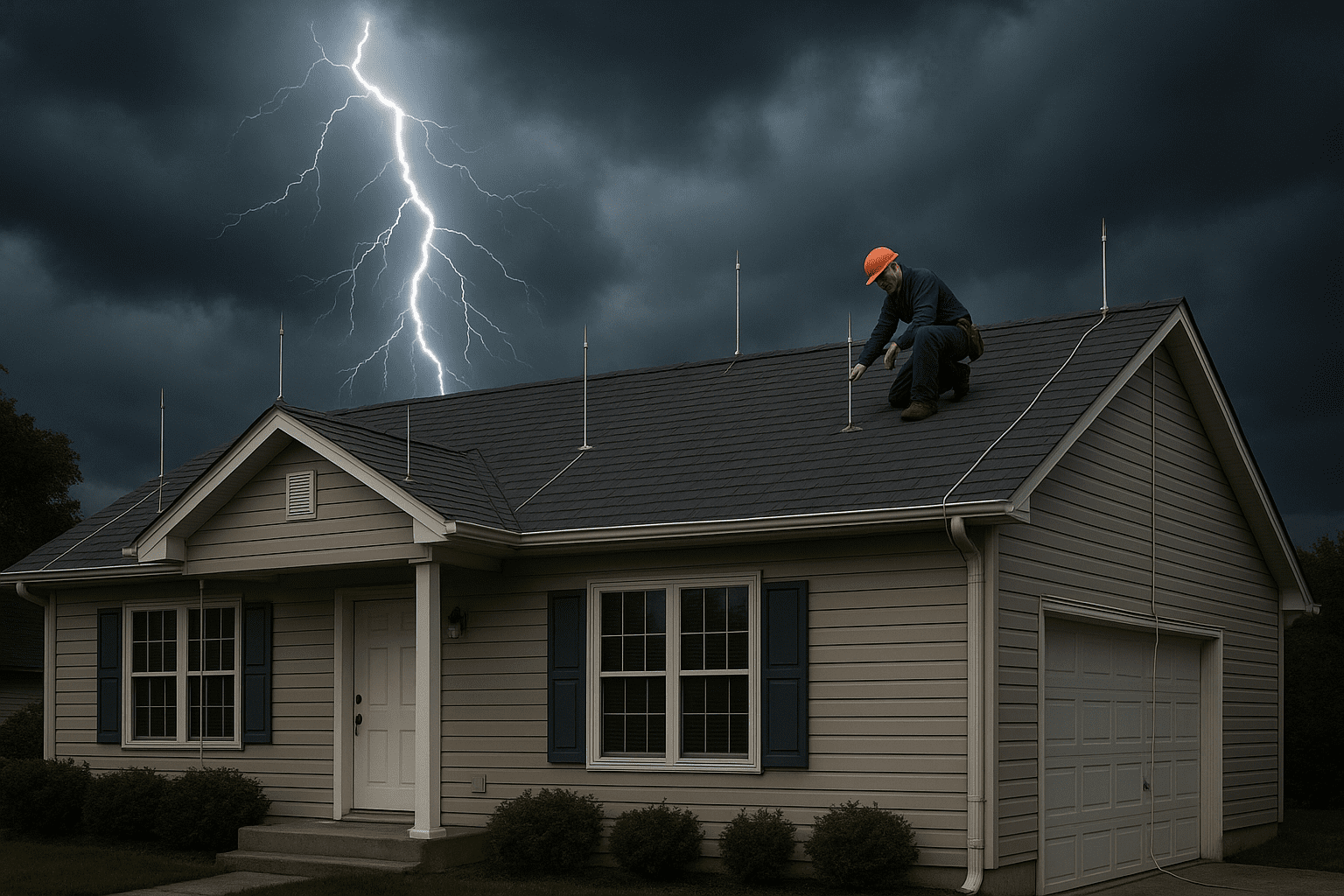
Lightning has no chill. It does not care about your remodel, your smart fridge, or your perfectly curated movie room. As a restoration company owner who has cleaned up after plenty of lightning hits, I can tell you this. Residential lightning protection is not a nice to have. It is a smart way to cut risk from fire, power surges, and expensive electronics getting cooked. This guide breaks down what lightning protection systems do, how lightning rod bonding and grounding work, why surge protection is part of the plan, what the codes say, and when to call a pro. I will keep it plain, a little edgy, and grounded in standards from UL, NFPA, and the Lightning Protection Institute.
How lightning protection works
A lightning protection system does not lure lightning. It gives that energy a preferred path to ground if a strike happens. The goal is simple. Move a massive electrical event outside your living spaces with as little resistance as possible. That reduces arcing inside. That cuts the chance of ignition. UL Solutions explains this approach clearly. Lightning protection systems provide a controlled path for lightning current and reduce side flashing that can start fires. They do not increase strike frequency on a protected home. You can read their plain language overview in the UL Lightning Protection Application Guide at UL Solutions.
Think of an LPS as a highway for the strike. Ramps on the roof. Heavy duty lanes down the building. A ground network that spreads energy into the earth. Bonding to other metal systems so you do not get dangerous voltage differences. Then a separate playbook for what rides in on your wires. Surge protective devices that knock down overvoltages on power and data lines so your electronics do not become toast.
Air terminals on the roof
Those small metal rods you see on ridges and edges are called air terminals. They make up the strike termination system. The spacing, height, and placement are not random. Designers use rules from NFPA 780 and UL 96A. The coverage concept is that any likely strike point on a roof is either an air terminal or within the protected zone of one. You might also see ridge conductors, masts near chimneys, or specialty terminals near tall features like cupolas. None of this work is guesswork. Certified designers map coverage using layout rules from the standards linked above.
Conductors that carry current
Heavy copper or aluminum conductors interconnect the air terminals. These follow the shortest practical path toward grade. They avoid sharp bends. They provide parallel routes so the surge spreads rather than bottlenecks. Conductor size and material are part of UL 96 component listings. Hardware like bonds, splices, and through roof connectors are also listed. The little things matter. A loose connector ruins the party when energy looks for another path through framing or wiring.
Grounding electrodes in the soil
Those rooftop conductors terminate on grounding electrodes. Think of driven rods or ground plates placed at opposite corners of the structure. Many homes already have electrical service grounds. The LPS electrodes should connect with them through bonding jumpers. Soil conditions matter too. Sandy soil behaves differently than clay. Pros test and design with that in mind. The aim is low impedance so the surge spreads fast into the earth.
Bonding to building systems
Bonding ties the lightning system to other metal systems that can carry current. Electric service. Communication lines. Cable and satellite. Gas piping. Metal water piping. The Lightning Protection Institute’s guidance calls this equalizing. Bonding reduces the chance that lightning current jumps a gap inside the home because two systems rise to different voltages. LPI has a clear residential summary on required bonds and why they matter at Lightning Protection Institute.
Surge protective devices
SPDs do a different job than the rooftop system. Lightning can ride in on power or data lines that stretch to the utility. The LPS routes a direct strike to ground. SPDs clamp transient overvoltage on branch circuits, the main service, and communications wiring. Modern codes call for service entrance SPDs and strong bonding provisions. UL notes that both strategies work together to reduce damage. The application guide at UL Solutions lays out this separation of roles in plain terms.
Do you need lightning rods
Not every home has the same risk. Plenty of houses get through storms for decades with no event. Plenty of others get nailed once and lose a roof, a TV wall, or an entire panel full of breakers. A smart call weighs exposure and the cost of what you are protecting. The Lightning Protection Institute points to risk considerations that mirror NFPA 780 guidance. Roof height. Shape. Slope. Tall trees near the home. Nearby ridges or open fields. Geographic lightning density. The contents of the home and your appetite for risk. Insurance or local code requirements. You can find that context at Lightning.org.
Here is a simple checklist I use when a homeowner asks if rods make sense.
- A tall or isolated roof that sticks above neighbors or trees
- Complex rooflines with peaks, dormers, or metal features
- Location in a high strike region with frequent summer storms
- Costly electronics, office gear, or home automation hardware
- A primary residence that must stay habitable after storms
- Historic or high value construction where fire risk stings more
- Local AHJ or insurer that wants UL 96A or NFPA 780 design
You also have partial options. Some owners choose full residential lightning protection with air terminals, down conductors, and new electrodes. Others at least upgrade bonding quality and add service level and panel level surge protection. That will not control a direct strike on the roof. It can still cut losses from nearby strikes and utility side surges. More on that below.
If you want stats to justify the conversation, NOAA has a useful snapshot. The United States sees tens of millions of lightning flashes per year. Storms are not rare events. That many flashes give plenty of chances for a hit on rooftops, trees, and utility lines feeding homes. Check the NWS coverage at NOAA.
Bonding, grounding, surge protection
Think of this as your day to day hardening package. Even if you decide against rods on the roof, you still want tight bonding and layered SPDs. When a strike happens near the house or on the utility, those measures can decide whether you reset a few breakers or lose most of your electronics.
Intersystem bonding matters
Intersystem bonding brings all grounding electrodes and utility grounds to the same electrical potential. The National Electrical Code has a specific bar for this near the service. A bonding conductor ties other systems to that bar. Cable TV. Satellite. Phone or fiber demarc. This is not sexy work. It pays off. If a lightning surge elevates your service ground, the cable shield must ride up with it. That reduces the jump that fries your HDMI ports and networking gear. EC Magazine covers the code logic for intersystem bonding and SPD types at ECMag.
Service entrance SPDs
A modern home should have a listed SPD at the main service. Type 1 fits line side or load side. Type 2 installs on the load side such as in the main panel. Many electricians now use a combination device that provides strong surge diversion right where utility power enters. That first clamp knocks down the worst of the incoming spike so branch SPDs and point of use protection do not get overwhelmed.
Branch panel and point of use SPDs
For sensitive circuits like home office gear or media rooms, a small panel mounted SPD at the subpanel adds another layer. For specific devices, quality point of use protectors help. Look for UL listed products with high surge current ratings. Avoid cheap plug strips with marketing fluff. True protectors publish let through voltage and Joule ratings and give you a real status indicator.
Gas, water, and metal systems
Bonding to gas piping and metal water piping prevents a fringe of danger. Without a bond jumper, those metal systems can end up at a different potential than your electrical ground during a surge. That creates sideflash risk to nearby framing or a person. The LPI residential guidance targets these bonds as standard practice. When in doubt, ask the installer to show the gas bond and the water bond in the design drawings.
Why this matters for fire risk
Fires from lightning do not always start on the roof. Sideflash inside a wall cavity can char studs or start smoldering insulation. Surges can arc in panels or junction boxes. If you want to see the warning signs of electrical trouble in general, my team wrote a quick guide to electrical fire warning signs. Lightning stress can expose weak spots. A quick check after big storms pays off.
Codes and picking an installer
Lightning protection is not a DIY weekend project. A system that looks pretty on a roof line can do harm if it is not designed and installed to a standard. Good news. You have clear playbooks. You also have a third party label that verifies the install.
NFPA 780 sets the standard for installation in the US. UL 96 covers component listings. UL 96A outlines installation requirements that work hand in hand with NFPA 780. The 2024 International Building Code now includes a dedicated lightning protection section. It points to NFPA 780 and UL 96A and references surge protection requirements. UL has an accessible write up on code compliant installations at UL Solutions.
For residential work, I recommend asking for a UL Master Label inspection when the job is complete. That is a third party verification that the installed system matches a standard. UL explains the installer and Master Label program at UL Master Label. The Lightning Protection Institute also certifies designers and installers. Ask for LPI credentials along with the UL label.
Here is a quick buyer checklist you can use when talking to contractors.
- Ask for design drawings that show air terminal layout and conductor paths
- Confirm bonding to electric, gas, water, phone or fiber, and cable
- Request UL listed components and a UL Master Label inspection
- Request LPI certified designer or installer credentials
- Confirm service entrance SPD and communications SPD locations
- Ask for references with homes similar in size and roof complexity
Pro tip from someone who sees the aftermath. If a contractor says you do not need bonding to gas or water piping, stop the conversation right there. That is not a best practice. It is a red flag.
After a strike
First things first. Safety. If you think the house took a hit, do a quick scan for fire. If you smell smoke, hear arcing, or see scorch marks near outlets or the panel, call the fire department. If there is water inside from roof damage or from firefighting, take a breath and call for help. My team runs 24/7 emergency restoration and cleanup for exactly this reason. A rapid response limits secondary damage from smoke and water.
Here is a short action list that keeps people safe and protects the claim.
- Evacuate if you see flames or heavy smoke
- Call emergency services for any fire or injuries
- Kill main power only if it is safe and you can do it without walking past hazards
- Keep pets outside or contained until the structure is checked
- Call a licensed electrician for a panel and system inspection
- Call restoration pros for moisture mapping, board up, and cleanup
- Document damage with photos before moving items when possible
Once the scene is safe, we handle water removal, smoke cleanup, and contents care. If the roof took a hit, we can coordinate emergency tarping and help you connect with trusted builders or roofers. For fire specific needs, see our fire and smoke restoration services. If water soaked the place after firefighting or a roof opening, we also have a handy post fire and water restoration checklist you can use while you wait for crews.
After any confirmed strike, I also recommend a full electrical inspection. Lightning can weaken insulation on conductors without a visible failure right away. The panel may show heat marks on neutral bars or breakers. SPDs can sacrifice themselves during a big event. Replace them if their status light shows a fault. If your home has gas piping, ask the contractor to confirm the gas bond and test for leaks before relighting appliances.
FAQs
Will a lightning rod attract lightning
No. Air terminals provide a preferred path if a strike happens. They do not pull lightning toward your house. See the engineering guidance from UL Solutions.
Are surge protectors enough
No. SPDs limit overvoltage on wires and save electronics. They do not carry the massive current from a direct strike on the roof. Both strategies work together as explained by UL Solutions.
What certifications should I look for
Ask for UL 96A or NFPA 780 design, UL listed components, a UL Master Label inspection, and LPI certified installers. You can verify the Master Label program at UL Solutions.
Do I need bonding to gas and water piping
Yes. Bonding equalizes potential and reduces sideflash risk. LPI’s residential guidance covers these bonds at Lightning Protection Institute.
Can I install a system myself
Please do not. Wrong materials or sloppy routing can raise risk. Use certified pros and ask for third party inspection as advised by UL Solutions.
Real world tips from a restorer
I have seen scorched attic rafters with no visible roof hole. The heat came from a sideflash inside a bay near a metal vent stack. Bonding would have helped. I have walked into homes where a utility side surge fried a garage door opener, a fridge, the doorbell transformer, and half the dimmers. A service level SPD would have taken that hit far better. I have also seen textbook UL Master Label jobs that shrugged off a strike with zero fire and one tripped SPD that did its job. The difference is not luck. The difference is design quality and attention to bonding.
People ask about cost. It varies with roof complexity and material. Simple gable roof homes cost far less than sprawling multilevel roofs with several gables and hips. Materials matter too. Copper looks great and costs more. Aluminum is common and approved. The number of air terminals and the routing down to electrodes drives labor time. Your installer can give a tight quote after a site visit and basic drawings.
One more thought. Even if your home has never been hit, consider what a single storm could do to your work from home setup. Servers. NAS units. Smart lighting hubs. Mesh networks. TVs. Gaming gear. A well designed SPD strategy is a budget friendly way to cut that risk. Then if your roof and site tell you that a direct strike is likely, take the next step with a full LPS.
How to plan your next steps
Start with a quick self assessment. Look at your roof height compared to neighbors. Count complex roof features. Check for tall trees close to the house. Pull up a lightning density map for your region. Make a list of electronics you really do not want to replace. If your gut says the risk feels real, reach out to a lightning protection installer with LPI credentials. Ask for a design based on NFPA 780 and UL 96A with a UL Master Label inspection when complete. Add SPDs at the service and key subpanels, plus quality point of use protection where you plug in sensitive gear.
If a strike already happened, or you smell smoke after a big storm, do not wait. Call the fire department if necessary. Then call a certified electrician and call a restoration team. We can get eyes on the structure, capture moisture readings, and keep secondary damage from spiraling. If you need immediate help, you can reach our 24/7 emergency restoration and cleanup line. We live for messy nights so you do not have to.
Lightning is part of summer in many regions. It hits fast. It hits hard. A residential lightning protection system gives that energy a safe path. Bonding ties everything together so you do not get dangerous jumps inside walls. Surge protection shields electronics that would otherwise fry. Codes back up these strategies with clear rules. Certified pros bring the plan to life. Do the boring work now so your next storm story is just a great video of rain off the gutters, not a rebuild.