
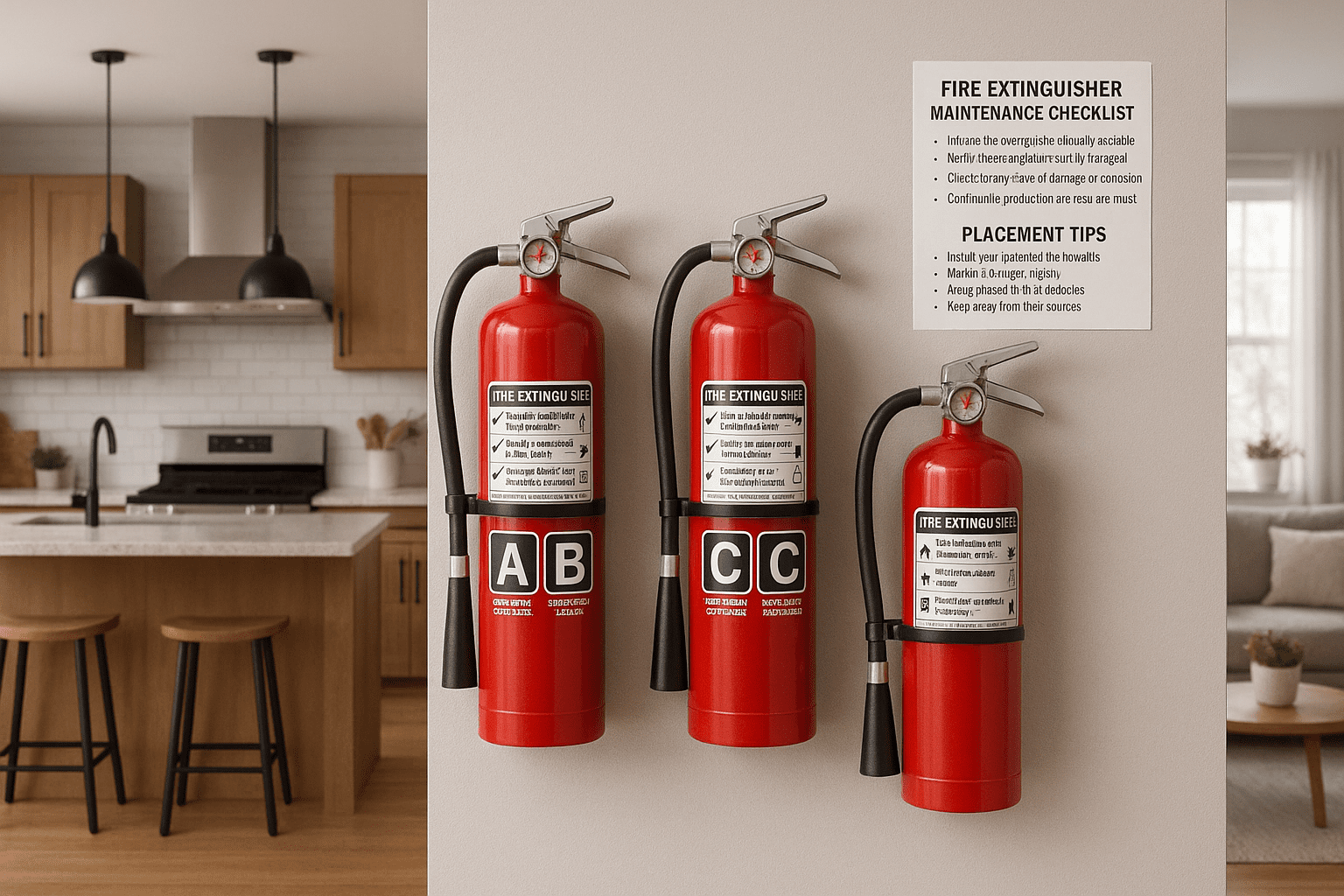
Few things in life are as jarring as a kitchen fire. Whether it’s a smoldering toaster or the full drama of flaming bacon grease, the seconds that follow separate chills from scars. Fires do not discriminate. They do not wait for your coffee to kick in. Most folks only think about fire extinguishers after the sirens have faded. That’s gut-wrenching. Let’s change that with a blunt, practical home fire extinguisher guide that gets ahead of disaster, not just cleans up after it.
Selecting Fire Extinguishers for Your Home
Walk into any hardware store and you’ll see red cylinders lined up like sentinels. Not all extinguishers serve the same purpose. Using the wrong type on the wrong fire is like putting out a gas grill with a cup of coffee. At best, it’s useless. At worst, it’s explosive.
Classifications spell out what each extinguisher can handle. Class A? That’s for everyday stuff like paper, cloth, and wood. Class B takes care of liquids like gasoline, oil, or the mystery grease behind your stove. Class C is for electrical flare-ups. Class D, not so much at home unless you’re melting metal in the backyard. Any kitchen that sees a frying pan needs a Class K, which handles fat and oil disasters with a different punch than the rest.
If you’re only buying one, go for a multi-purpose ABC model. This covers almost everything that can ignite in a home, except serious cooking oil fires. Grab a dedicated Class K extinguisher if cooking anything beyond instant noodles is part of life, especially with deep fryers or lots of oil. Don’t pick based on color or size alone. Study the labels. Ask questions if needed. Get the right equipment, or you’ll end up with nothing but regret and insurance paperwork.
Where Fire Extinguishers Should Be Placed
Location makes the difference between beating out a fire or standing there powerless as smoke seeps into the drywall. Extinguishers must be visible and easy to grab. Don’t hide them behind flour jars or in junk drawers. When you need one, adrenaline makes fine motor skills disappear. You don’t want to be digging for safety gear.
Start with the kitchen. Fires love this spot. Place the extinguisher near the cooking area but avoid putting it right next to the stove. If flames leap up, you want to be able to reach over, not through, the heat. Mounting it on the wall at adult chest height keeps it accessible, visible, and out of the reach of kids who believe every shiny pin is a toy.
Garages and workshops gather flammable liquids, old rags, and extension cords. These areas are fire magnets. Hang a sturdy ABC extinguisher where you can snag it in a hurry, maybe near the door if you want to fight or flee, it’s about choice, not just heroics.
Bedrooms and living rooms matter too. Ever tripped over a burning candle or had a space heater go rogue? Spread out extinguishers across your home, placing one on each floor. Consider putting them in hallways or by stairwells, where everyone can see them and reach them in a rush.
Don’t forget to tell your family or roommates where each extinguisher lives. If you hide them or let furniture creep in front, you might as well rely on wishful thinking as your emergency plan.
How to Maintain Your Extinguishers
A fancy extinguisher means nothing if it fails at GO time. Those pressure gauges are not there for decoration. Time, temperature, and dust can leave extinguishers useless. Nobody brags about saving a house with a dead canister.
Monthly, give your extinguishers a sharp-eyed check. Make sure each one sits in its spot, easy to reach and not blocked by recycling bins or the world’s tallest stack of unread mail. Glance at the pressure gauge. It should point in the green zone. If it’s flirting with red or yellow, don’t risk it, get it serviced or replaced. Look for rust, leaks, or dings. A battered extinguisher isn’t a badge of honor. It’s a liability.
The nozzle and hose attract spider webs, dust, and yesterday’s spaghetti bits. Wipe these areas clean so nothing blocks your aim. The safety pin and tamper seal should be intact. If they’re gone, that means someone’s been playing firefighter or worse, the unit has already been used.
Once a year, call in a pro. Certified technicians have the tools to inspect internal parts, recharge units, and run hydrostatic tests that involve a lot more pressure than you want in your living room. For some extinguishers, these deeper tests are required every few years. Expenses like this sting, but they sting less than fire damage or hospital bills.
After using an extinguisher, yes, even for a small, controlled puff, get it recharged or replaced immediately. A half-empty extinguisher is a cruel trick during a real emergency.
Simple Tips for Keeping Your Gear Ready
Some wisdom sounds too simple but keeps things working. If you own dry chemical extinguishers, give them a gentle shake once a month. This keeps the powder from caking up at the bottom. Left undisturbed, the powder eventually turns into a brick, which blocks everything you want coming out of that nozzle.
Check the manufacturer’s date printed on the cylinder. Old extinguishers cannot be trusted, no matter how glossy they look. Set reminders for monthly and annual inspections. Store a maintenance log somewhere the whole family can spot. This is not the time to get mysterious or cryptic with notes. Jot down what you checked, when, and what you found. No app required, a sticky note on the fridge or in a kitchen drawer works just fine.
Watch the condition of safety seals and pins. If you ever find them missing or broken before you need to use the extinguisher, replace or service the unit. Never leave this to chance. A little attention once a month saves a world of heartbreak later.
Humidity, sun, and rough handling speed up wear. Keep extinguishers away from direct sunlight and places where they might get knocked over. Treat them with the same respect as any life-saving gear because that’s exactly what they are.
Know Your Extinguisher Inside and Out
No two extinguishers work exactly alike. Take a few moments to study the models you install. Get familiar with how to pull the pin, aim the nozzle, squeeze the handle, and sweep back and forth at the fire’s base. Practice makes perfect, at least in theory. You might never need to use these steps for real, but muscle memory gives you a fighting chance in the panic of a real fire.
Talk with your household about which extinguisher fights what kind of fire. It takes less than ten minutes, but that simple chat can save lives and property. During family meetings or when training new tenants, show where each extinguisher lives and teach everyone how to handle them. A quick reference card posted above the extinguisher dramatically helps under stress.
Don’t wait until the holidays or fire prevention week to give this attention. Fires pick their own schedules. Consistent checks keep you ahead of Murphy’s Law and way ahead of any spark that tries to ruin your day.
Action Steps for Improving Home Safety
This home fire extinguisher guide would not be complete without a straight punch of honesty. Complacency is how most house fires go from small scare to headline tragedy. Get the right gear, learn how it works, keep it within reach, and check it often. That’s it. No intimidating jargon. No fancy equipment outside what is sold at any home supply store.
If you have questions or want professional assistance, check resources from trusted restoration professionals such as Blackhill Restoration. Many offer inspections, recommendations, and can handle the heavy lifting if you feel out of your depth. Your home is worth protecting. So is everyone in it. Treat fire safety like the essential routine it should be.
Pick the right fire extinguisher for every space. Place them where you’ll actually spot them. Maintain, shake, inspect, and log every visit. Teach everyone in the household how to use each one. Fires never care about your schedule. Be ready before you need to be. No more excuses. Safe beats sorry every time.