
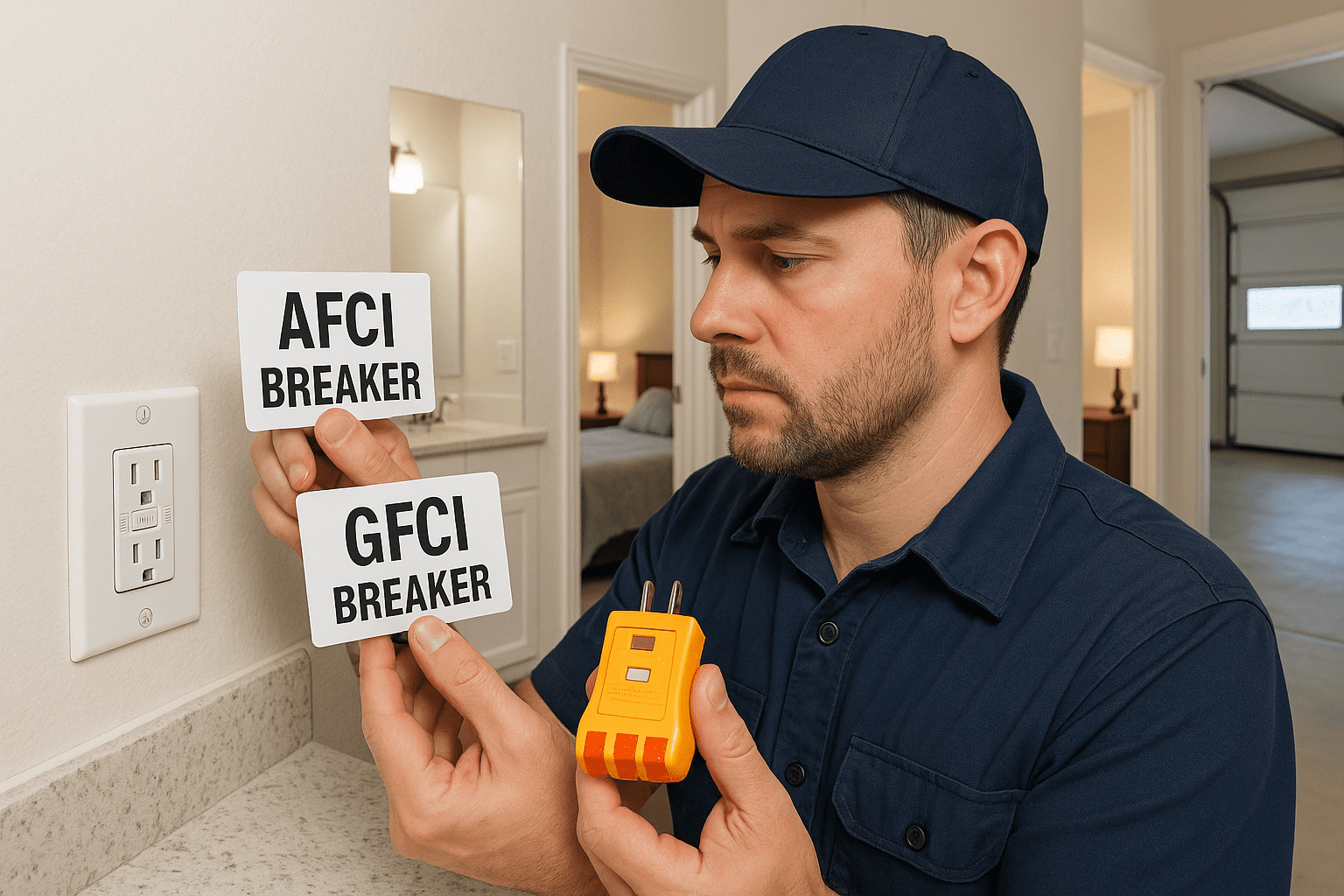
You do not need to be an electrician to keep your home from shocking you or catching fire. You do need the right protection in the right rooms. That is where AFCI and GFCI come in. I restore fire damaged homes for a living, and I blog because I would rather help you avoid calling me. This guide cuts through the code speak. It shows where each device belongs, how they lower risk, and what to do when nuisance tripping makes you want to throw a toaster across the kitchen. We will hit AFCI GFCI code requirements in plain English, simple placement tips for kitchens, baths, bedrooms, garages, and outdoors, monthly test steps, plus real world fixes for GFCI nuisance tripping. If you do have a fire or smoke damage, Blackhill Restoration is ready with a 24 slash 7 emergency response, but let us focus on not needing that call.
What AFCI and GFCI actually do
Quick rule. GFCI protects people from shock near water. AFCI protects the building from arc faults that can start fires inside walls or devices. GFCI watches current leaving on the hot and coming back on the neutral. If even a tiny amount takes a shortcut through you or a wet surface, it trips in a split second. AFCI listens for the signature noise of sparking at a loose connection, damaged cord, or nicked wire. That spark makes heat that ignites dust or wood. AFCI shuts it down before it gets ugly.
Why this matters: electrical malfunction still starts a lot of house fires every year. Federal fire data shows many thousands of residential fires from electrical causes annually. That is not fear bait. That is a scoreboard that does not lie. You can review the U S Fire Administration cause summaries for context at USFA residential fire causes. If you want to spot trouble before it spreads, I wrote about electrical fire warning signs you can check today.
Now bring in code. The National Electrical Code lays out where shock protection and where arc fault protection are required. A strong summary for the current cycle lives at EC and M on NEC AFCI GFCI requirements. Big takeaway. GFCI touches any place with water or damp surfaces. AFCI covers most living areas in the house. Those lists overlap in kitchens and laundry rooms, so many circuits there need both.
A room by room guide that matches code
Bathrooms demand GFCI on all receptacles. Think toothbrush chargers, hair dryers, or a smart mirror. The environment is wet. Shock risk is high. AFCI is not typically required for bathroom receptacles in most jurisdictions. Some lighting circuits pick up AFCI because of how the home was wired or local amendments. Expect GFCI at the outlet locations, with a device that you can reach to reset. If the GFCI is hidden behind a fixed panel or above a ceiling, that is not acceptable for new work. It must be readily accessible to you without tools.
Garages and accessory buildings with power use GFCI on receptacles. Many people plug a fridge or freezer in the garage. That is a classic source of complaints about nuisance tripping. Moisture, long cords, floor drains, and concrete make shock risk real. AFCI is generally not required in a garage for receptacles, though local inspectors vary. Some circuits feeding a sub area or connected rooms might still need AFCI. Do not get cute with a freezer on a non GFCI outlet. That was a thing decades ago. It does not meet current code in most areas, and it is not worth the food loss risk. Use a quality device and correct wiring to minimize trip frequency. More on that later.
Outdoors requires GFCI. Sconces near a door, front or rear porch outlets, patio kitchens, and pool equipment receptacles need protection. Receptacles also must be weather resistant rated and have in use covers that close over the plug. You still press a test button monthly on these just like an indoor device. Outdoor GFCI should be installed with the line and load connections correct or you can lose downstream protection without realizing it.
Bedrooms, living rooms, family rooms, dens, dining rooms, hallways, closets, and similar areas run on AFCI for the standard fifteen or twenty amp, one hundred twenty volt branch circuits. That includes receptacles and many hardwired loads like lighting. These are not wet areas, but the wiring is often hidden in walls. Furniture cords get pinched or nibbled by pets. Nails and screws find wire. AFCI watches for arcing conditions that older breakers would miss. That arcing can smolder for hours before smoke ever hits your nose. I see the aftermath too often during fire restoration.
Kitchens now fall into both categories. GFCI coverage has expanded in recent code cycles. The 2023 summaries make it clear that kitchen receptacles see much broader GFCI coverage, not just the ones at countertops. You can read a homeowner friendly overview at Home Depot on NEC 2023 changes and match that with the EC and M breakdown. AFCI is also required in kitchens because they are considered living spaces. Bottom line. Most kitchen circuits now need both AFCI and GFCI. That includes the fridge circuit in many areas, disposal, dishwasher, microwave, and countertop runs. That often means a dual function breaker or a layered approach with breaker plus receptacle protection on the first outlet.
Laundry areas land in the same bucket as kitchens. GFCI for shock protection near sinks or wet appliances. AFCI for arc fault protection in a living area. Washers and gas dryers usually need both. Electric dryers at two hundred forty volts have expanded GFCI coverage in recent code cycles too, so talk with your electrician about your exact model and local adoption. This is where the dual function device discussion becomes real. It keeps you from doubling up awkwardly while still hitting code.
Basements and crawl spaces contribute their own twists. Unfinished basements need GFCI. Crawl spaces at or below grade also need it. Finished basements follow the living area AFCI rules, with GFCI added wherever the space meets the wet location definitions or near sinks. Outdoors or accessory buildings like sheds follow similar logic.
Codes evolve. Cities adopt on different schedules. Always check with your local licensed electrician for your jurisdiction. The high level AFCI GFCI code requirements stay consistent in spirit across the country. The details in your panel and on your walls should match your local inspector so that your home stays safe and passes inspection found first time.
| Room or area | GFCI | AFCI | Notes |
|---|---|---|---|
| Bathroom | Yes for all receptacles | Usually no for receptacles | GFCI device must be reachable |
| Kitchen | Yes for most receptacles | Yes for branch circuits | Both often required on same circuit |
| Laundry | Yes | Yes | Dual function solution is common |
| Bedrooms and living areas | No | Yes | Protects hidden wiring from arcs |
| Garage | Yes | Usually no for receptacles | Use weather resistant where exposed |
| Outdoors | Yes | No | Use in use covers and WR devices |
| Basement unfinished | Yes | No | Moisture raises shock risk |
| Finished basement | As required near sinks | Yes for living spaces | Same as living rooms |
For the technical rule text and to check the 2023 updates on kitchens, laundry, outdoors, and pools, see the breakdown at EC and M with the homeowner friendly notes at Home Depot NEC changes.
When you need both protections
If a room belongs to both lists, you need both. Kitchens and laundry areas top that list. Many homeowners ask if they need to stack an AFCI breaker and a GFCI receptacle or use one device. You have a few clean options that meet code when installed correctly.
Use a dual function AFCI GFCI breaker in the panel. That device protects the entire circuit for both arc faults and ground faults. In most brands the breaker has a clear test button and instructions printed on the side of the breaker handle. These are widely available and recognized by inspectors. You can review an example from Leviton at Leviton dual function AFCI GFCI devices. Eaton and other brands offer similar solutions.
Use an AFCI breaker plus a GFCI receptacle at the first outlet in the run. That combination can also satisfy both requirements when the GFCI is wired on the line and load terminals to protect downstream outlets. The same idea works in reverse with a GFCI breaker and an AFCI receptacle or combination device, though AFCI receptacles are less common in the field than AFCI breakers.
Use a listed dual function AFCI GFCI receptacle at the first outlet in the branch circuit. This can be a good option where a panel upgrade is not in the cards right now or where space in the panel is tight. Make sure the device is listed for dual function and that the first outlet location is actually first in the run. If the device is not first, the downstream receptacles will not be protected. That favors using the breaker approach when possible. Either way you meet code only if the device is installed according to its listing instructions.
This is not a pick your favorite exercise. The point is to deliver both shock protection and arc fault protection to the people in the house. If you think this is overkill, read our take on common fire hazards. The little stuff adds up to big losses in a hurry.
Placement tips that prevent headaches
Kitchens come with the most gotchas. Place the first GFCI device at the first outlet box in the countertop run so that downstream outlets are protected. Use deeper boxes where you will land line and load along with two or more conductors. Crowded boxes cause loose connections later. For microwaves, dishwashers, and disposals, plan on protection for both AFCI and GFCI. Manufacturers sometimes give guidance on GFCI use in their manuals. Follow that. The fridge deserves a dedicated circuit. In many areas it still needs GFCI and AFCI. A quality breaker can be more stable than a receptacle device for motor loads. If your inspector allows a GFCI breaker for that run, it often reduces nuisance trips compared to stacking multiple receptacles behind the unit.
Bathrooms benefit from a GFCI at the vanity where you can reach it. If you share a GFCI for two bathrooms, label the reset location clearly. Better yet, give each bath its own protected device. That keeps a guest from knocking out power to your primary bath. Lighting in bathrooms can live on a separate circuit and may pick up AFCI depending on your jurisdiction and how much of that circuit runs in living spaces.
Bedrooms and similar rooms see the full benefit of AFCI. If you have one room that trips an AFCI when you plug in a treadmill, vacuum, or certain LED floor lamps, you are not crazy. Some devices spit out electrical noise that looks like arcing. Newer AFCI breakers have improved filtering and better brains. If an old breaker trips every time that vacuum runs, you can ask your electrician about replacing the breaker with a newer model that matches your panel. Also check the cord and plug on the device. I pull melted lamp cords off carpets after fires. AFCI is not being dramatic. It is doing its job.
Garages are a battle with moisture and temperature swings. Use weather resistant receptacles where required. For freezers, use a dedicated circuit with a high quality GFCI breaker if allowed. Label it so nobody resets the wrong device. Keep the receptacle off the slab if possible and use an in use cover. A puddle and a metal case appliance is an ugly combo for shock events.
Outdoors requires attention to covers and hardware. Use in use bubble covers that close over the plug. Rain does not care that your party lights look cute. Seal the top of the box to the siding with proper exterior grade sealant. Leave the bottom unsealed so water can drain. Check for insects. Ants love warm boxes. That dirt causes tracking that looks like a fault pathway to a GFCI. If your patio outlet trips after a rain, check the cover first. Replace old covers that no longer seal under the cord.
Laundry room plans should allow for both AFCI and GFCI on the washer outlet. If the laundry sink sits nearby, measure the distance from sink edge to receptacle center to determine placement. Many modern appliances leak a tiny amount of current by design through filters. That is normal. A healthy GFCI can handle it. If your washer pops the device every spin cycle, the issue might be the washer, not the GFCI. Run the test called out in the troubleshooting section to confirm.
How to test AFCI and GFCI
These devices are not decorations. They are mechanical. They need a quick monthly test. It takes less time than making coffee. The Electrical Safety Foundation International has clear steps for AFCI and GFCI testing at ESFI AFCI and GFCI testing.
To test a GFCI receptacle, plug in a small lamp or night light and turn it on. Push the test button on the receptacle. The light should go out. Push the reset button. The light should come back on. If the test button does nothing or it will not reset, replace the device or call an electrician. Self testing models still welcome a manual test once a month.
To test a GFCI breaker in the panel, push the breaker test button. It should trip to the tripped position. Move the handle fully off, then back on. If it does not trip when you press the button, that is a problem. If it trips but will not reset, call a pro.
To test an AFCI breaker, push the AFCI test button on the breaker face. It should trip. Reset by moving the handle off then on. Ignore plug in testers for AFCI. Use the built in test button on the breaker. If it fails to trip or if it trips and refuses to reset, stop there and call a licensed electrician. That can point to a wiring fault that you do not want to ignore.
GFCI nuisance tripping fixes
GFCI nuisance tripping lives rent free in many kitchens and garages. The device is doing its job in most cases. A few simple checks can save your sanity. First, unplug everything on the circuit. Reset the GFCI. If it holds, plug items back in one at a time. A single bad toaster or fridge defrost heater can leak current and trip the GFCI. If you catch a repeat offender, service or replace that appliance. If the GFCI trips with nothing plugged in, the likely culprit is wiring. A neutral touching ground downstream or a swapped line and load on the GFCI will cause instant trips. This calls for a meter and experience. Have an electrician inspect the circuit. Good reference materials cover these patterns in detail at InspectApedia on GFCI inspection.
Moisture is another easy win. Outdoor boxes fill up with condensation or a garage outlet gets sprayed during a washdown. Dry the box, fix the cover, reroute cords off the floor, then try again. In older homes, the GFCI itself may be tired. Devices do not last forever. An upgrade to a modern GFCI or a GFCI breaker in the panel can offer better performance. Code changes in recent years widened GFCI use in kitchens and laundry, which means more people are noticing when their older appliances do not play nice. The change is for safety. You can read a digest of the 2023 shifts at NEC 2023 changes overview.
If a particular outlet refuses to reset with everything unplugged, do not keep pounding the button. Heat and carbon tracking inside a device can turn an annoying trip into a melted box. If you ever smell a hot plastic odor or see scorch marks, shut power to that circuit. Then call an electrician. If the event led to smoke or damage, call us for Blackhill Restoration services and contact us. Also check our guide on how electrical problems start fires.
AFCI nuisance tripping fixes
AFCI nuisance trips feel different. Devices with motors or variable speed controls like treadmills, vacuums, and some LED drivers generate electrical noise. That noise can look like an arc to a sensitive AFCI. Manufacturers have improved discrimination, but no device gets it perfect in every setup. If one device trips the AFCI every time on one circuit, try it on another AFCI circuit. If it still trips, the device probably needs service or replacement. If it trips on only one AFCI, that breaker might be overly sensitive or failing. An electrician can swap in a current model that is compatible with your panel. Industry notes on nuisance tripping and compatibility are summarized by lighting manufacturers such as WAC Lighting on nuisance tripping.
Shared neutrals on multi wire branch circuits create another trap. If two hot legs share one neutral without a common trip two pole AFCI or without a handle tie, the AFCI sees a mismatch and trips. Older wiring practices did this often. The fix lives in the panel. It needs a paired two pole AFCI that monitors both hots and the shared neutral together. This is not DIY territory. Let a licensed electrician correct it. That small change often ends months of mystery trips.
Loose connections and nicked conductors are also frequent causes. Backstabbed receptacles that were installed years ago can loosen. A wire slightly cut by a staple will arc under load. The AFCI is basically telling you that a problem exists that can start a fire. Do not override it. Have a pro inspect the circuit from panel to last device. InspectApedia has notes on these wiring faults as well. The right takeaway is simple. If an AFCI trips with nothing plugged in, suspect real arcing and get help.
AFCI GFCI code requirements in context
The NEC calls for GFCI protection in bathrooms, garages and accessory buildings, outdoors, crawl spaces at or below grade, unfinished basements, kitchens including most receptacles in the room, laundry areas, and within six feet of sinks or tubs. The 2023 cycle expanded the coverage for kitchen and laundry. AFCI protection covers most fifteen and twenty amp one hundred twenty volt branch circuits in living spaces including bedrooms, living rooms, dining rooms, hallways, closets, kitchens, and laundry. Those two lists overlap heavily in kitchens and laundry which is why dual function now comes up so often. You can read a clear summary at NEC requirements for GFCIs and AFCIs. For homeowner oriented change notes see NEC 2023 update overview. For a product path that meets both in one device see dual function AFCI GFCI options.
One more practical note. A GFCI device must be reachable for you to test and reset. Hiding a GFCI behind a fridge or up in a garage ceiling violates that idea. Place the device where you can actually use it. This makes life simple for you and for inspectors.
What to do when protection keeps tripping
If a breaker or outlet trips with a pop and you smell hot plastic or see blackened parts, kill power at the panel right now. Do not keep resetting it. That smell means heat building in a box or wire run. Call a licensed electrician to inspect the circuit. If there was smoke or any damage, call us for electrical fire restoration with 24 slash 7 emergency response.
If there is no smell or damage, unplug everything on that circuit. Reset the device. Plug items back in one by one until the trip returns. That isolates a problem device. If the trip happens with nothing plugged in, stop. That is a wiring or device fault. For GFCI, look for swapped line and load or a neutral touching ground. For AFCI, think loose connection or damaged cable. If an LED or vacuum trips only one AFCI but not others, consider replacing that breaker with a newer compatible model. If the device trips any circuit in the house, the device is the problem, not the breaker.
You can go deeper with professional troubleshooting flowcharts, but this logic tree gets homeowners most of the way to a solution without lifting a panel cover.
FAQs homeowners ask us
Do I need both AFCI and GFCI on the same circuit
In kitchens and laundry areas, yes in many cases. Code lists overlap, so the circuit needs both shock protection and arc fault protection. You can meet this with a dual function breaker, a combination of an AFCI breaker with a GFCI receptacle at the first outlet, or a listed dual function receptacle placed first in the run. A dual function breaker is the cleanest approach when your panel supports it. See dual function devices for examples.
How often should I test AFCI and GFCI
Monthly is the standard recommendation. Use the built in test button. For GFCI receptacles, a lamp makes it easy to confirm that power drops and then returns after reset. For AFCI breakers, the breaker test button is the only reliable test. The ESFI guide explains this clearly at ESFI testing instructions.
Why does my new LED light trip the AFCI
Some drivers produce electrical noise that looks like arcing. That noise can wake up a sensitive AFCI. Try that LED on a different AFCI circuit. If it trips there too, the lamp driver is the issue. Swap brands or models. If it trips only one circuit, the breaker may be oversensitive or older. Ask about a breaker with improved filtering. Notes on this topic are collected at WAC Lighting nuisance tripping.
Can I replace a single outlet with a dual function receptacle
Yes if it is a listed dual function AFCI GFCI receptacle and it is installed as the first outlet in the branch circuit so that downstream outlets receive protection. If it is not first in the run, it will protect only itself. Many homes benefit more from a dual function breaker in the panel for whole circuit coverage. Discuss the layout with your electrician before you buy parts.
Real world scenarios we see
The garage deep freezer that died in a heatwave because of a silent GFCI trip. The homeowner discovered it by smell two days later. Fix. Move the freezer to a dedicated circuit with a quality GFCI breaker. Label it. Replace the old receptacle box with a gasketed in use cover to keep condensation out.
The bedroom where vacuuming trips the breaker every time. The AFCI was a first generation model that did not like the motor noise. Fix. Replace the breaker with a current version from the correct manufacturer for that panel. Confirm that all receptacle terminations are on screw terminals instead of backstabbed. Problem solved in one visit.
The kitchen remodel that failed inspection because the fridge and dishwasher were not on GFCI. The homeowner thought only the countertop outlets needed it. The NEC update caught them. Fix. Install a dual function breaker for the fridge circuit and add a GFCI device for the dishwasher circuit with proper line and load wiring. Update labels in the panel and at the device. Pass inspection. Sleep better.
Safety reminders from a restorer
I walk into soot coated kitchens that were shiny last month. Space heaters in bedrooms still start fires. Overloaded power strips under desks melt. A nicked cord under a recliner sparks. Read our quick guide on preventing electrical fires. Then take twenty minutes this week to test your AFCI and GFCI. Label the reset location for any hidden device. Replace tired devices. Call an electrician when trips happen with no loads plugged in. If you ever see smoke or charring, cut power and call for help. Protect people first. Property follows.
If the worst happens, our team handles cleanup, odor removal, repairs, coordination with insurance, and all the messy bits that come after. Keep our Blackhill Restoration services page handy. You can reach the crew any time on the contact page. I would rather meet you at a neighborhood barbecue than at three in the morning after a kitchen fire. Getting AFCI and GFCI right helps make that possible.